
In the high-octane world of Tesla investing, emotions often run hotter than the company's battery packs. The start of 2026 has brought significant volatility to the tech sector, and with it, intense scrutiny on every move made by Tesla's leadership team. Whenever a Form 4 filing hits the SEC database showing an executive has sold millions of dollars in stock, retail forums erupt with accusations that management is "abandoning ship." This knee-jerk reaction, while understandable, is usually a fundamental misreading of how modern executive compensation works in Silicon Valley.
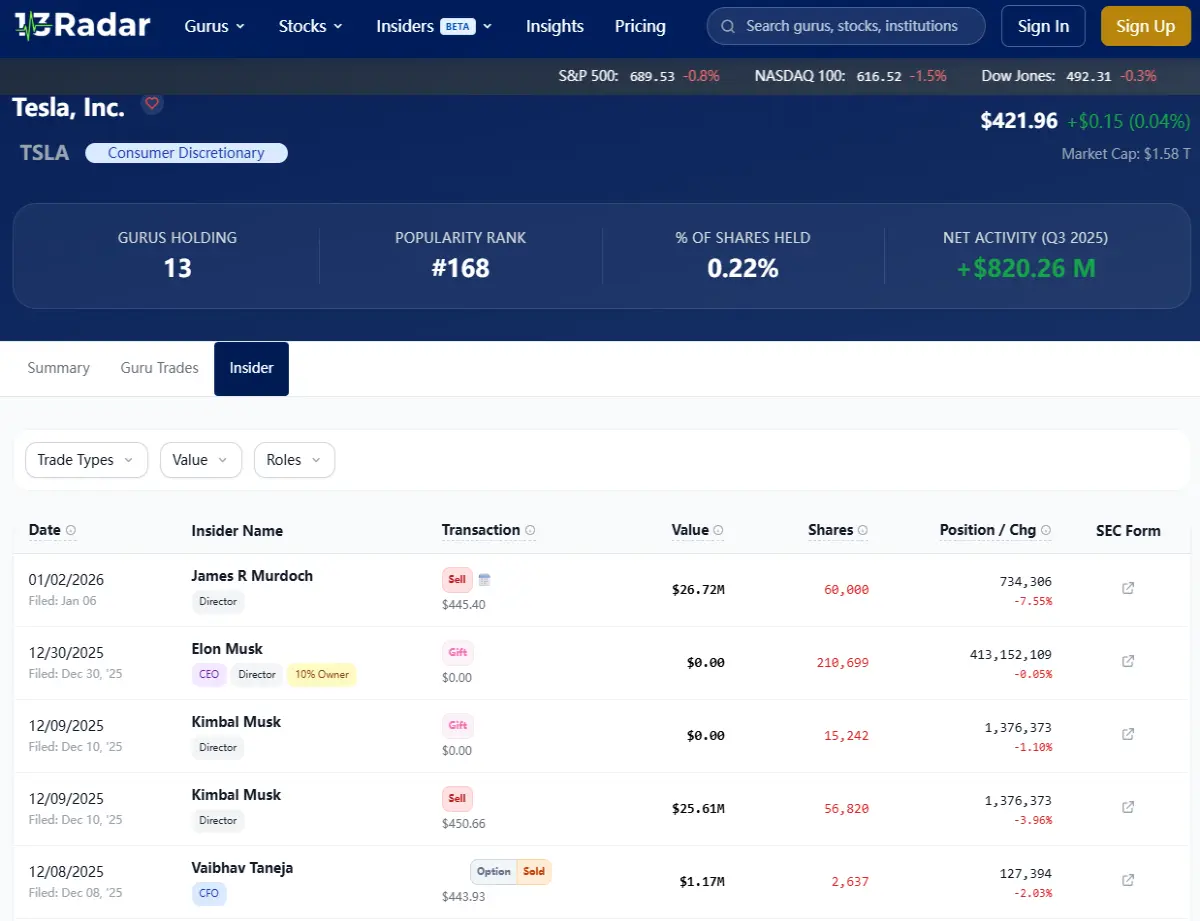
The reality is that for high-growth tech companies, stock *is* the salary. Executives receive vast amounts of equity compensation, and when those options vest, they trigger massive immediate tax liabilities. To pay Uncle Sam, they are forced to sell a portion of the underlying shares. Confusing these mandatory "sell-to-cover" transactions with a lack of faith in the company's future is one of the most common mistakes individual investors make. Recent patterns in Tesla filings confirm this, frequently showing option exercises paired immediately with sales for tax withholding, rather than purely discretionary exits.
The "Sell-to-Cover" Mirage
Investors need to look beyond the headline number of shares sold. If a Tesla executive exercises 50,000 options and sells 20,000 to cover taxes, their net ownership in the company has actually increased by 30,000 shares. Yet, the news headline will simply read "Executive Sells 20,000 Shares." This context is vital. Without analyzing the transaction codes on the filings, you are trading based on incomplete and often misleading information.
💡 The One Signal That Actually Matters
If selling is often noise, what is the signal? Open-market buying. Because Tesla executives are already heavily incentivized through stock grants, they rarely feel the need to buy more with their own cash. When they do, it is a thunderous statement of undervaluation. While recent data on TSLA insider trading shows continued liquidity sales, a sudden emergence of discretionary buying would be the ultimate contrarian indicator in this volatile market.
Decoupling Elon from the Rest
Finally, investors must treat Elon Musk’s transactions as a separate category. Unlike other executives selling for mortgages or taxes, Musk’s historical sales have often been tied to massive liquidity needs for his other ventures (like SpaceX or X). His selling drives short-term price action due to volume, but it rarely reflects his long-term fundamental view of Tesla's potential. Grouping his unique liquidity events with the routine tax sales of a CFO is a recipe for misinterpreting the data.






