
While retail investors are currently experiencing severe FOMO (Fear of Missing Out) and chasing the seemingly endless artificial intelligence rally, the most calculated billionaires in Silicon Valley are executing a vastly different strategy. When the founders who actually built these generational tech monopolies start liquidating their positions, it serves as a massive warning sign for the broader market. Understanding this divergence between public hype and private action is crucial for retail survival.
The AI Euphoria vs. Insider Reality
The mainstream financial media is aggressively pushing the narrative that tech valuations have room to run forever. However, regulatory filings tell a much more sobering story. We are seeing a significant wave of insider distributions across the tech sector. Rather than buying into the peak of the AI hype cycle, legendary venture capitalists are quietly de-risking their portfolios and locking in historic gains. This is not a panic sell; it is a systematic, algorithmic approach to wealth preservation in an overextended market.
🔥 CASHING OUT AT THE TOP: THE PALANTIR MASTERCLASS 🔥
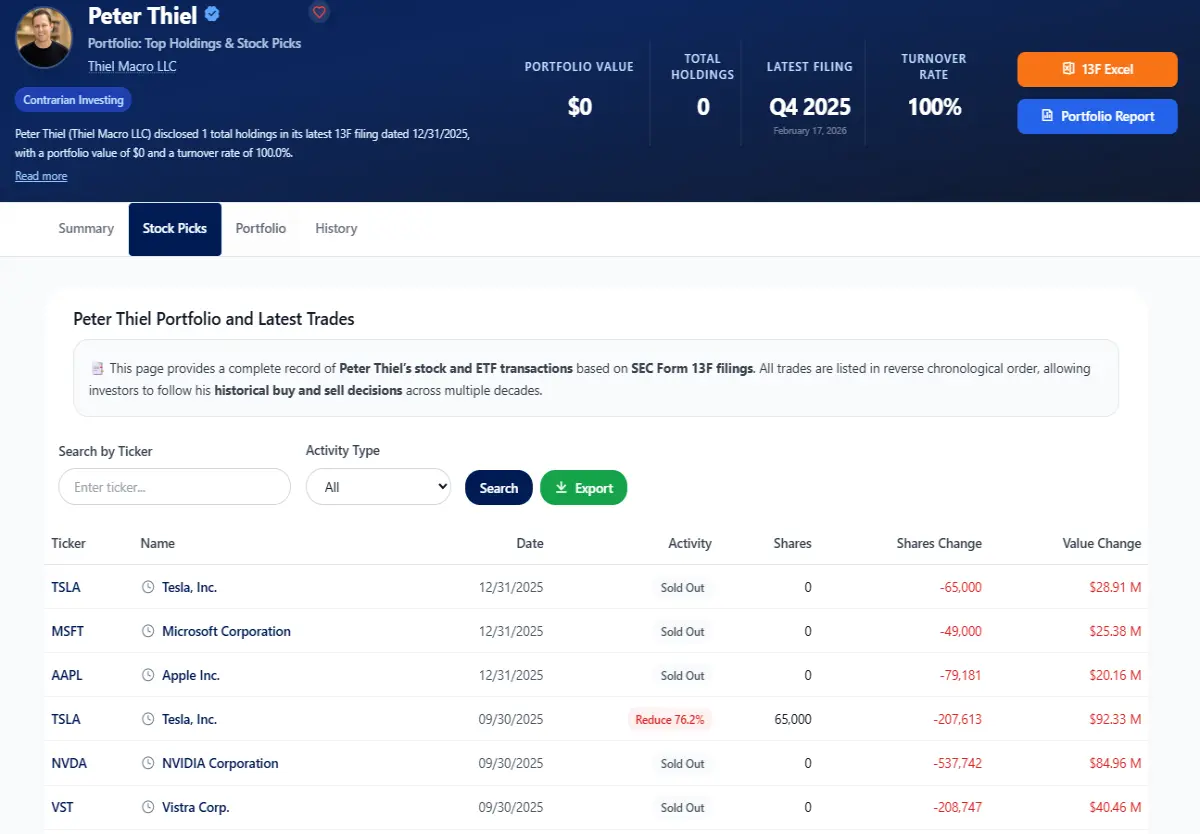
There is no better example of this disciplined execution than recent institutional moves in the data analytics sector. Recent 13F and Form 4 filings reveal that Peter Thiel has been aggressively selling massive tranches of Palantir (PLTR) stock via pre-arranged 10b5-1 trading plans. As the stock surged to record highs driven by AI sentiment, the company's co-founder systematically converted his equity into cash. When the ultimate insider decides that capitalizing on current valuations is better than holding for future upside, everyday investors must seriously evaluate their own risk exposure.
Tracking the Contrarian Playbook
To avoid becoming exit liquidity for institutional giants, you must stop listening to the news and start watching the data. By analyzing the exact peter thiel stock holdings, investors can gain unparalleled insight into how the "smart money" is navigating this precarious macroeconomic environment. Following the actual regulatory footprints of elite capital allocators is your best defense against sudden market corrections.






