
When a single semiconductor giant single-handedly underwrites the global artificial intelligence infrastructure, the resulting wealth creation for its founding team reaches historically unprecedented levels. For retail investors heavily allocated to Nvidia, the relentless wave of executive stock sales has become a massive psychological hurdle. Every time the CEO or a key board member liquidates a multi-million-dollar tranche of shares, it triggers immediate market anxiety about a potential macroeconomic top. However, automatically assuming that every mandated regulatory disclosure equates to a bearish structural signal is a critical analytical failure—one that routinely shakes weak hands out of generational compounders.
Contextualizing the NVDA Liquidation Wave
To accurately price in downside risk, analysts must contextualize these massive capital outflows against the broader semiconductor ecosystem.
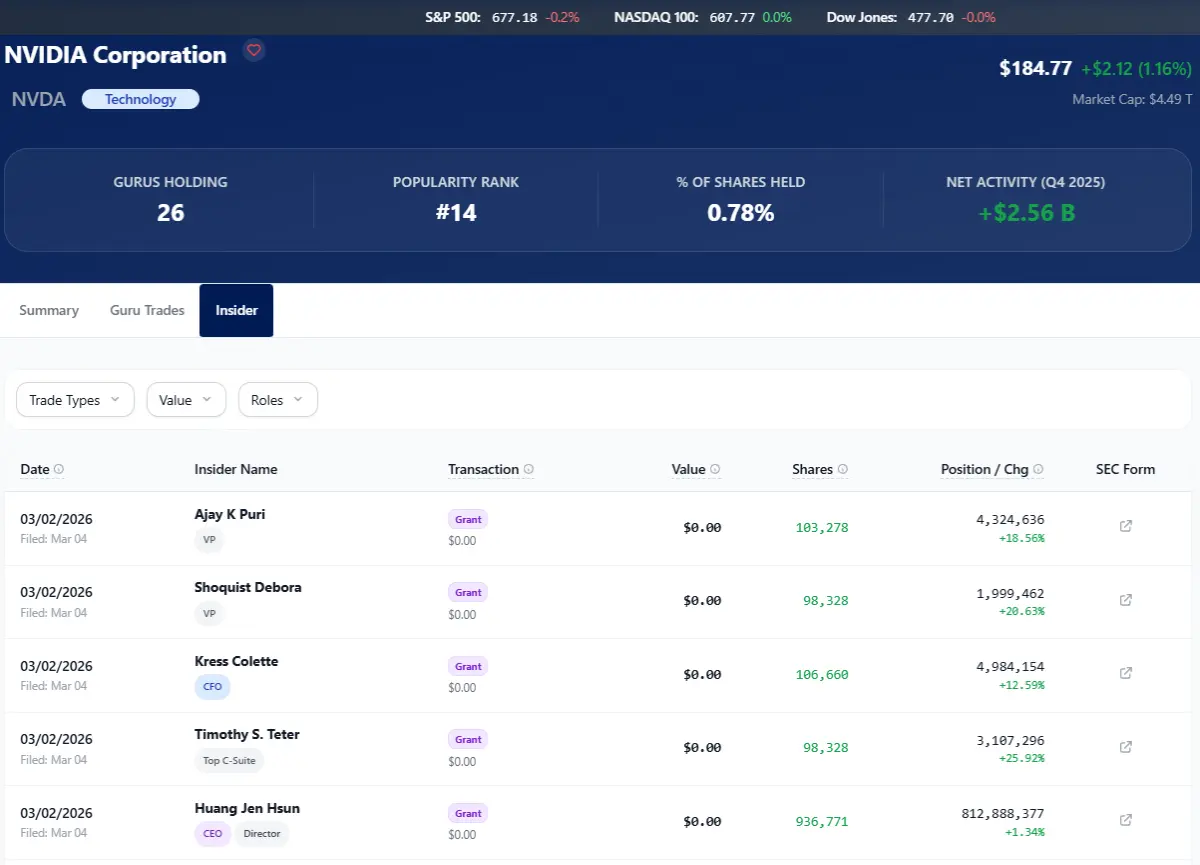
Recent Form 4 filings show a noticeable increase in executive sales across major tech companies, particularly as AI-adjacent equities stretch into historical valuation percentiles. When analyzing Nvidia specifically, this macro liquidation trend is aggressively magnified by the sheer velocity of the stock's multi-year appreciation. The C-suite is essentially forced to offload shares to manage the immense tax liabilities generated by vesting Restricted Stock Units (RSUs) and to achieve basic portfolio diversification. Treating this necessary, mathematical wealth management as a panicked exodus is fundamentally incorrect and leads to poorly timed exits.
Separating 10b5-1 Mechanics from Discretionary Dumping
To accurately assess the fundamental health of this tech behemoth, you must dissect exactly *how* these specific dispositions are being executed. The overwhelming majority of Nvidia's executive selling pressure is structurally dictated by pre-arranged 10b5-1 trading plans. These automated legal contracts are established months in advance, specifically designed to sell predetermined fractional amounts of equity regardless of where the current share price sits, effectively insulating the executive suite from insider trading accusations. The true danger only arises if these insiders spontaneously cancel their automated plans to aggressively dump un-planned shares right before a major earnings call or a reported Blackwell supply-chain delay.
Mapping the True Valuation Floor Through Disclosures
Quantitative hedge funds do not panic at the sight of a Form 4; they use the raw data to reverse-engineer the boardroom's internal pricing models. By meticulously monitoring the specific price brackets where Nvidia executives either accelerate their selling or unexpectedly initiate open-market buys, algorithms can identify hidden institutional resistance and support levels. To build a resilient, data-backed trading thesis, modern investors must rigorously analyze the execution dates and volume metrics found directly within the NVDA Form 4 filings. Ultimately, tracking the exact timeline of these mandatory SEC disclosures transforms executive behavior from a source of retail anxiety into a highly predictable, actionable trading indicator.






