
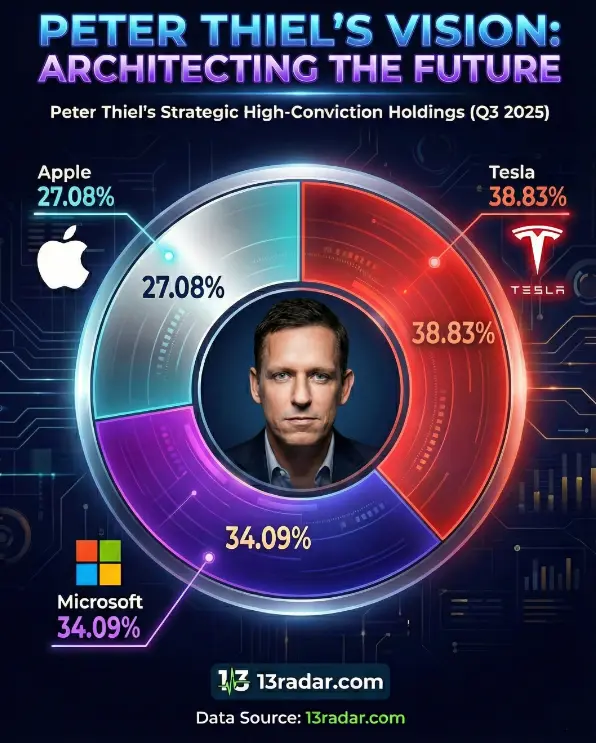
Peter Thiel’s approach to public equities is a direct extension of his "zero to one" philosophy: seek massive asymmetry and avoid the mediocrity of consensus. The Peter Thiel Stock Portfolio, as disclosed in his 13F filings, is deliberately structured for maximum conviction, not conventional risk management. This highly concentrated model, often featuring fewer than 10 core positions, means that every trade is a high-stakes bet on technological or geopolitical dominance.
Risk as a Strategic Tool
Unlike institutional funds that prioritize beta and broad sector hedging, the structure of the Peter Thiel Stock Portfolio embraces single-stock risk as a means to achieve non-linear returns. The portfolio's overall market volatility (high beta) is a direct result of its focus on disruptive firms in defense, AI, and complex industrial systems—companies designed for breakthrough growth rather than stability. This strategy has resulted in the portfolio seeing quarterly swings often exceeding the S&P 500 by a factor of two.
The Signaling Power of Concentration
The allocation within the portfolio is a transparent signal of Thiel's highest conviction long-term theses. When a large percentage of his capital—often over 75% of public equity—is committed to a handful of names, it suggests an existential belief in those firms’ monopolistic future. For investors, this concentration provides a clear roadmap for identifying the next generation of public tech giants that Thiel backs.
Beyond the Quarterly Noise
Analyzing the structure of the stock portfolio provides insight that transcends short-term market noise. It reveals a long-term capital strategy anchored in the belief that true value lies only in companies capable of creating entirely new markets.






