
Alphabet finds itself at a historic crossroads today, caught between a massive technological leap and a severe legal reckoning. On one front, the company has sent shockwaves through the semiconductor industry by unveiling a next-generation language model that dramatically slashes the memory hardware required for AI processing. On the other front, a Los Angeles jury just delivered a damaging verdict against tech giants in a landmark social media addiction lawsuit. For retail investors, weighing the bullish AI narrative against the bearish legal risks is nearly impossible based on news headlines alone. The only way to cut through the public relations spin is to analyze where the corporate elite are parking their personal wealth.
The Collision of Innovation and Legal Headwinds
When a corporation faces a multi-billion dollar legal threat, its public communications will naturally project supreme confidence to prevent a shareholder panic. Meanwhile, the technology press is completely absorbed by the disruptive potential of Alphabet's new LLM architecture, creating a dangerous blind spot for the average trader. If the internal legal liabilities outweigh the future AI revenue streams, the earliest warning signs will not come from a press release, but from the mandatory SEC disclosures filed by the executive team.
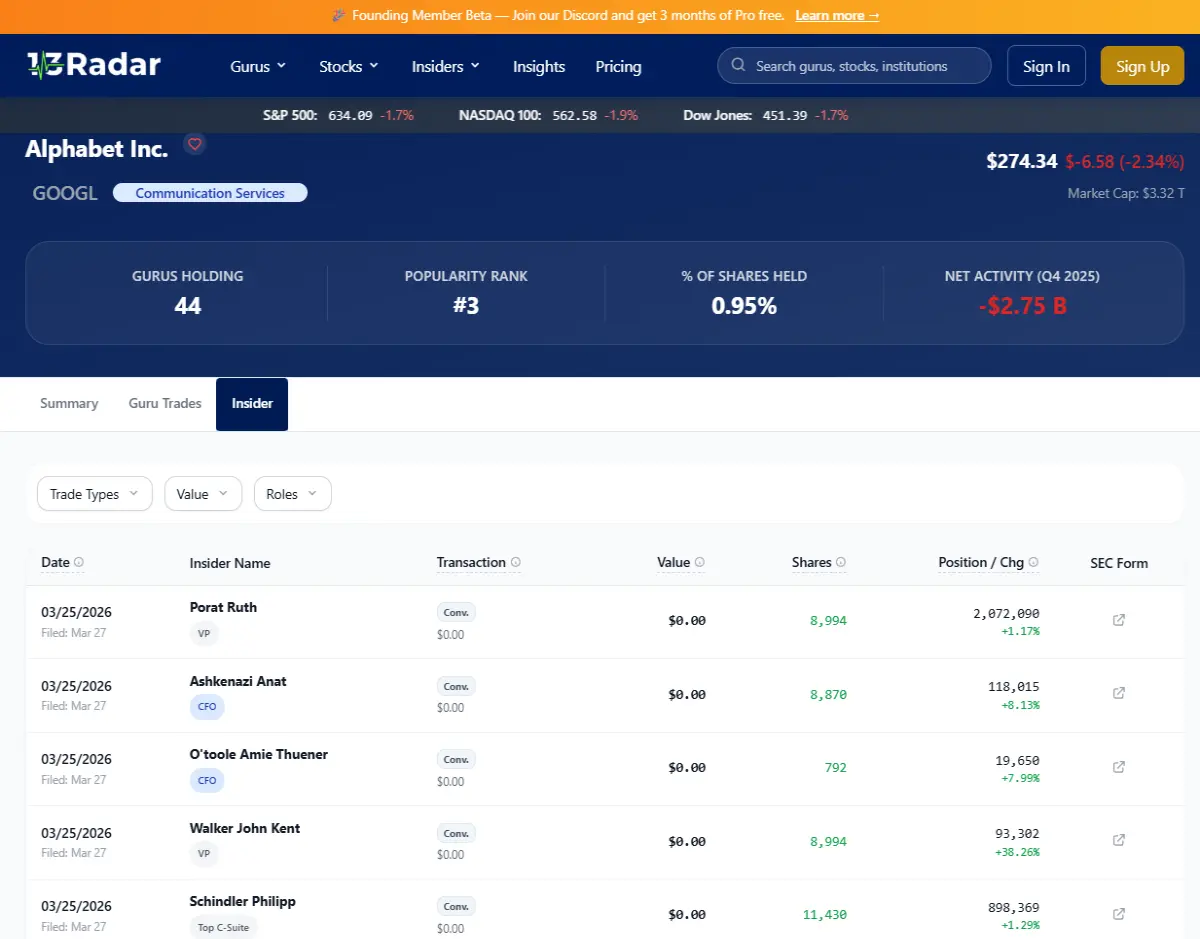
🚨 Decrypting the Executive Blueprint 🚨
To truly understand how the C-suite is calculating these competing catalysts, traders must stop guessing and start tracking the verifiable GOOGL insider activity. We are currently observing a distinct trend in the broader market: recent Form 4 filings show a noticeable increase in executive sales across major tech companies, particularly those facing heightened regulatory scrutiny. Watching the boardroom ledger allows investors to spot exactly how executives are positioning their own post-tax capital.
- The Timing of Distributions: Massive equity liquidations occurring just before or immediately after a negative legal verdict indicate that the boardroom is actively de-risking their personal portfolios.
- The Absence of Buying: When a stock dips on bad legal news, the ultimate sign of corporate conviction is opportunistic buying. A lack of such purchases speaks volumes about the perceived fundamental bottom.
- Structural Liquidation: High-volume, discretionary sales during a technological hype cycle suggest that insiders are using the AI-driven retail liquidity as an exit strategy before legal penalties materialize.
Aligning Your Portfolio with the Smart Money
In a macro environment plagued by sticky inflation and geopolitical unrest, trading on isolated news events is a recipe for capital destruction. The algorithmic bots will violently swing the stock price based on the latest AI benchmark or courtroom update, but the long-term trend is always dictated by institutional and insider capital flows. Smart money does not gamble on courtroom outcomes; it follows the verified actions of the people who actually read the internal legal memos. By prioritizing SEC Form 4 data over tech media hype, investors can build a highly defensive strategy that protects their capital during periods of extreme corporate uncertainty.






