
The intersection of healthcare and technology is currently one of the most volatile segments of the stock market. With macroeconomic pressures forcing hospital networks to tighten their budgets, retail investors have aggressively dumped digital health equities, assuming the worst for forward-looking earnings. However, pricing SaaS models purely on short-term fear creates massive pricing inefficiencies, leaving a generational discount on the table for those who know where to look. To find the true bottom, you must stop listening to the panic and start tracking the regulatory footprints of corporate leaders.
The Form 4 Catalyst: Identifying the Cluster Effect
In the world of corporate finance, isolated trades can often be dismissed as routine tax planning or portfolio diversification. The real signal emerges when multiple insiders act simultaneously. Recent Form 4 filings show a noticeable surge in clustered insider activity across the mid-cap software and digital health sectors. When a CEO, a CFO, and a major board member all independently decide to alter their equity positions during a massive drawdown, it ceases to be a coincidence. It becomes a fundamental catalyst. These synchronized actions indicate a shared boardroom consensus regarding the company's true intrinsic value, completely detached from the daily emotional swings of retail traders.
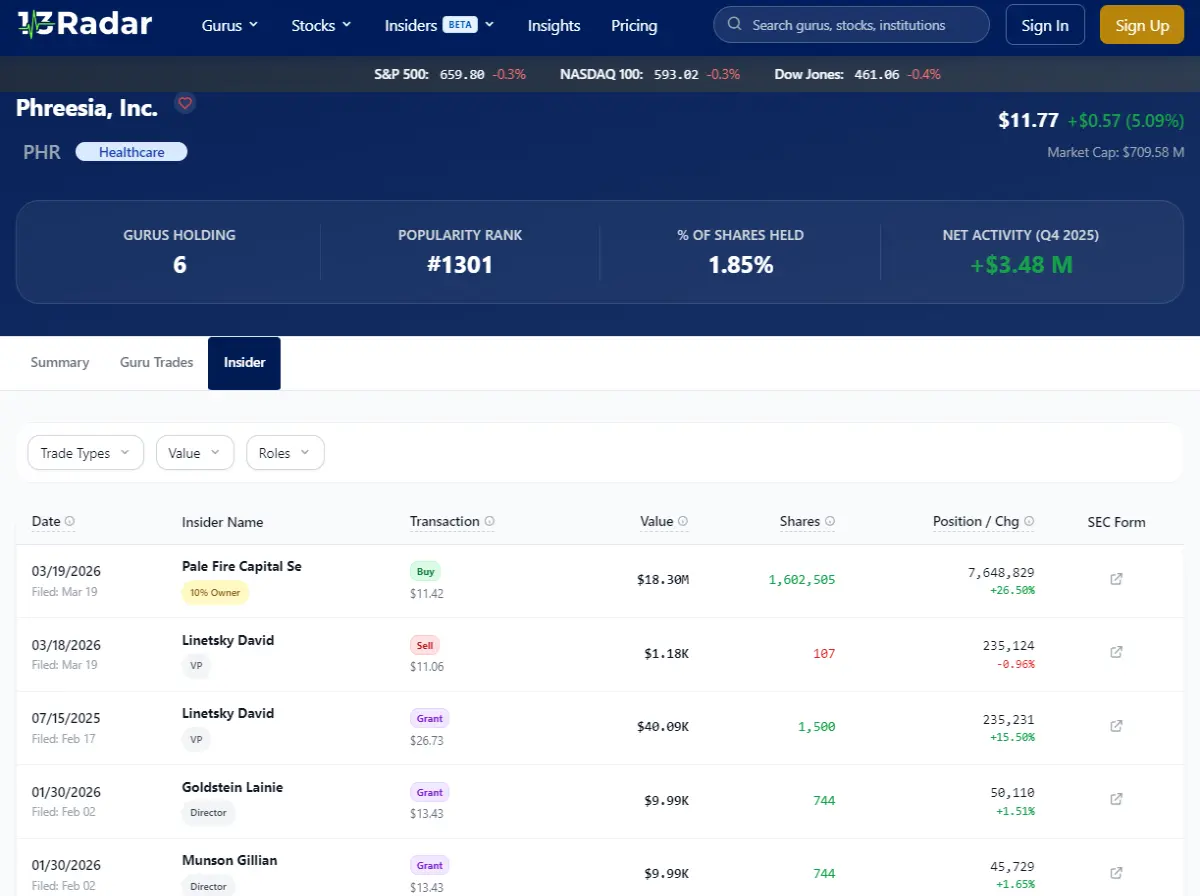
⚡ THE INSTITUTIONAL CROSSHAIRS: Analyzing Phreesia
When smart money moves, it leaves a trail. Here is why the latest patient-intake SaaS tape requires immediate attention.
Applying this "cluster" framework to the current market reveals highly actionable data, particularly within deeply oversold equities. A prime example is currently unfolding with Phreesia. If you look closely at the recent PHR insider activity, you aren't just looking at random, disconnected transactions. We are witnessing highly calculated capital deployment from entities with unparalleled access to the company's annual recurring revenue metrics and client churn rates. When 10% owners and key decision-makers synchronize their market participation, it mathematically signals that internal forecasts drastically outpace the pessimistic valuations currently assigned by Wall Street. This creates a structural powder keg for future price action.
The Asymmetric Investment Logic
Navigating a turbulent market requires an anchor, and there is no stronger anchor than corporate conviction. Betting against heavy boardroom consensus is a historically losing strategy. Following clustered insider flow provides a distinct asymmetrical advantage, drastically lowering your downside risk while exposing your portfolio to maximum upside potential. Rather than trying to catch falling knives based on moving averages, intelligent investors use SEC disclosures to build their watchlists. The logic is impenetrable: if the architects of the company believe the equity is mispriced, aligning your capital with theirs is the smartest trade you can make.






