
Recent data suggests the student loan problem is not isolated but part of a broader breakdown in household credit. Auto and home loan delinquencies have been rising as borrowers struggle to keep up with payments in an economy where real wage growth has lagged and job security has weakened. At the same time, student loan payments in the United States have officially resumed after being paused since covid, but repayment behavior has not returned to pre pandemic norms.
Reports indicate that a very large share of borrowers are fully aware their student loans are due, yet many are not paying. The primary reason is affordability. After years of paused payments, households restructured their budgets around survival rather than debt servicing. Rent, food, insurance, and healthcare absorbed the space where loan payments once existed. For many, there is simply no room left.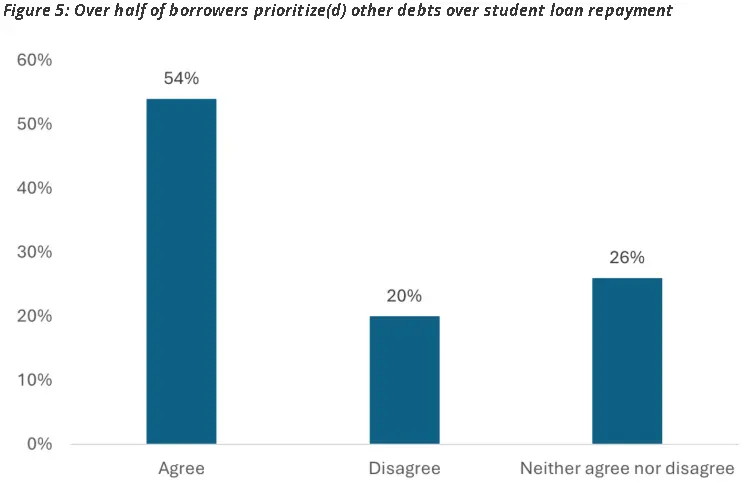
This strain is occurring alongside a weak job market dynamic. Hiring has slowed, layoffs remain selective but persistent, and there is little incentive for companies to raise wages. Efficiency gains through automation and restructuring have reduced labor demand, creating what appears to be a hidden cost of productivity. Fewer stable incomes are now supporting the same or higher levels of debt.
Housing and insurance trends add further pressure. Long term mortgage products are increasingly structured in ways that stretch payments across decades, effectively tying household income to fixed obligations. While this lowers monthly payments on paper, it consumes a larger share of long term budgets and leaves borrowers vulnerable to even small shocks.
Within this environment, student loans are treated differently by borrowers. There is a growing perception that enforcement is inconsistent and that widespread non payment reduces individual risk. When many people stop paying at once, the social and psychological weight of default weakens. This collective behavior changes how debt functions.
This is where concerns raised by Jerome Powell around reserve management become relevant. Banks and financial institutions hold significant exposure to student loans and related credit products. Rising delinquencies across auto, housing, and education loans increase the risk of balance sheet stress. Higher reserves are not just precautionary. They signal uncertainty about how much of this debt will actually be repaid.
Student loans were not carried forward as usual after covid. They were paused in a fundamentally different economy. Restarting them without addressing job quality, wage growth, and servicing capacity has created a fragile situation that lacks a clear long term outlook.
You can check the report here: https://www.empower.com/the-currency/life/student-loans-hit-gen-z-research






