
BURN IT DOWN
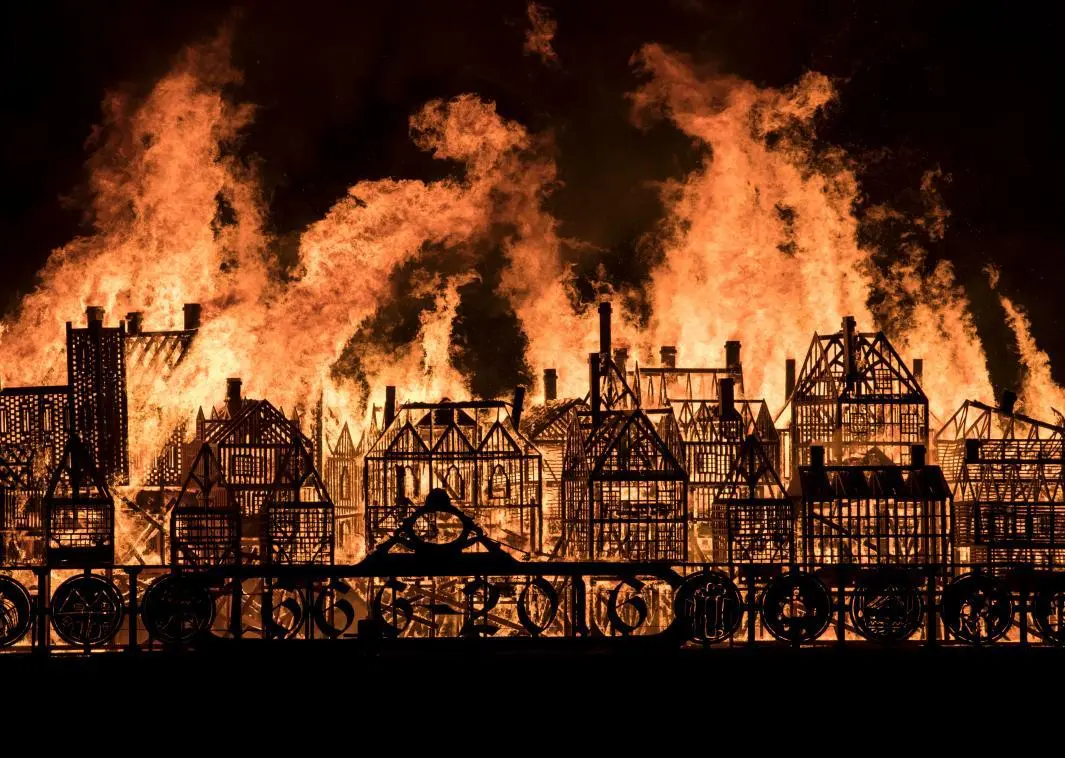
London, 1780
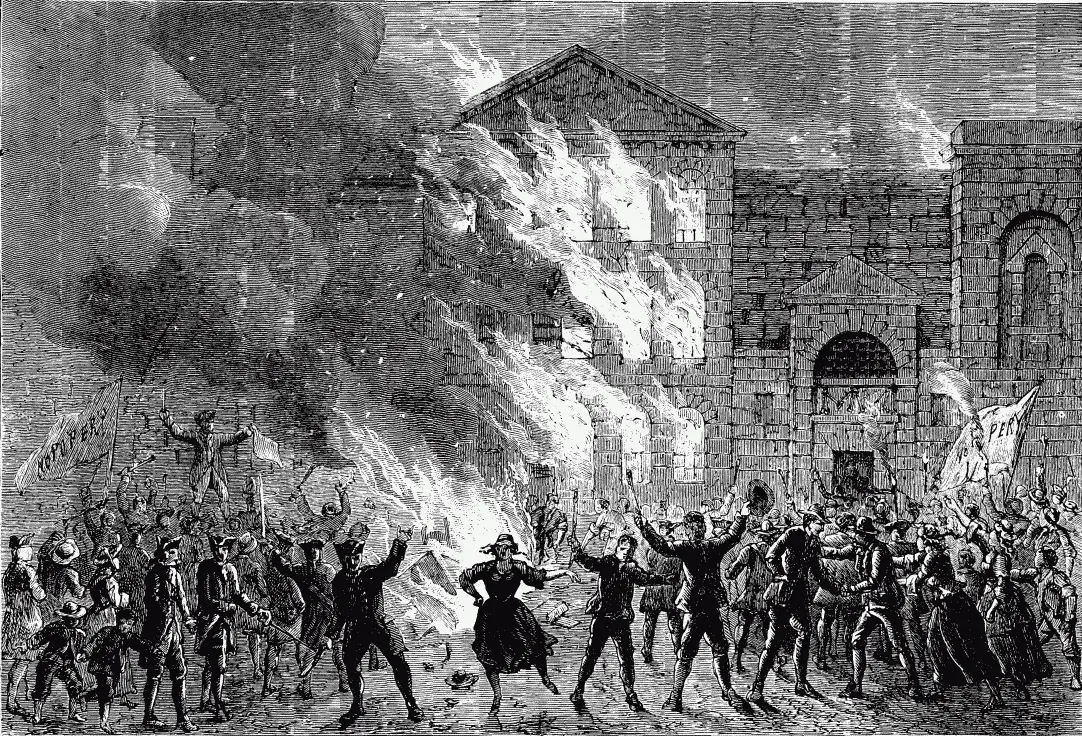
Bellamy raps the keeper’s door with his knuckles like a drummer testing a skin. Three knocks. Silence. The brass ring gleams back at him through smoke and night. He turns, gives the crowd a small bow, and points. That’s the signal.
Iron bites wood. Crowbars find seams. Someone swings a scaffold pole like a ram. Glass bursts; a shutter folds in on itself. The air takes on that sticky sweetness of burning pitch and scorched paint. Bellamy shoulders a boy in a tar-stiff jacket up to the sill. The lad vanishes, then reappears in the window with a grin, throwing down a framed king and a chamber pot to cheers.
“Keep the neighbours out of it,” Bellamy shouts. “We’re here for walls, not people.”
The crowd answers with a battering blizzard. Mattocks for the keeper’s house, chisels for the debtors’ wing, sledges for the felons’. Above the hubbub someone’s singing off-key about St. George. Below it all, you can hear a clean workmanlike rhythm: steel, breath, splinter, step.
The keeper’s lock holds. The gate doesn’t. They wedge furniture against the timbers and set it alight. Heat lifts the hair on Bellamy’s arms. The turnkeys poke brooms through the hatch, trying to scatter the burning pile, then sluice water into the hinges. It hisses and runs. The wood keeps catching.
When the chapel takes, it goes fast, a bright box flaring from inside. Smoke rolls along the ceiling and drops in a wave. Then the first prisoners pour out, blinking, irons clanking like a butcher’s apron buckle. A woman coughs herself to her knees and kisses the stones. Bellamy heaves her up.
“Easy,” he says. “Keep moving. Fresh air’s ahead.”
A boy with a tar-pot scrawls HIS MAJESTY KING MOB across the wall. Cheer. More ironwork clatters. A turnkey’s hat sails into the fire and crumples like a spider.
Two men emerge last from the deepest cell. They don’t rush. The first is all corners and nerves and salt-scoured hands; Greek by the look of him, with a stare that says he has counted windows his whole life. The second is taller, steadier, a dark face lit oddly warm by the flames. He cradles a satchel like a bible.
“Welcome to market day,” Bellamy calls. “Take your liberty and your legs.”
The Greek snorts, voice rough as rope. “This liberty stinks of smoke.”
“It stinks of truth,” the other says, and his eyes don’t leave the fire.
“Truth, then,” Bellamy answers. He’s smiling and doesn’t know why.
They peel away from the blaze into streets that breathe hot. Old Bailey opens like a missing tooth in a jaw of lamps. People swarm up and down the lanes as if the city itself has exhaled its dead. Windows hang like tongues. A woman walks holding a bed-knob like a sceptre. A man is already drunk on the idea of free.
By dawn the light is cruel. Soot slicks the cobbles; the air tastes of vinegar and sweat. Bellamy counts bodies without meaning to. Not many for a night like this. Few soldiers, fewer dead than rumour will want. The rumour never cares for arithmetic.
He keeps the two from the cell with him. Names come later. For now they are the Greek and the Arab, or simply the lean man and the tall one. They move as Bellamy moves, sliding through gaps in the milling, listening for hooves and orders.
“What’s your front?” the Greek asks at last.
“Where the money sleeps,” Bellamy says. “Where the paper tells the guns which way to point.”
“Then the Bank,” the tall one says. Not a question.
Bellamy nods and almost says, Not yet, then doesn’t. The words catch in his throat. He can taste the city’s want; it’s like standing downwind of bread.
Hyde Park is pricked with tents by afternoon, canvas white as boiled bone. The army has found its courage with the sun. Drums sound like bad news. At Langdale’s distillery the crowd howls for gin and gets a lecture. They answer with fire.
When the first vat bursts, the street becomes a river. Spirit runs in the gutter and takes a flame like it was waiting for someone to ask. Boys dip mugs. A man slips and stands up burning, shrieking as if the air itself had betrayed him. Another drags him by the boots, smothering him with a coat and curses.
“Back,” Bellamy yells. “Back from the run.”
No one listens. The heat is a factory in full cry; even the stones seem to sweat. Somewhere a church bell tolls without conviction. Langdale’s roof sighs, then tips into the street. Sparks lift and find fresh places to live.
“Now the Old Lady,” someone roars. “Rob the devil and pay the parish.”
It catches like a cough. Threadneedle Street becomes a tide.
“Turn,” Bellamy says, measuring the barricades ahead, the ropes slung across the way, the blue coats nested like cats along the steps. Cannon stand with their mouths open, eager.
“Turn back,” he barks, louder.
They don’t hear him, or pretend they don’t. The first rank surges. A red coat lifts his hand and drops it. The volley snaps in a clean white line.
For a moment the crowd doesn’t understand. Bodies tighten, then fold, then slide. Sound comes late: a wooden crash, a woman keening like a kettle, the spin of a cartwheel. Smoke drifts low and mean. The second volley takes the talkers, the third breaks the bravest. The gun-teams work like mill horses, unbothered.
Bellamy grabs the Greek by the collar and yanks him down.
“Crawl,” he says. His voice doesn’t sound like his voice.
The tall one has already flattened himself along the gutter, satchel under his ribs. A boy with a rope burns his hands and then stares at his palms, baffled. Someone keeps shouting “Hold, hold,” as if the word could do it.
They make an alley because there is always an alley if you know where to look. They sit with backs to a damp wall, the three of them, and let their hearts kick their ribs.
The Greek wipes brick dust off his tongue. “You knew,” he says.
“I guessed,” Bellamy answers. It comes out as a laugh that hurts.
The tall one opens his satchel and closes it again. Bellamy doesn’t see what’s in there, only the careful way the man’s hands move, as if the air around the leather were expensive.
“Seven days we danced,” Bellamy says. “I thought they’d forgotten the step.”
“Kings don’t forget,” the tall one says. “They merely rest.”
By evening the city has remembered uniforms. Parliament, the Bank, the courts, the places that put seals on suffering, all rimmed with bayonets. Hyde Park grows new mushrooms of white canvas. Orders move quicker than bread.
They walk south with their heads down. South is always good; it doesn’t ask questions. On Blackfriars Bridge a boy in a blue cockade tries to sell Bellamy a key that isn’t a key. Bellamy buys it anyway.
“Souvenir,” he tells the Greek.
“For what?” the Greek asks.
“For the last time the Bank slept without a gun by her bed,” Bellamy says.
They cut through lanes already forgotten by the map, where the smoke thins to kitchen smells and the talk returns to the price of eels. At a pump a woman washes soot off her child’s face with a hand that won’t stop shaking. In an open doorway men argue about the right thickness for a cudgel, as if the answer could save them.
Southwark smoulders, a red seam under a grey blanket. Three gaols burn and one lives; the city will add that to its stories. Bellamy feels the tiredness arrive like a messenger who’s walked too far. He wants a bed and a bottle and a day without drums.
“We lost,” the Greek says, not unkindly.
“We learned,” Bellamy says. “Where the line is. Who draws it.”
“And next?” the tall one asks.
“Next we pick our front,” Bellamy says. He touches the key in his pocket and keeps his voice level. “Not doors. Nerves.”
They turn down an alley that smells of fish and horse piss, then into another that smells of nothing at all. The city folds around them and forgets them. This is what it does best. It will mend and march and marry and feed, and then one night it will cough and remember that it has a throat.
At the river Bellamy stops. Starlight lands in broken strips on the water, thin as tin. Somewhere upstream a cheer carries, small and late and stubborn.
“For a moment,” he says, and the words are for himself as much as for them, “we made the hinges sweat.”
The Greek grins despite himself. The tall one looks back once at the city and then forward into the dark.
They go.
The alleys take them, the way the sea takes a thrown bottle: without comment, without hurry, as if everything that matters has already been written and the rest is only a matter of getting there.






