
9/1/2020
The era of a conservative MakerDAO eroded March 12th. The "whatever it takes" mentality, borrowed straight from Collin Powell's synapses, characterized the atmosphere throughout the emergency period. A certain aggressive viewpoint won in popularity between the wider, inner, and corporate Maker community seemingly agreed on a narrative. This viewpoint resulted in the emergency formal addition of the US banking system, a broad organization, to the Dai Credit System in the form of USDC. This panicked self directed mini bailout allowed individuals to borrow DAI from USDC without risk of liquidation. While USDC only contributed around 10M DAI during the crisis period, the symbolic power of depending the banking system resonated with some.
Now, in anxious marathon mode, rather than the furious mental sprint of March, Maker community marches on. After the March crash Maker was desperate to add collateral. Unfortunately, few attractive options were available. Eventually some swift action was taken and WBTC was added as well with an initial debt ceiling of 10M.
WBTC system involves several groups. The names of which include: Merchants, DAO members, exchanges, and custodian. Merchants pass the customers BTC along to the custodian and initiates a minting request. The custodian mints WBTC, then transfers the token to the customer via the merchant. When the customer wants their BTC returned they will send in their WBTC via the merchant, which gets burnt. The addition of merchants or custodians, requires approval by the DAO members on a multi sig.
If you want to explore the list of merchants: https://wbtc.network/dashboard/partners
The largest WBTC vault owners play an aggressive strategy. 62.27M worth in DAI debt is owed by three of the top four WBTC vaults, all of these vaults veer towards liquidation, as collatearlization ratios remain below 175%. At 150% those positions can be liquidated in auctions. This debt accounts for 77.8% of the total outstanding DAI drawn from WBTC. Also, throughout the lifetime of WBTC vaults, borrowers have kept the debt ceiling filled almost as soon as its raised. Meaning, when governance raised the debt ceiling from 10M to 20M or 20M to 40M, they were filled within a week. No other collateral type has shown this sort of behavior.
Maker attracts about 33% of the WBTC supply. Over 75% of the supply floats within a defi protocol. With 0% interest, since August, individuals owning WBTC (or ETH) can receive free money if they offer their collateral to the system for some time. However the peg still tends above 1usd, despite the new supply coming from free credit.
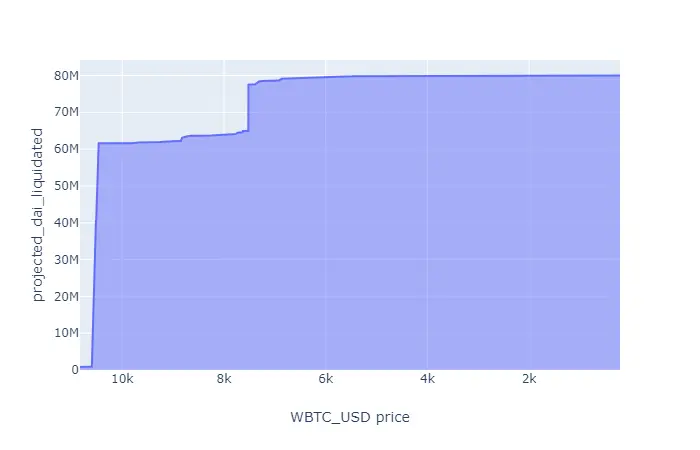
http://makervaults.descipher.io/
If BTC price moves below 10,451$, and vault owners take no decisive action, then auctions to cover the system debt commence.
ETH vaults look well collateralized, but still a ~28% drop would currently liquidate 30M usd worth of ETH. With just BTC and ETH vaults almost 100 Million dollars would liquidate. That's a serious liquidity shock to DAI markets.
The public maker community appears unaware of any active WBTC keepers. In the event of a market crash we will learn the plans of the major ecosystem participants. Only a single flip auction has occurred to date, so no major track record has been recorded, however plenty of steps have been taken by the Maker Foundation and governance community. Auction parameter adjustments let auctions take place over a longer period of time, an emergency freeze module has been added to governance, and UIs now exist which allow for people to participate in auction without running their own ethereum node. However a fundamental question remain, that MKR holders should ask...
Why do WBTC holders seeks such extreme risk, where a sudden 20% move in the market (its been known to happen...) exposes you to a recently violated auction system?






