Hello HODLers,
When missiles fly over one of the world’s largest oil producers, markets don’t just blink — they hold their breath.
The joint attacks by the United States and Israel on Iran have injected a fresh dose of geopolitical risk into an already fragile global economy. And while nobody can say with certainty that a recession is inevitable, the ingredients for a serious macro shock are suddenly on the table.
Let’s break it down calmly — and strategically.
Conflict Erupts in Iran
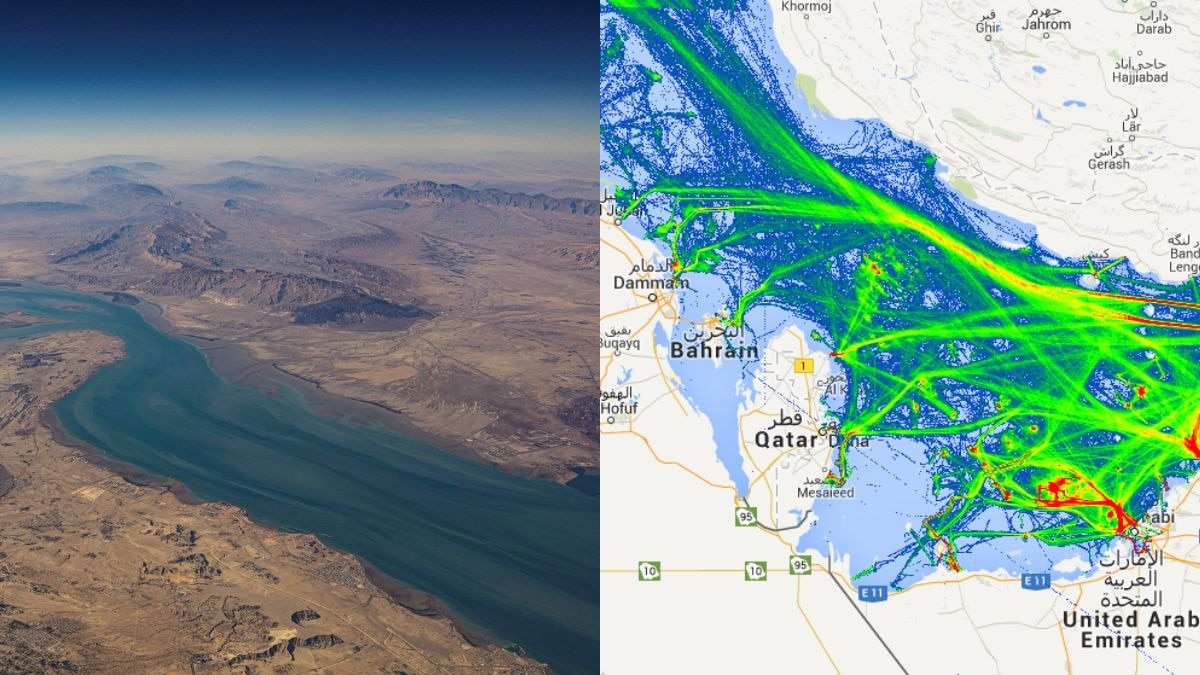 The escalation between United States, Israel and Iran has immediately raised fears across financial markets. Iran responded with missile launches targeting Israeli territory and U.S.-linked assets in Qatar, the UAE, Bahrain and Kuwait. Airspace closures followed. Commercial routes were disrupted. Aviation stocks reacted fast — and not in a good way. But the real elephant in the room isn’t air travel. It’s oil. And more specifically: the Strait of Hormuz.
Oil and Iran: Is a Recession Coming?
Iran is not a marginal player in the energy world.
As a member of OPEC, it consistently ranks among the top oil producers globally. As of early 2026, production hovered around 3 million barrels per day.
Now here’s where it gets critical:
-
Around 80% of Iran’s exported crude goes to China.
-
Over 14 million barrels of oil per day transit through the Strait of Hormuz.
-
Roughly 20% of global LNG shipments pass through the same chokepoint.
If Hormuz is effectively blocked — even temporarily — we’re not talking about a minor supply issue.
We’re talking about a global supply shock.
And China sits right at the center of it.
As the world’s manufacturing powerhouse, any energy disruption in China can ripple across supply chains worldwide. Less energy means slower production. Slower production means fewer goods. Fewer goods mean higher prices.
That’s how inflationary spirals begin.
Oil and Recession: What’s the Link?
Oil is not just another commodity.
It powers:
-
Transportation (ships, planes, trucks)
-
Electricity generation in many countries
-
Industrial production
-
Plastics and petrochemicals
Globally, oil accounts for roughly one-third of total energy consumption.
In Europe alone, the energy mix still relies on oil for more than 35%.
If oil prices surge because supply tightens:
-
Transportation costs rise
-
Energy bills increase
-
Production margins shrink
-
Consumers spend less
-
Growth slows
It’s a domino effect.
A prolonged oil spike toward $100+ per barrel could re-ignite inflation just as central banks were hoping to pivot toward rate cuts. That’s when recession risk becomes real.
History taught us this lesson in the 1970s.
Energy crises and recessions tend to walk hand in hand.
Are There Strategic Oil Reserves?
Yes.
Many countries maintain strategic petroleum reserves designed for exactly this type of emergency. The United States, European nations, and other major economies hold emergency stockpiles.
But here’s the uncomfortable truth:
Strategic reserves are a bridge — not a permanent solution.
They can smooth short-term disruptions.
They cannot sustain months of blocked maritime flows.
If the conflict drags on and the Strait remains compromised, reserves buy time — not stability.
War in Iran and Market Tensions
The conflict erupted over a weekend, when traditional markets were closed.
Crypto didn’t get that luxury.
Bitcoin traded through the chaos — as it always does.
Asian markets opened lower:
-
Japan’s Nikkei 225 fell over 2%.
-
Hong Kong equities dropped sharply.
-
Airline stocks were hit hardest.
Oil prices jumped aggressively.
But here’s the twist.
Bitcoin held up better than expected.
Bitcoin Reacts Better Than Stocks
While equities corrected and Brent crude spiked, Bitcoin oscillated between $63,000 and $68,000, absorbing weekend panic flows.
This pattern isn’t new.
Crypto markets operate 24/7. When traditional markets are closed, Bitcoin becomes the first pressure valve for global risk sentiment.
After initial liquidations, BTC rebounded — even as oil surged and equities opened in the red.
That doesn’t mean Bitcoin is immune.
It means it reacts faster.
And sometimes, it recovers faster too.
Ethereum and Solana even posted relative strength over a 7-day window, suggesting that the crypto market may have partially priced in geopolitical risk before traditional finance reopened.
So… Why Is a Global Recession a Real Risk?
Let’s summarize the chain reaction:
-
Major oil producer under attack
-
Risk of Hormuz disruption
-
Oil and LNG supply shock
-
Energy price spike
-
Inflation resurgence
-
Central banks forced to stay hawkish
-
Liquidity tightens
-
Growth slows
If sustained, that’s textbook recession material.
But here’s the key word: if.
Markets are resilient. Geopolitical shocks are often sharp but temporary. Much depends on the duration of the conflict and whether maritime flows remain open.
For now, corrections remain contained — not catastrophic.
And that matters.
Final Thoughts
This is not a guaranteed recession.
It’s a high-stakes macro stress test.
Oil is the transmission mechanism.
Hormuz is the pressure point.
China is the amplifier.
Markets are the barometer.
And Bitcoin?
It might just be the early signal.
As always in moments like these, volatility creates both danger and opportunity. The next few days will tell us whether this is a short-term shock… or the beginning of something far bigger.
🔥 MY PASSIVE EARNINGS: What I’m actually farming right now🔥
1. GRASS — (DePIN/AI)
Grass is a decentralized network that lets you turn your unused internet bandwidth into crypto rewards!
Just install the browser extension, desktop app (2× rewards) or mobile app (3× rewards) — and start farming Grass Points automatically while you browse.
🔥 At the end of each season, your Grass Points are converted into $GRASS tokens — and Season 1 has already rewarded thousands of users (including me!).
👉 Farm Grass airdrop now: https://app.grass.io/register?referralCode=lNAoYuHQUPN22mF

2. UPROCK — (DePIN/AI)
Earn $UPT in multiple ways: share your unused internet bandwidth via desktop app or smartphone, play games and answer surveys!
👉 Start earning $UPT now: https://link.uprock.com/i/f38853d4