Hello HODLers,
When cash disappears, code becomes money

Imagine an economy where banks don’t exist, ATMs are almost all dead, and physical cash has practically vanished.
That’s not a crypto dystopia.
That’s Gaza right now.
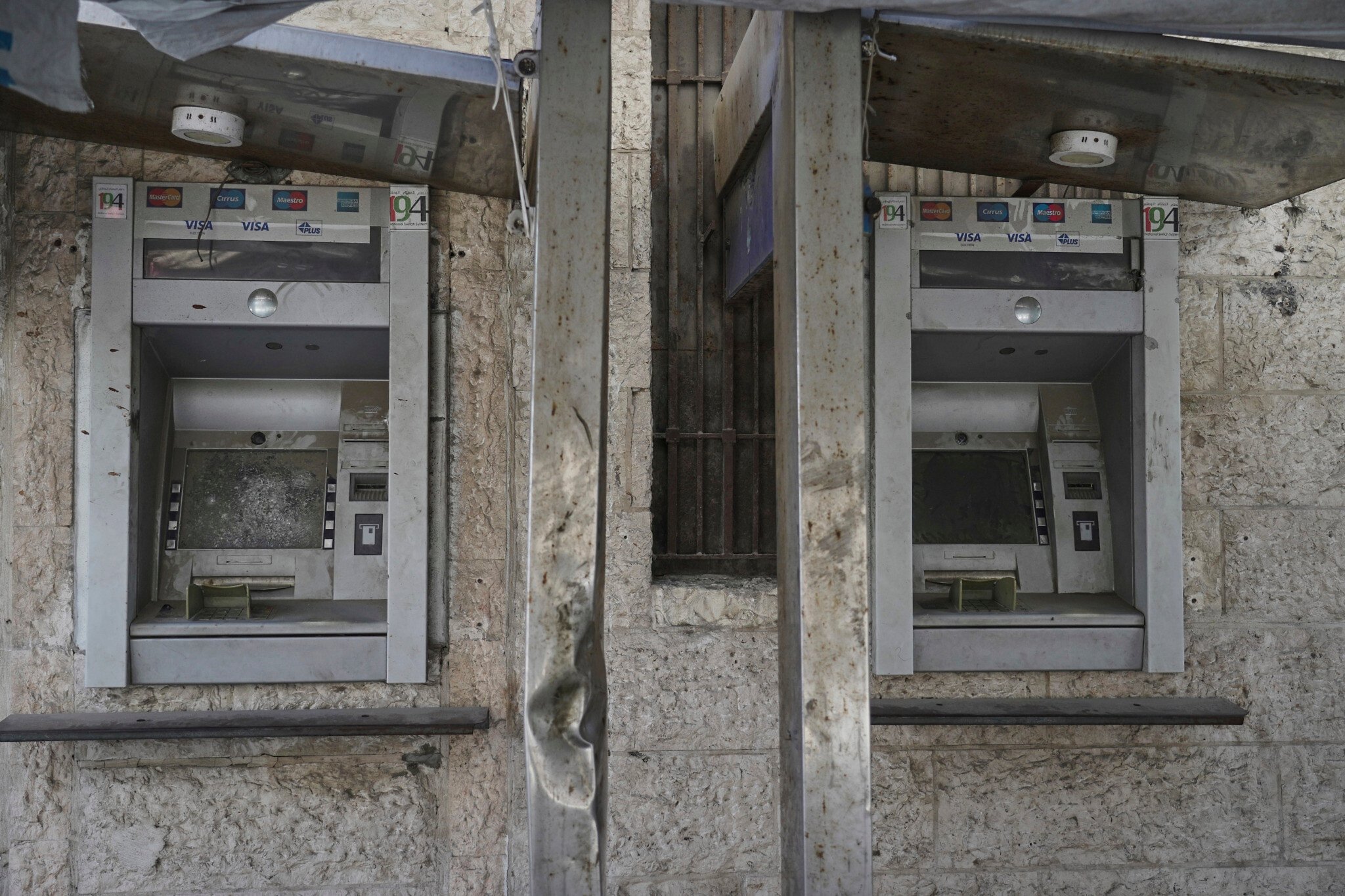
With the financial system largely destroyed and cash transfers halted for years, daily transactions have become a logistical nightmare. In that kind of vacuum, even a simple payment becomes a challenge.
So when reports emerged that a policy group linked to Donald Trump is exploring a USD-pegged stablecoin for Gaza, it immediately sounded extreme — but also strangely logical.
Not a national currency.
Not a central bank digital currency.
Just a digital dollar payment rail designed to work where banks no longer do.
And that’s what makes this story explosive.
A stablecoin as emergency infrastructure
The proposal is still in a very early stage. No confirmed blockchain, no technical rollout plan, no wallet standard.
But the objective is clear:
create a digital payment system that can move money without relying on banks or physical cash.
In theory, that would allow aid organizations to send funds directly to individuals, merchants to accept digital payments, and the local economy to function again — at least partially.
We’ve already seen similar experiments. The UNHCR used USD Coin for Ukrainian refugees, and the World Food Programme has tested blockchain-based aid distribution for years.
So the concept isn’t new.
What’s new is the scale, the politics, and the environment.
The Gaza reality check
Here’s the problem: technology alone doesn’t solve infrastructure collapse.
Gaza still faces:
-
2G connectivity
-
frequent blackouts
-
limited device access
A stablecoin without reliable internet and power is just a theoretical solution.
That means any real deployment would require parallel investment in telecom and energy — otherwise adoption stays close to zero.
Transparency vs control
This is where the debate becomes less technical and more philosophical.
A blockchain-based aid system could make funds traceable, reducing corruption and diversion. That’s a huge advantage in humanitarian operations.
But traceability also means every transaction can be monitored.
In a conflict zone, that raises uncomfortable questions about:
-
financial surveillance
-
wallet control
-
the ability to freeze funds
At that point, we’re no longer talking about “crypto” in the decentralized sense.
We’re talking about programmable aid money.
A digital dollar economy by design
Gaza currently uses the Israeli shekel as legal tender, but without functioning banks and with cash nearly gone, legal tender status doesn’t mean much.
A dollar-pegged stablecoin would effectively introduce a digital dollar economy overnight.
We’ve seen organic dollar-stable adoption in places like Argentina and Turkey.
But this would be different — not market-driven, but policy-driven.
That distinction matters.
Why this matters for crypto
Zooming out, this story signals something bigger than Gaza.
Stablecoins are evolving from trading tools into real-world financial infrastructure.
When they’re discussed in the same context as:
-
humanitarian aid
-
monetary collapse
-
geopolitical strategy
…we’re witnessing a shift.
Crypto is no longer just an alternative system.
It’s becoming a tool that institutions consider when traditional finance fails.
And that changes the narrative for the entire sector.
Lifeline or leverage?
A Gaza stablecoin could:
restore basic payments,
speed up aid delivery,
reduce dependence on scarce cash.
But it could also centralize financial control and introduce a new layer of digital oversight.
So the real question isn’t whether a stablecoin is useful.
The real question is who controls the system.
Because in crypto, governance always matters more than technology.
And this may become the first true test of stablecoins as geopolitical financial infrastructure.
🔥 MY PASSIVE EARNINGS: What I’m actually farming right now🔥
1. GRASS — (DePIN/AI)
Grass is a decentralized network that lets you turn your unused internet bandwidth into crypto rewards!
Just install the browser extension, desktop app (2× rewards) or mobile app (3× rewards) — and start farming Grass Points automatically while you browse.
🔥 At the end of each season, your Grass Points are converted into $GRASS tokens — and Season 1 has already rewarded thousands of users (including me!).
👉 Farm Grass airdrop now: https://app.grass.io/register?referralCode=lNAoYuHQUPN22mF
2. UPROCK — (DePIN/AI)
Earn $UPT in multiple ways: share your unused internet bandwidth via desktop app or smartphone, play games and answer surveys!
👉 Start earning $UPT now: https://link.uprock.com/i/f38853d4