Granted the headline below sounds quite plausible given what Big Chocolate has done to Chocolate (Cacao) over a few hundred years.
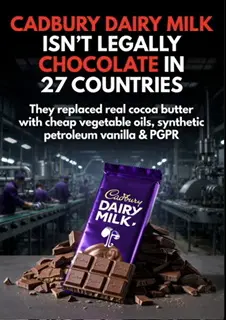
”CADBURY DAIRY MILK ISN’T LEGALLY CHOCOLATE IN 27 COUNTRIES
They replaced real cacao butter with cheap vegetable oils, synthetic petroleum vanilla & PGPR”
Brief History
- cacao tree was first domesticated in present-day Ecuador 5,000 years ago
- cacao drinks became popular as an elite beverage among cultures including the Maya and the Aztecs (similar to adrenochrome is today)
- Cacao was considered a gift from the gods and was used as currency, medicine, and in ritual ceremonies
- introduced to the West by the Spaniards conquistadors around 1519
- 16th century saw cacao captivating royal courts as a decadent drink for European elites
- 17th century, chocolate spread across France, Italy, and England, becoming a fashionable indulgence in aristocratic circles
- 1824, John Cadbury began to sell tea, coffee and drinking chocolate from his premises in Birmingham. Drinking chocolate was promoted as a medicinal drink
- 1828 with the invention of the cacao press chocolate reached broader audiences.
- British chocolatier Joseph Fry introduced the world’s first solid chocolate bar in 1847 by recombining cocoa butter with sugar and cocoa powder into a mouldable paste
- 19th centrury saw the industrialisation of chocolate and the ritual, cultural and medicinal aspects of cacao start to fade
What Should Be In Real Chocolate
Note: By Real Chocolate I am referring to what is now commonly called Raw Chocolate, while I prefer the term guilt free and healthy chocolate.
only 4 ingredients, 5 for milk chocolate
- cacao butter (organic preferred)
- organic ground vanilla powder ($1400kg AUD but luckily you only need 1.25gm per batch)
- sweetener (personally use organic agave or maple syrup)
- organic cacao powder
Currently it costs $6.38 AUD per batch. This is achieved by buying the quality ingredients in bulk. For example:
- 25kg organic powder, $882.72 AUD, included freight. Delivered to our door on a pallet in a very big truck. Made me laugh as it seemed like overkill, but suppose rules are rules. Even gave the truckie some chocolate for his effort.
- Organic Cacao Butter 2x 4kg blocks, $689.55 AUD
openfoodfacts.org
AI will only tell you what Cadbury wants the world to hear. Highlighting the glass and an half marketing story and glossing over the other not so nice ingredients.
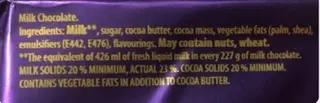
- milk 50%
- sugar 25%
- cacao butter 12.5%
- cacao paste 6.2%
- vegetable fat (palm oil and shea butter) 3.1%
- emulsifier E442 (Mixed ammonium salts of phosphorylated glycerides)
- emulsifier E476 (Polyglycerol polyricinoleate -PGPR)
- flavouring
It states there are actually 14 ingredients instead of the nine listed above. That because under each heading there can be more than one substance that can be legally called by that name. For example flavouring
Flavouring
Could be one or more of the following as Cadbury are not required to list as the formulations are considered proprietary trade secrets
- Ethyl Vanillin, a synthetic compound (C9H10O3) that provides a stronger vanilla taste than natural vanillin
- Caramel Flavouring Substances: compounds like diacetyl, acetylpropionyl, or furans created during the heating of sugars
- PGPR (Polyglycerol Polyricinoleates): primarily an emulsifier (E476), it can influence flavour release and mouthfeel, often appearing alongside flavourings in North American ingredient lists
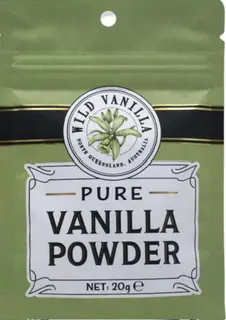
If it was real they would have listed it as Pure Vanilla Powder ($14.99 AUD 20gm) instead of the generic “flavouring”.
The Legality
In Australia, chocolate ingredients and composition are primarily governed by Food Standards Australia New Zealand (FSANZ) under the Food Standards Code. To be legally labeled as "chocolate," a product must contain a minimum of 20% cocoa solids and no more than 5% of edible oils other than cocoa butter or dairy fats.
Key regulatory requirements include:
-
Compositional Standards: The product must be prepared from cocoa bean derivatives, adhering to the specific cocoa solid and non-cocoa fat limits set by FSANZ.
-
Labelling: Ingredients must be listed in pparately. Characterizing ingredients (like chocolate in chocolate ice cream) must include their percentage content.
-
Additives: Permitted additives, such as lecithin or flavorings, must be disclosed on the label, and all allergens must be clearly stated to ensure consumer safety
Ah But Whats Missing?
To qualify as healthly, chocolate needs also to contain all of the natural goodies that come from the Cacao bean. There is a very good reason why it was considered a gift from the gods.
- rich source of antioxidants, 10 times more than industrial chocolate due to over heating
- phenylethylamine & magnesium, promotes thermeogenesis & healthy bowel motility, naturally decreases appetite = weight loss
- mild aphrodisiac & libido enhancer
- serotonin, stress
- dopamine, motivator
- tryptophan, amino acid that helps relax and sleep better
- arginine, amino acid helps body produce nitric oxide
- anandamide, bliss chemical, helps increase stress resilience, concentration and heighten sense of wellbeing
- lots magnesium, helps heart, sleep, exercise recovery, relaxes muscles, stress , clear toxins and utilise energy
- calcium, zinc, iron, copper and potassium
- theobromide, gentler cousin of caffiene, does not deplete the adrenal gland like caffeine
Conclusion
Cadbury may be legally allowed to call Dairy Milk chocolate in your country. All they have to do is met the minimum legal standards. Which can vary widely depending on the jurisdication.
As for the heading.
Leaning towards fake chocolate, definitely not real chocolate
Definitely engagement farming with some facts added.
Anecdotal Evidence
Gave some guilt free and healthy chocolate to Sonja our Bioharmonic practioner to taste. She liked it so much she got the recipe and ingredients and started making her own.
She commented that it was like what she remembered chocolate was like as a kid. She was born in Switzerland, who were known for their chocolate.
On the same subject, she recalled when she recently visited the Swiss Chocolate Factory near Denmark in WA. When Sonja asked how they make it, she was told by the sales person that they don’t make it there. They buy “Belgian Chocolate” and just melt it. Sonja was shocked and walked out. The building does have a distinct Swiss flavour to it, but thats about it.
DISCLAIMER: I promise no AI was harmed in the researching, editing and publishing of this.