
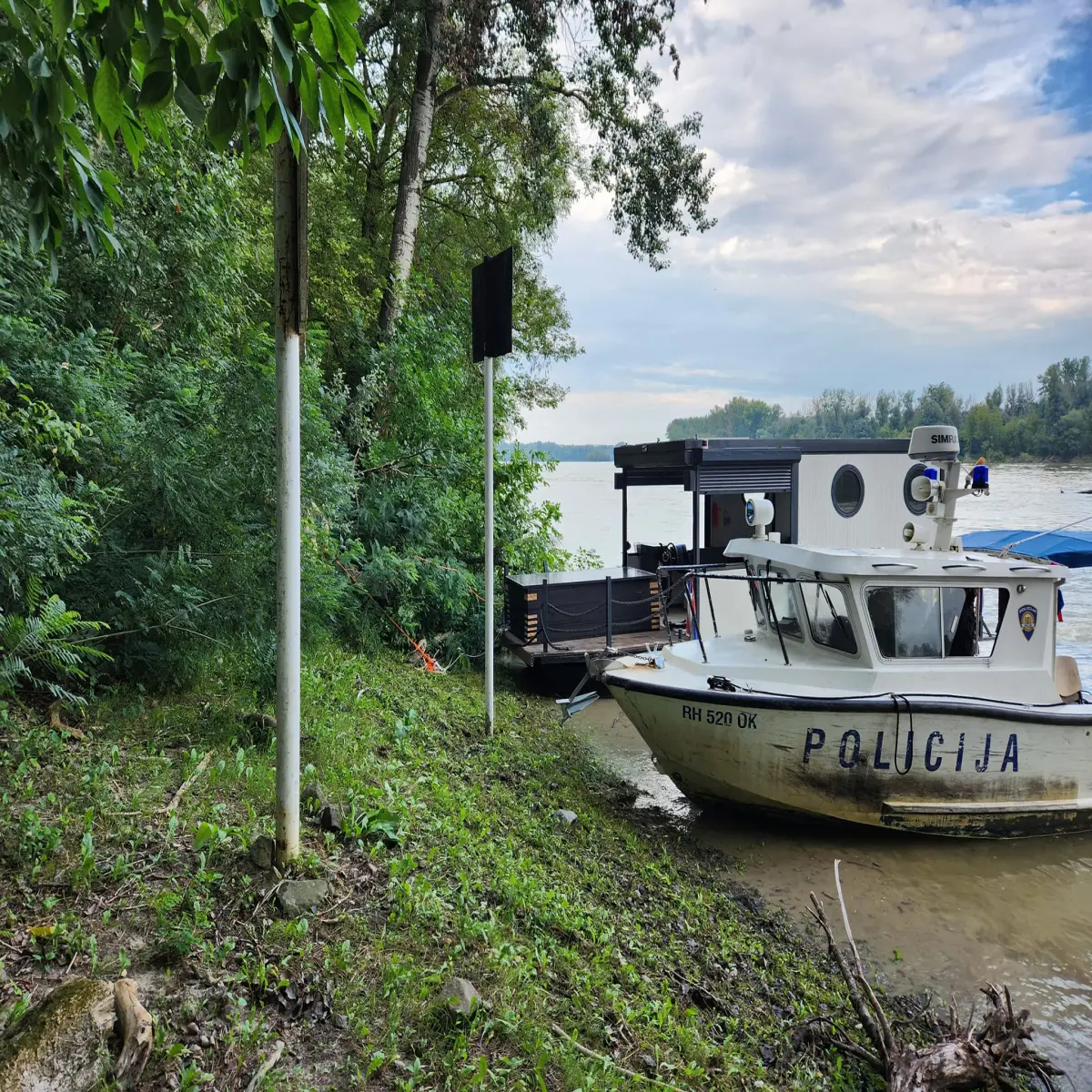
Liberland settlers have been facing some tough challenges lately.
These folks have big dreams and are peaceful, friendly, and law-abiding. They want to create jobs, bring in more services, and invest money in the area. Their goal is to make the entire Osijek-Baranja region thrive. But the welcome they've gotten from the police hasn't been warm or supportive.
A number of problems have come up. And it's important to say that our settlers are taking these problems very seriously, working together with lawyers in Croatia and taking every legal remedy available to them. Still, It's not just one or two small problems. There's a big issue with how the Croatian police are treating them. This isn't what you'd expect in a country where laws are supposed to be followed and respected.
Misdemeanors
Trying to make Liberland a successful and independent place has hit a big legal wall: lots of misdemeanour accusations. These are minor legal troubles, like setting up camp where it's not allowed, digging in a flood plain or supposedly landing a boat in the wrong place, adding up to about 40 cases so far in Liberland.
The main problem is where these issues are happening: Liberland. This area, the focus of all their hard work, isn't supposed to be under Croatian police control. Imagine a Croatian officer trying to give you a parking ticket in Serbia or in some other country where they have no power. That's the kind of situation we're looking at here.
For those who think they've been wrongly accused, there's a way to fight back by challenging these misdemeanour charges. This has been the approach for every case. It's important to remember that according to the law if you challenge a charge, you're considered innocent until the final decision is made. So far, none of the Liberland cases have been resolved, leaving everyone involved stuck in limbo but still officially innocent.
This idea that you're innocent until proven guilty is a necessity if a country wants to call itself respecting the rule of law. The situation with Liberland puts this principle to the test. It shows how much we need a fair legal system that respects where borders are and protects people's rights - how much Liberland itself, which promises all this and more, is necessary if this can happen in a modern EU country. And this is, sadly, not all we have to report here.
Banning Non-EU citizens
The pursuit of establishing and developing Liberland encounters another significant legal obstacle, impacting non-EU citizens through the imposition of entry bans. These bans, applied under Article 56, paragraph 1 of the Law on Foreigners 133/20, cite the absence of valid reasons for staying in Croatia. However, this justification raises questions, especially when those affected present themselves as tourists or visitors without any undisclosed motives.
The basis for this is that nearly "90 misdemeanours" are supposedly associated with activities in Liberland. However, this figure is not only false (way too high) but overlooks a critical aspect of the legal process: the objected misdemeanours are still under the presumption of innocence until a final verdict is reached. Croatian authorities are systematically ignoring this foundational rule of law principle.
Moreover, non-EU individuals found in the vicinity of Liberland are being preemptively judged for intentions to commit misdemeanours, such as starting a fire or illegal camping, even in cases where no evidence, like camping gear, supports such intentions. This approach hints at a "pre-crime" strategy, where predictions of future offences lead to repressive measures even though the person did nothing wrong. This has also not been an occasional oversight, but thus far, no less than twelve non-EU citizens have been treated in this manner.
This predictive punishment model not only strays from the essence of modern legal systems but also challenges the principles of justice and fairness. In a rule-of-law system, actions and intentions must be clearly defined and proven before any legal penalties can be imposed.
We see that the non-EU people are most consistently affected because they are at the mercy of Croatia and have little practical international protection. They are, however, not the only ones to experience “guilty until proven innocent” in Osijek-Baranja.
Banning EU citizens
EU laws aim to create a uniform legal system across its member states, particularly in the treatment of foreign nationals. Among these laws, the Law on EU Citizens (66/19) stands out for providing significant protections and legal options for individuals, including ways to delay or contest decisions affecting their stay or potential entry bans.
Yet, amidst these protections, Article 46, paragraph 7 of this law poses a stringent challenge. This part of the law, which is intended for handling severe criminal threats linked to activities like organised crime, terrorism, or drug trafficking, allows for swift and harsh measures. It essentially flips the standard legal presumption on its head, operating on a "guilty until proven innocent" basis in situations deemed critically dangerous to public safety and security.
Activating this provision isn't straightforward. It requires solid evidence, typically a report from the Security Service about the person of interest. For Liberland, such a report exists but is a state secret, its contents unknown to those without a certain Croatian security clearance. Hence, the report is used in the process, but the accused can’t see its content!
This secrecy has led to the arrest and deportation of four individuals closely connected to Liberland, without them even being able to examine the evidence and know what exactly they did wrong that warranted their extreme sanction - deportation from Croatia for many years without a reasonably fast recourse. This has so far been the fate of four EU citizens: two government officials and two settlement coordinators.
This reliance on Article 46, paragraph 7, and the secrecy surrounding the Security Service report brings up several pressing concerns:
- The application of extremely severe legal measures based on a presumption of guilt
- The use of confidential and secret documents to justify actions against individuals effectively leaving them defenceless and uninformed about the accusations they face
- The abrupt and unexpected nature of arrests and the imposition of long-term bans lasting up to five years
These issues highlight a significant tension between the goals of public safety and the foundational principles of justice and individual rights. The current approach questions the balance of fairness, transparency and the right to contest legal actions.
Exemplary Punishment
Exemplary punishment is a hot topic in the world of law. It's when the punishment for wrongdoing is much harsher than what seems fair for the act itself. The main point of this tough approach isn't just to scold the person who did wrong but to send a strong message to everyone else. While some places allow this kind of harsh punishment, it's usually saved for really bold, dangerous, or harmful actions.
Besides those EU citizens banned, which can certainly be called exemplary punishment, there were other cases where this was clearly applied. For example, one person from Liberland made a rude gesture at a camera by mistake, not knowing it was a police camera. Another person got into a heated talk with a police officer. Both times, these things happened in places where Croatian laws about misdemeanours shouldn't even apply.
The process was started very quickly, in stark contrast to how long our people have to wait to defend themselves from the false accusation described above or to make claims of criminal activity of those who objectively cause them harm.
The person who made the rude gesture was accused of doing something really bad as if they had attacked the very heart of civil society. This seems way too extreme for just a rude hand signal. In both of these cases, the people in charge went for the harshest punishments possible, including banning these individuals from Liberland - 3000 euros, in one case for a middle finger shown at a camera, in another, a verbal argument.
This use of exemplary punishment raises big questions. Is it fair? Is it right to use such severe penalties for small missteps, especially when these actions happen outside of where Croatian laws about misdemeanours should even apply? These harsh reactions seem to be more about making an example out of people than fitting the punishment to what was actually done wrong.
Croatian Forestry
The journey towards establishing Liberland continues to face significant hurdles, not just from legal and bureaucratic challenges but also from unexpected quarters such as the Croatian forestry department (Hrvatske šume). Despite having no rightful jurisdiction in the area, their actions have significantly impacted the settlers and representatives of Liberland. The most notable incidents include the unauthorised removal of a houseboat and the illegal raid and destruction of the initial settlement. These actions go beyond the realm of legal disputes, venturing into what can only be described as acts of unwarranted aggression and appropriation.
Improving Relations
Lately, we have seen that the Croatian police and other organs have not only been more civil and very professional but also no cases of the above have been reported within the last month. This may be significant. We are closely monitoring the situation and, of course, continue pursuing legal actions under Croatian Law for what had happened prior; still, if there is a way to start a completely new page of our relationship, one based on mutual trust and respect, we are wholly committed to making it happen, including giving up on grievances of the past. In Liberland, we always look towards the future and what we can build together in this beautiful land.
Going through all this, the people trying to make Liberland happen are really showing how tough and determined they are. They've run into all kinds of roadblocks, but they're not giving up. Instead of being pushed away by these challenges, they're standing strong. Our people believe in what they're trying to do, and they're sticking with it. We’re all hoping that someday, everyone will see what they're about and respect their efforts and goals. We can then cooperate to make the region a better, more prosperous place.
Source. https://liberland.org/news/550-croatian-government-still-harassing-settlers





