
Introduction
On June 2, Senior Director of Sony Interactive Entertainment Content Communications, Sid Shuman, gave an interview with Head of PlayStation Studios, Hermen Hulst. It's quite a lengthy interview, but what caught my eye was Hulst's response to Shuman's last question regarding the Japanese market.
For context here's Shuman's question:
Another topic that’s been out there recently is Japan. Do you feel that, from the PlayStation Studios perspective, that Japan is still a big focus for development? Or are you maybe considering a shift to a more Western focus for game development?
Here's Hulst's answer:
Oh no, I want to be very clear that Japanese games and Japanese talent remain extremely important to PlayStation Studios and to Sony Interactive Entertainment. Japan and Asia are strongly associated with our legacy: the success of Sony, the PlayStation brand, and many of our iconic PlayStation franchises were actually born in that region.
I remember watching the PlayStation 5 Showcase event from last year. It struck me how much Japanese influence there was in the games that we showed. And what a key part of PlayStation’s DNA that is. It’s one of the things that makes PlayStation different, unique in my mind.
I know the potential from high-quality games from Japan and Asia, and some of the best development talent in the world is found there. They have that history of innovation, of craftsmanship and skill, that pride and team spirit. We very much want to continue those traditions.
Polyphony Digital is such an important part of the PlayStation family, making the best driving simulation games in the world. We’re building Team Asobi in Tokyo, a world-class studio that are developing a franchise for all ages with global appeal. Such a creative team.
And alongside Asobi, we will continue to maintain and build partnerships through our external development team. So I’m really excited about the future of PlayStation games from Japan, and Asia. And I’m grateful for the interest and passionate support for our Japanese teams.
Reading through Hulst's response, I came out very unconvinced of Sony PlayStation's commitment to the Japanese market. In fact, I would even call his statement tone deaf. Considering what happened with Japan Studio and how Sony has treated small 3rd party Japanese developers, Hulst's vow to "maintain and build partnerships" is more lipservice than an actual commitment.
Japan Studio, Sony's Former Unique IP Maker
As I have written back in April 9, Sony closed down Japan Studio. The writing was on the wall when notable leaders like Keiichiro Toyama, creator of the Silent Hill, Siren, and Gravity Rush series, Puppeteer director Gavin Moore, and Teruyuki Toriyama, producer of Bloodborne and the Demon's Souls Remake, left Sony Japan Studio.
While it was never the juggernaut, the studio made some good quality games going back to the PS1 days. There were Legend of Dragoon and Wild Arms, two good JRPGs. During the PS2 era, the studio shifted to a different genre with Ico and Shadow of the Colossus which were very graphically impressive at the time. For the PS3, Japan Studio notably co-developed Demon's Souls with From Software.
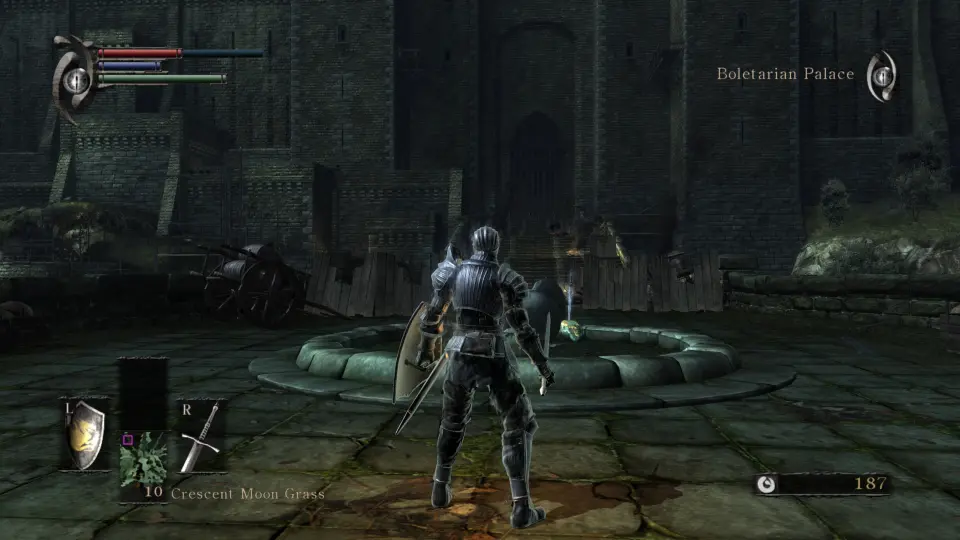
Demon's Souls gained a cult following before From Software hit gold with the spiritual successor, Dark Souls.
However, the studio began to decline in recognition through no fault of its own. Puppeteer was a nice platformer with a cool aesthetic, but it was released right before Sony launched the PS4. Did the game ever get a PS4 remaster? It did not as it was left to die with a declining PS3 userbase. In my opinion, this is almost as bad as how EA handled Titanfall 2's release.
Freedom Wars had the same problem, but worse. The game was exclusive to the Vita, which had an even smaller active userbase. For a game that was exclusive to a handheld flop, it sold pretty well. Personally, I found the game to be a whole lot of fun and scratches that Monster Hunter itch. Unfortunately, like with Puppeteer, it never received the remaster treatment. Honestly, this was baffling since the Monster Hunter genre really came back to the forefront with Monster Hunter World, so I assumed that Sony would want to cash in on that audience with a Freedom Wars remaster. I was wrong.
These two games I mentioned above were victims to being at the wrong place at the wrong time. In regards to Freedom Wars, it was not the game's fault that Sony handled the Vita extremely poorly.
Treating 3rd Party Japanese Developers Poorly
All the way back in January, I talked about how Sony was too censorship-happy against the niche 3rd party Japanese developers. I talked about how one studio, Studio light, who had their game Silverio Trinity delayed because of Sony's strict approval process. Japanese developers had to communicate with PlayStation HQ in English only during US hours which was not only inconvenient, but also disrespectful.
Another unnamed Japanese studio complained about how Sony's policy is very costly which can be very crippling for a small, cash-strapped studio. Some developers like PQube just straight out not release their games on the PlayStation platforms to not deal with the approval process. Others like D3Publisher took the opportunity to make fun of Sony.
Sony used to be strict back in the 2000s. Its strict approval process was widely regarded by the Japanese game development scene as the "Sony Check". During the early 2010s, the company began to ease up on the restrictions. However, starting in 2018, its censorship policy began to rear its ugly head again much to the frustration of Japanese developers and consumers of Japanese games.
Recent examples of the "Sony Check" being referenced can be found at 7:58.
Citing Niche Studios =/= Commitment to Japanese Games
In Hulst's answer, he mentioned two of Sony's first party studios based in Japan to prove the company's commitment: Polyphony Digital and Team Asobi. However, this is completely tone deaf as both of these studios fill very specialized niches in the video game market.
Polyphony Digital is known for the racing simulator series, Gran Turismo. Other than Omega Boost, a game released back in 1999, the studio has only made Gran Turismo games. The series has sold extremely well from generation-to-generation, but even then, the racing simulator genre only makes up a small fraction of the overall video game market. In addition, there is more competition currently with series such as Forza Motorsport, Project CARS, and Assetto Corsa available.
Team Asobi is best known for making Astro Bot Rescue Mission and Astro's Playroom. The former is a PlayStation VR game and the latter is a free demo on the PS5 to show off the DualSense's haptics. As you can see, both games are extremely niche and focus on very specialized experiences. As of January 2020, the PSVR sold 5 million units, which is a very small userbase. In addition, not everyone owns a PS5 and the chip shortages are still bottle-necking the supply chain.
Yes, Polyphony Digital and Team Asobi are Japanese studios and therefore, their games are technically Japanese games by virtue of origin. However, I highly doubt when people hear "Japanese games", they think about racing simulators, VR games, and haptics tech demos. I would imagine they think more along the lines of anime artstyles, RPGs, and visual novels.
Closing Thoughts
Overall, Hermen Hulst's statement is very disconnected from the reality. If Japanese games and talent are truly important to PlayStation, then we wouldn't be seeing Japan Studio hemorrhaging notable creators. Small 3rd party Japanese developers would not be treated like 2nd class citizens and Sony's existent Japanese studios would be branching out beyond niche genres.
True commitment would entail exploring a wide variety of genres, not screwing up release windows (Puppeteer) or leaving games to die on a flop platform (Freedom Wars), and treating Japanese studios with respect unlike with the "Sony Check". Unfortunately, I do not see any signs of this from Hulst's statement and I don't expect Sony PlayStation to actually walk-the-walk anytime soon.






