
It is safe to say at this point that the Securities and Exchange Commission has been dubbed the bully of the Cryptocurrency society. With a whopping 697 suits filed in 2021, it is no wonder they have caught a bad reputation amidst all of the suits filed and the drama surrounding the Ripple suit they were bound to get a bad reputation at some point. I have my own personal views on the SEC which I will keep separate from this post.
The focal point of this post is not to berate the SEC or offer projections on the suit between themselves and Ripple. What I am here to talk about today is purely factual. I will let you guess which speech I am going to be presenting these facts from.......

If you guessed the speech administered by the Securities Exchange Commission then Director of the Division of Finance, William Hinman in 2018 at the Yahoo Finance All Markets Summit titled, "Digital Asset Transactions: When Howey Met Gary (Plastic)" then you guessed correctly! This should come as no surprise as this particular lawsuit has gained a lot of notoriety since it first began in December 2020 due to the strong opinions associated with the suit and most notably the reluctance of the SEC to release emails between Hinman and his attorney, emails of which pertain directly to the 2018 speech. The reluctance to release the emails gained public attention after multiple court orders to release the emails went ignored. The emails have been released to date; I have not personally read them but most feel that the SEC had to be hiding something because if not why go to such lengths to keep the emails from the public eye unless there was something within them that was worth hiding.
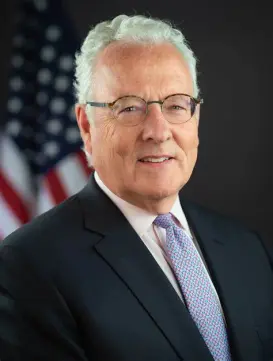
Many feel that the SEC has met their match in challenging Ripple and that the lawsuit is unjust and that the claims being raised have no factual basis nor truth in the accusations. However, as I stated this post is not about my opinions of myself or others for that matter, this is an opportunity for particular sections from the Yahoo Summits Speech in particular to be reviewed and compared against facts that we know to be true. While I'm sure many would agree that Bill Hinman doesn't need any help contradicting himself or digging the SEC into a deeper hole as more details emerge.
Even though he has done a great job tarnishing his reputation and potentially sabotaging the SEC's lawsuit against Ripple I am going to point out all of the times he has contradicted himself and the SEC's claims against Ripple. Sit back and enjoy, but bear with me as there is a lot of Crypto jargon that I will do my best to explain everything in a readable manner that anyone would be able to understand. Do your best to keep up and I will do my best to make this post as readable as possible.

William Hinman Quote:
“Can a digital asset that was originally offered in a security offering ever be later sold in a manner that does not constitute an offering of a security?”
“In cases where the digital asset represents a set of rights that gives the holder a financial interest in an enterprise, the answer is likely “no.” In these cases, calling the transaction an initial coin offering, or “ICO,” or a sale of a “token,” will not take it out of the purview of the U.S. securities laws.”
There are a few terms in this quote that I want to define and explain before doing a comparison of this statement to Ripple.
Financial Interest in an Enterprise:
An investor with an aggregate ownership interest of ten percent or more in the applicant applying for a license.
Aggregate Ownership:
A unique form of integrated ownership that pays homage to shareholders as individuals and maintains focus on the total ownership of each individual as opposed to multiplying percentages down a line of ownerships. The calculation is interpreted as a percentage. This percentage is determined by a simple equation.
(Divide the # aggregate number of shares within the Common stock of the Corporation of which the person holds or its affiliates by the aggregate number of shares that are pending.
Integrated Ownership:
An umbrella term that describes the summed percentage of ownership by an individual or entities of one another. Determination is made by exploring all the complex paths to the individual entity, multiplying percentages between every level, and finally adding up the resulting figures for all paths.
William Hinman Quote:
"Let me share what I believe may be most exciting about distributed ledger technology – that is, the potential to share information, transfer value, and record transactions in a decentralized digital environment."
While this quote does not necessarily relate to the SEC VS. RIPPLE suit, it once again proves Hinman's inconsistency and why his word is hard to trust. Let's take a deeper look at this quote, shall we?
Hinman states that the idea of distributed ledger technology excites him.
For those that don't know what distributed ledger technology continue reading!
Distributed Ledger Technology: Distributed Ledger Technology or "DLT" is the concurrence of copied, shared, synchronized, and digitized data that is dispersed across a large geographic area spanning multiple sites, countries, or establishments.
What is DLT in short? Simply put it is the blockchain. Hinman is referencing the ability to share information, transfer value, and keep an ongoing record of any and all transactions via the Blockchain. The reason that I included this particular quote is that all of the qualities listed above XRP possess.
Share information: XRP is well known for being a secure and efficient place to share transactional information.
Transfer Value: Prior to the SEC lawsuit users could transfer/ buy/sell and trade XRP via the Ripple network.
Record Transactions: XRP is notably recognized for its affordability and instantaneous transactions all while providing security for its users offering a payment system/network that does not require mining to authenticate and make note of new transactions but rather the XRP Ledger requires trusted validator nodes to reach a concurrence quickly all while keeping the transaction ledger up to speed recording roughly every 3 to 5 seconds. These trusted nodes are collectively called the Unique Node List or UNL.
Decentralization:
Ripple is a decentralized exchange according to David Schwartz, the chief technical officer (CTO) at Ripple stated that "XRP Ledger by design is also— if not more so — fundamentally decentralized than Bitcoin and Ethereum."
While Ripple Foundation (the company that stands behind Ripple and is primarily responsible for the creation of the token XRP) are adamant that XRP is completely decentralized and that while they admit to owning a majority of the XRP tokens that exist they have not swayed from claims that they are disconnected from the XRP Token and that owning a lot of something does not mean that you have control over that something. Schwartz goes on to make the comparison of Exxon owning plenty of oil. In the same way, Ripple Foundation is the source that delivers XRP to financial engines. There are currently 150 nodes on our ledger and Ripple controls operate only seven of those nodes.
Despite these adamant claims from the Ripple Foundation members, skeptics are still critical of Ripple Foundation and the XRP Ledger alike. In an effort to plead its case, Ripple has distanced itself from XRP and its creation. This is backed by statements from figures so important in the Ripple Foundation team as the Chief Executive Officer CEO Brad Garlinghouse insists that the XRP Ledger came to be before the Ripple Foundation formed.
William Hinman Quote:
"Funds are raised with the expectation that the promoters will build their system and investors can earn a return on the instrument – usually by selling their tokens in the secondary market once the promoters create something of value with the proceeds and the value of the digital enterprise increases."
This excerpt is very prominent to me because although the purpose of this post isn't to go over the lawsuit at hand, the lawsuit plays a key role in this particular statement. I say this because of the motion filed by the attorney representing Ripple in the suit, John Deaton. The motion was filed on behalf of XRP token holders to intercede in the suit in favor of Ripple. The filing cites an astonishing 12,600 investors that are in communication with Deaton in hopes of joining the intervention motion that was filed.
XRP holders allege that the SEC's lawsuit alleging that XRP Tokens were illegally sold as investment contracts, on behalf of XRP holders, the motion filed defines the intervening defendants as:
“Investors, holders, developers, content providers, and small businesses that utilize the digital asset XRP and the XRP Ledger.”
The memorandum is stated citing:
"The SEC has put the property of XRP Holders at the heart of this case and positions its interest at the complete opposite end of the spectrum from that of XRP Holders."
XRP supporters state that the Securities and Exchange Commission, despite the Commission's purpose to protect consumers on several different levels,
"Does not represent their interests."
Stating per submitted documentation:
"Clearly, the SEC is either unaware of XRP Holders’ use of XRP or they are choosing to ignore such use for ligation reasons."
The information cited above is in response to the Securities and Exchange Commission's claims that because XRP tokens were allegedly sold as investment contracts businesses have failed. Contrary to this accusation the lawsuit itself has caused many institutions that were previously working with and in favor of Ripple and the XRP token to cut ties for fear of legal repercussions.
This is relevant to the quote from the Yahoo Convention because XRP holders are personally disagreeing with the claim that they rely on XRP for financial growth for them as well as the XRP token. Holders are making it very clear that they were fully aware of the fact that they could not rely on XRP for any financial purposes.
William Hinman Quote:
"Calling the transaction an initial coin offering, or “ICO,” or a sale of a “token,” will not take it out of the purview of U.S. securities laws."
XRP did not function as the result of the Initial Coin Offering (ICO), XRP tokens are minted strictly by Ripple.
- Definition: An initial coin offering (ICO) is a crowdfunding event to raise money for a new cryptocurrency asset, company, or venture.
William Hinman Quote:
"What about cases where there is no longer any central enterprise being invested in or where the digital asset is sold only to be used to purchase a good or service available through the network on which it was created? I believe in these cases the answer is a qualified “yes.”
The above excerpt describes exactly what the XRP Tokens function is, which would mean that there is a good chance that it is not a security.
Below are factors that Hinman mentions in his speech to reference when trying to identify a security token or investment contract:
- Is there a person or group that has sponsored or promoted the creation and sale of the digital asset, the efforts of whom play a significant role in the development and maintenance of the asset and its potential increase in value?NO. The development and sale were executed by Ripple.
- Has this person or group retained a stake or other interest in the digital asset such that it would be motivated to expend efforts to cause an increase in value in the digital asset? Would purchasers reasonably believe such efforts will be undertaken and may result in a return on their investment in the digital asset? NO. Investors have already stated that they were not reliant upon XRP.
- Has the promoter raised a number of funds in excess of what may be needed to establish a functional network, and, if so, has it indicated how those funds may be used to support the value of the tokens or to increase the value of the enterprise? Does the promoter continue to expend funds from proceeds or operations to enhance the functionality and/or value of the system within which the tokens operate? NO.
- Are purchasers “investing,” that are seeking a return? In that regard, is the instrument marketed and sold to the general public instead of to potential users of the network for a price that reasonably correlates with the market value of the good or service in the network? NO.
- Does the application of the Securities Act protections make sense? Is there a person or entity others are relying on that plays a key role in the profit-making of the enterprise such that disclosure of their activities and plans would be important to investors? Do informational asymmetries exist between the promoters and potential purchasers/investors in the digital asset? NO. XRP's function is to be used for making payments quickly and efficiently while operating on a secure network.
- Do persons or entities other than the promoter exercise governance rights or meaningful influence? NO. XRP is decentralized (See above for more information on the XRP's decentralization status)
Below is a disclaimer made by William Hinman in regard to the next list I will be referencing:
"This list is meant to prompt thinking by promoters and their counsel and start the dialogue with the staff – it is not meant to be a list of all necessary factors in a legal analysis."
- Is token creation commensurate with meeting the needs of users or, rather, with feeding speculation? What is Speculation in Cryptocurrency: "Speculation is the act of allocating funds to financial transactions that are considered to be substantially risky." While the Cryptocurrency market is volatile and therefore does come with risk the intent of the token creation is to aid in meeting the needs of its consumers.
- Are independent actors setting the price or is the promoter supporting the secondary market for the asset or otherwise influencing trading? Because XRP tokens were created by RIPPLE the trading value does rely on largely whether or not more XRP tokens are created. Which would cause the price to decrease as the rarity of the token would decrease.
- Is it clear that the primary motivation for purchasing the digital asset is for personal use or consumption, as compared to investment? Have purchasers made representations as to their consumptive, as opposed to their investment, intent? Are the tokens available in increments that correlate with a consumptive versus investment intent? YES.
- Are the tokens distributed in ways to meet users’ needs? For example, can the tokens be held or transferred only in amounts that correspond to a purchaser’s expected use? Are there built-in incentives that compel using the tokens promptly on the network, such as having the tokens degrade in value over time, or can the tokens be held for extended periods for investment? Tokens can be held for investment purposes and there are no built-in incentives for using the tokens on the network.
- Is the asset marketed and distributed to potential users or the general public? The asset marketed and distributed is meant for the general public.
- Are the assets dispersed across a diverse user base or concentrated in the hands of a few that can exert influence over the application? Assets are dispersed across a diverse user base.
- Is the application fully functioning or in the early stages of development? The application is fully functioning.
There you have it, my full analysis of the 2018 Hinman speech! I have very high hopes for the victory of RIPPLE in this suit and in turn the future success of investors. If I found that many rifts in the speech alone, I can only imagine what the Securities and Exchange Commission was hiding behind in regard to releasing the emails that were sent regarding this speech. I have been unable to find the full report detailing the full copies of the emails, but I have found some. I will provide a link to the emails as well as the Hinman speech below!

For those that are interested in reading the entire William Hinman speech from 2018 CLICK HERE!
To view the emails posted on the Securities and Exchange Commission's website CLICK HERE






