Crypto means more than technology; it is an epitome of social class. While one end speaks luxury and exclusivity, the other renders survival and opportunities. Both travel the same blockchain roadway; the only thing is that they travel in opposite lanes and ever so rarely cross each other.
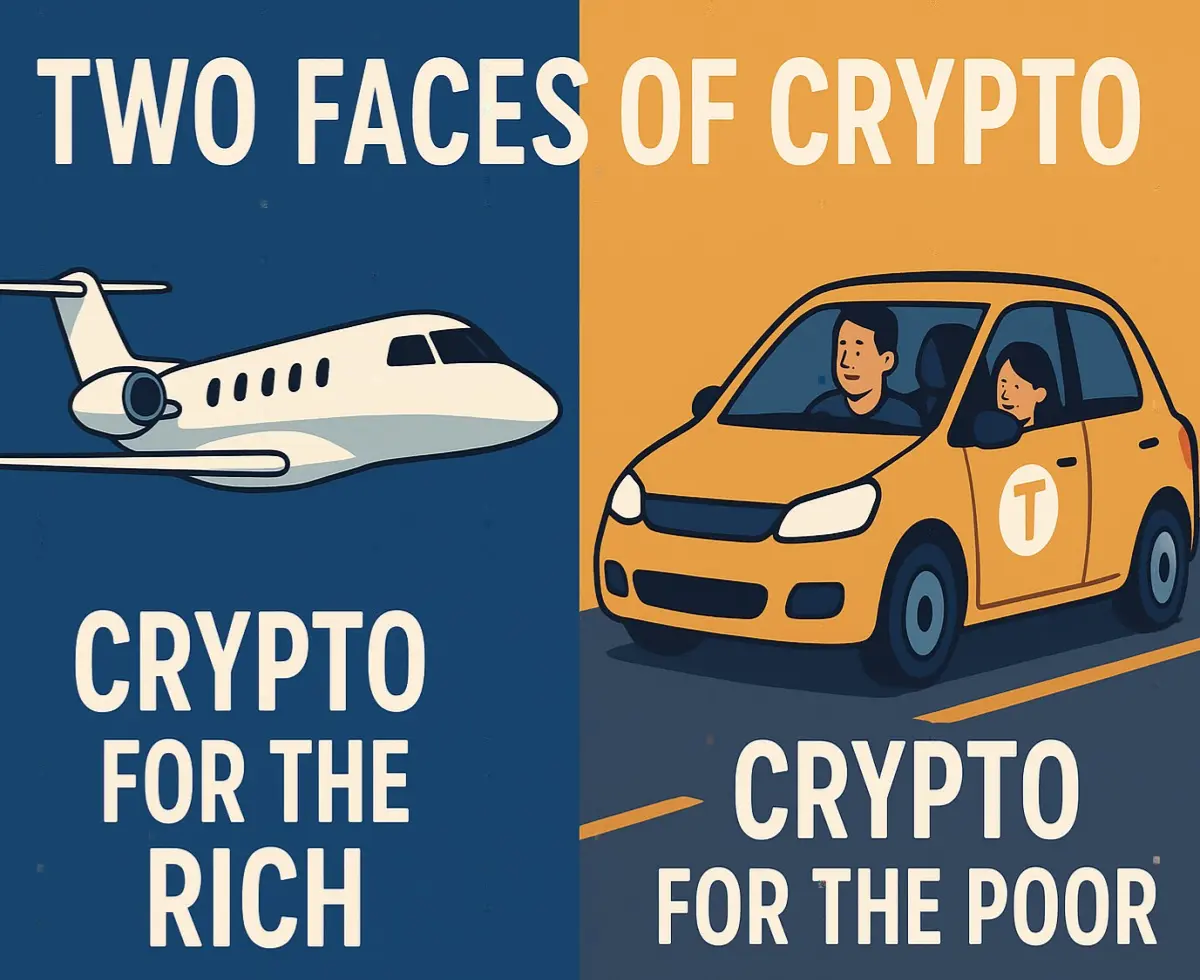
On one end lies the luxury version of crypto for the rich. Think of it as the private jet flying across the financial skies. It is luxurious, choosy-who gets on depends on how many dollars are in their pockets. Tokens on exclusive networks-like the Ethereum mainnet-completely out of reach NFT's on Solana-or DeFi projects that charge thousands for entry caveats: these are far from the mundane playgrounds where even small change becomes essential. Their function is to sustain fortunes, wealth, and the prestige of sophistication. The Hermès of digital finance, crypto, is no longer a matter of utility-the status it confers becomes paramount. The message is loud and clear: an entrance for modern money's members.
At the other end is crypto for the needy. Here also the metaphor turns into a digital minibus-well crowded; it is alway within reach of everyone. Here lie those who have only a second phone and a prepaid data package, yet wish to join the ride. Cheap blockchains with almost zero fees-like BCH, Tron, BSC or layer 2-solutions form the backbone. The idea is not using them to show off portfolios but to handle daily needs: sending remittances, hunting airdrops, earning through play-to-earn games, or tipping creators. The economics of the whole thing are simple-people's money-borderless, permissionless, and ready for every pocket.
One may consider these two models as potential enemies, but they are cohabitees of the same ecosystem. The first speaks of a form of status along with accumulation, whereas the latter speaks of access and survival. Private jet and minibus are both vehicles, but passengers and destinations may differ. At another level, crypto remains a shared highway abreast of which rich and poor carve their journeys.





