
Hey folks, if you followed me along in my last article on #maBEETS that I published last month, you would have known about the project that the BeethovenX team was launching that involved Relics — the ByteMason-smart-contract designed composable NFTs, which were meant as a tool to attract and hold liquidity on the Beethoven platform.
In this article, we’re going to do a breakdown whether or not the Relics have been successful, and whether or not they might be worth it going forward.
But first, if you have no clue what Relics are, let’s do a quick recap…
Relics — the composable NFT
Kick-started earlier this month, the BeethovenX team launched the ability for users to mint composable NFT’s called Relics, which you could mint once depositing your $BEETS/$WFTM into a balancer-structured pool, receiving $maBEETS via your Relic NFT in return:

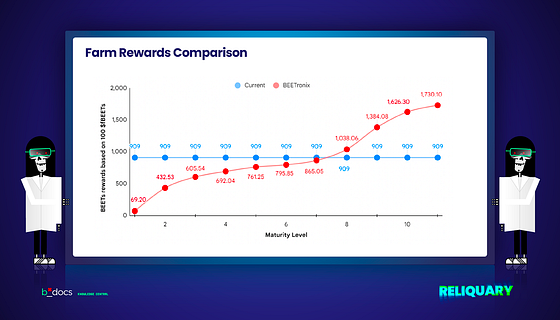
On the surface level, you may think that these, like any other financial NFTs aren’t anything new for there are lots of different platforms that have NFTs that represent different tokens for LP positions. But what really sets Relics apart are through their “BEETronix” maturity rates which increase greatly over time, incentivizing people to mint (and to keep holding) their NFT for the full 11–12 week life cycle:
 https://docs.beets.fi/beets/mabeets
As you can see from the graphic above, the BEETronix curve offers longer-term Relic holders much greater incentives for holding their positions than do their normal farm counterparts.
Additionally as I mentioned before, the Relics are composable NFTs which allow the owner to do one of three things:
- Add more tokens to your LP/NFT/Relic position
- Split and/or Merge multiple Relic balances with one another
- Shift balances from one Relic to another
Due to all these composability features, I suspect that moving forward we’ll begin to see more and more people try to gamify the incentives for the relics, as each of these actions can impact that maturity date in a positive or negative manner. If you’re curious about the exact effect that one of these actions could have, I highly recommend that you check out Franzns’ math as he breaks down each scenario.
Great, so now that we know what Relics are, how successful are they?
Ability to Attract Liquidity
Well first let’s talk about TVL — the main driving force for why Relics were introduced into the first place. By giving users incentives to hold their $BEETS on relics, the goal was to attract liquidity to BeethovenX and to keep it there, thus solving the problem of rotater capital where people are just jumping in and out of protocols looking for the best yield.
On Fantom, prior to the inception of $maBEETS and Relics, the TVL on BeethovenX was sitting a a little under $45 million. To date, nearly 3 weeks after the Relics inception, the TVL on Beethoven has increased by roughly 6%, sitting at close to $48 million:
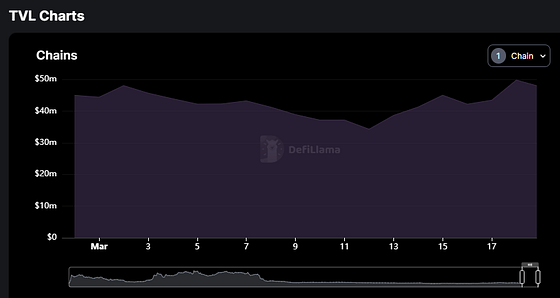
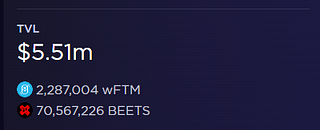
Given the unprecedented amount of stablecoin FUD that occurred during the weekend of the 12th, I find that the 6% increase is impressive and I assume that a significant proportion (if not all) of the 6% increase is most likely due to the liquidity that the Relics have been able to attract. To date, there is a total of $5.51 million in TVL from the Relics alone:
Perhaps maybe not a fair comparison, but if we consider Liquity’s launch of $LUSD Chicken Bonds (a principal protected dynamic NFT), from October 1st to 19th they were able to amass around $8 million in Chicken Bonds but during that same period of time their total TVL actually decreased by around $12 million, going from about $425 to around $419 million:
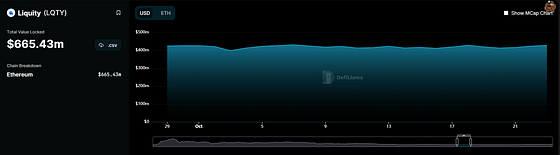
Now almost 6 months since their inception, Chicken Bonds currently make up a total of more than $95 million $LUSD deposited, which is approximately 15% of the protocol’s TVL. By comparison, Beethoven’s Relics have amassed more than 10% of Beethoven’s TVL on Fantom and they’re less than 3 weeks in.
A final comparison to Chicken Bonds that I’ll make is that within the first 3 weeks, a total of 607 Chicken Bonds were minted, whereas the total of Relics minted were 2,102:
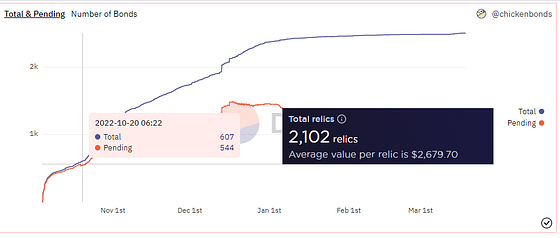
Once again, I might be comparing apples to oranges here, but it certainly is an exciting start for the Relics considering they’ve been able to gain so much traction in a short period of time.
In it for the Finale
Besides just attracting liquidity, one of the purposes of the Relics was to maintain it by adding incentives via the BEETronix curve maturity rates.
If you notice the curve above, the maturity rates accelerate the fastest in the first few weeks which incentivizes people to open position, and also around the 9th week which incentivizes people to hold them for the longer term.
It’s perhaps to soon to tell, but cross-referencing the Relic’s historical TVL by the number of $maBEETS per Relic level, it appears that most (if not all) of the 1st-week minters have not yet exited their positions:
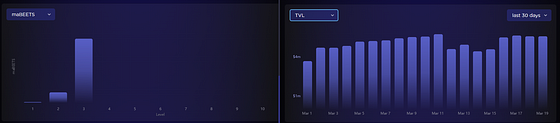
By looking at the graphs above, the TVL from March 7th to 19th roughly increased by $1 million in TVL, which probably accounts for the Relics that were created after March 7th. Therefore given the data, I think that we can deduce that so far, the incentives are working at keeping the TVL in Beethoven.
Other Things of Note
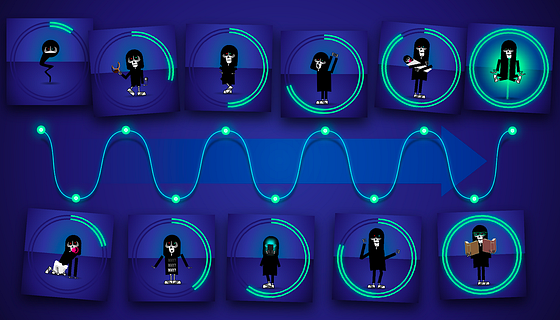
Relics must be levelled up manually every week (and it behooves you to do so): With every week that passes by, your NFT gains more maturity therefore earning more $BEETS. Relics will be be leveled automatically after 3 days past the levelling up date, but keep in mind that without leveling up, you won’t earn at the higher maturity rate. This should be done until you get to level 11:
 https://docs.beets.fi/beets/mabeets
Rewards accrued by your Relic are not auto-compounded, but they can be claimed at anytime without changing your level and/or maturity rate: Once claimed, you do have the option of re-adding to your original Relic position, but just know that this may negatively impact your overall maturity rate so personally I think it makes more sense to option a new Relic instead.
It pays to vote: As of this past week, maturity adjusted voting was introduced, giving more voting power to those who have Relics in later stages of maturity.
https://beethovenxio.medium.com/a-maturity-adjusted-voting-update-851ef14fb835
Not sure which LP to vote for? Check out Votehoven to get a breakdown of where the largest incentives are.
Conclusion
Beethoven is truly exploring some new ground with their Relics, and so far it seems like its taken off with a pretty good start. Given the success of Liquity’s Chicken Bonds, in my opinion the potential ceiling for profitability is much higher for Beethoven’s Relics because you can claim rewards without exiting your positions, and because incentives grow even greater as time moves on. Not only that, it also doesn’t hurt $BEETS’ price action when people buying $BEETS are holding them in their Relics for longer periods of time.
Have you already minted your Relic(s) and started trying to gamify them? I’d love to hear about it in the comments below.
And as always, thanks for taking the time to read this and be sure to follow me on twitter (https://twitter.com/CryptosWith) to get all my latest updates. Also, looking for a gift for your Crypto-loving/hating friend? Give them a REKT journal to cheer them up!
Disclaimer: And as a final reminder, this is not financial advice and this is for educational and entertainment purposes only. Please as always, do your own research and find what investments are best for you. Cheers everyone!





