
Reusable infrastructure would help space technology reach maturity.
To get technology like today's Starlink internet systems and the Iridium phone network, we’d need other pieces of technology to help leverage that. For instance, we’d need reliable radiocommunication and telemetry systems as well as a robust failsafe hardware design to ensure that we wouldn’t have to deal with ongoing failures in the harsh orbital environment. One of the biggest hurdles to overcome though, would be the development of launch technology that was both reliable and affordable. In fact, this was so relevant, that even today companies like SpaceX aim to bring sustainability into their designs, hoping to make launches far more affordable. It’s fair to say though, that Space Shuttle designs contributed much to this technology.
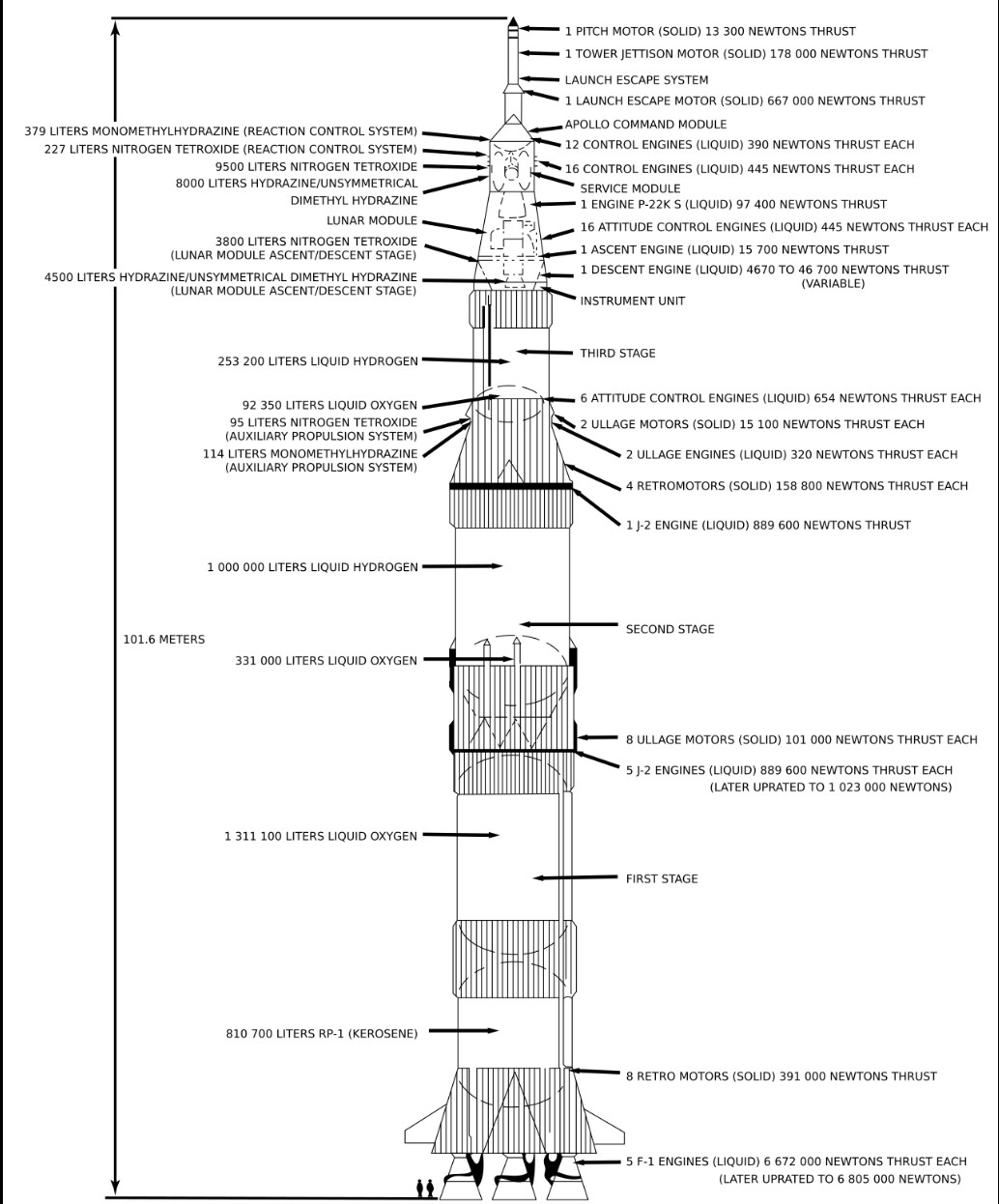 The Saturn-V would take man to the moon via the Apollo Program. However, the Saturn was expensive, and not re-usable. Source: Wikipedia.
Early Developments
Most people understand now how relevant the space race would end up becoming in the post-war era. And while it wasn’t just focusing on exploration, communication and development, the whole battle for satellites and the race to the moon would become pivotal parts of cold-war era culture.
When Sputnik raced overhead the United States in 1957 it wasn’t that tiny transmitting beacon that intimidated some people. It was the realisation that the USSR was able to do it first. And that got people thinking of other things flying overhead. Namely, the soon to arrive, Intercontinental Ballistic missiles like the UGM-27 Polaris.
While the United States would eventually win the race to the moon, the battle for space dominance would continue into the 1980s, firstly with the concept of the Strategic Defensive Initiative (Starwars) and later with the development of the ASM-135 ASAT anti-satellite weapon.
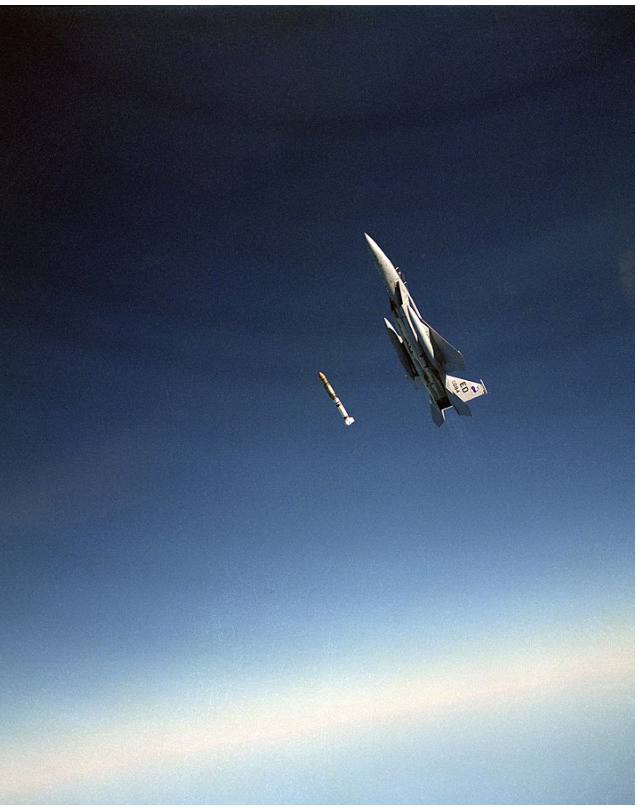 The ASM-135 ASAT was launched by a modified F-15 Eagle and could attack targets up to 400mi Altitude. Source: Wikipedia.
An American ASAT capability was realised when the defunct SOLWIND P-78 satellite was destroyed with the new design, ushering in a new era in the realities around warfare in space.
Because of all this, both the US and the USSR realised early that to leverage space reliably, a new design ethos would need to be developed. Rather than simply leave residual launch components in orbit as waste, both sides would look to develop reusable and modular launch systems that could be overhauled between uses. The battle was on.
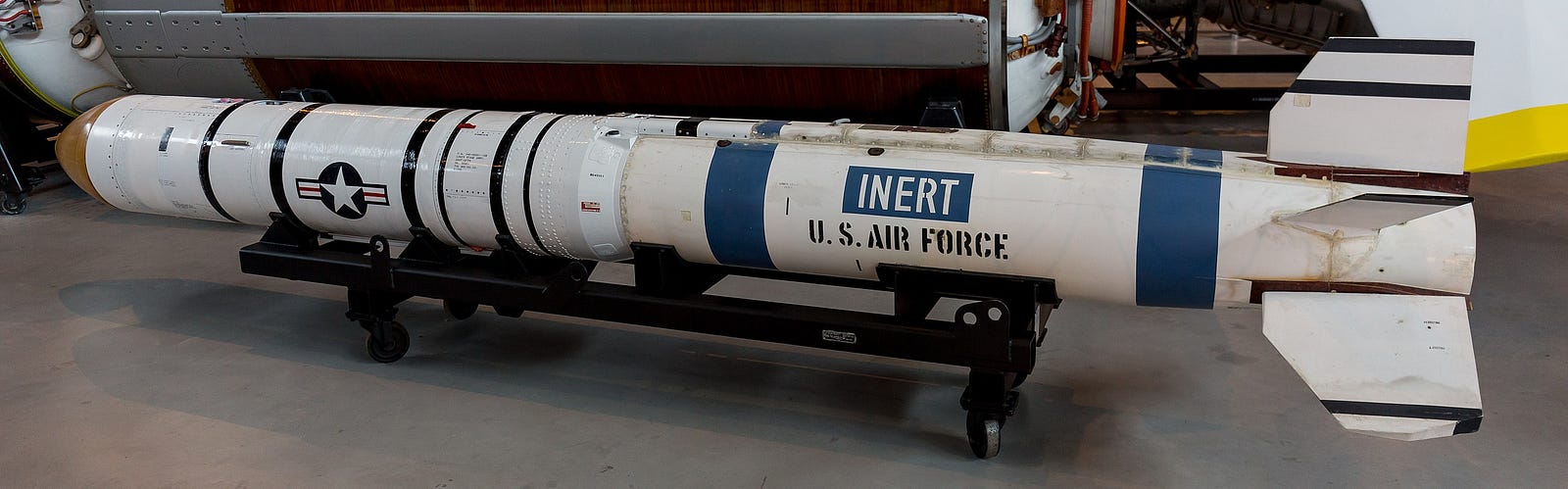 The ASM-135 was a large weapon, with around 15 built. It was retired in the late 1980s soon after becoming operational. Source: Wikipedia.
The Space Shuttle
History shows us that it would be the Americans that would best leverage the design, with their space shuttle concept reaching production and providing much in the way of benefits to NASA’s space program. Due to its large payload bay and ability to re-use its Solid Rock Boosters, the shuttle provided the first steps towards proving the ability of modular systems to contribute to modern space programs.
While it would struggle to meet some project and performance goals in the long term, it still was revolutionary in the way that it changed spaceflight and it had a few unique features because of this.
Its large payload bay could be used to both launch and recover satellites in orbit giving NASA the option of modifying or recovering a bird rather than simply abandoning it in space.
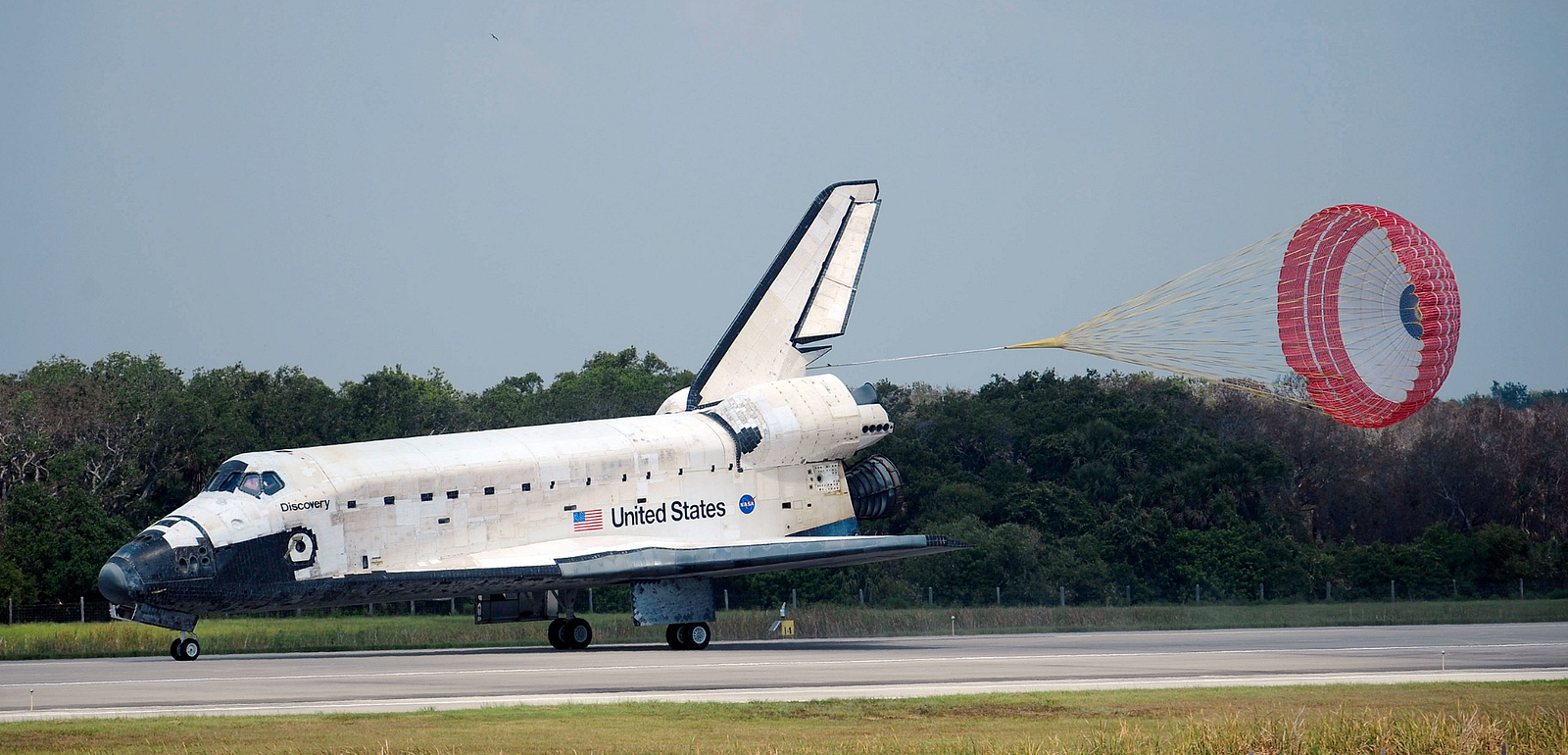 Flies like a spaceship, sinks like a brick. The Shuttle was renowned for its decidedly ordinary glide characteristics. Source: Wikipedia.
One of the most interesting features though was how it was recovered. Rather than simply reentering under parachute control like earlier designs, the shuttle design would incorporate small, stubby wings. This allowed the orbiter to glide back to Earth like an aircraft, being recovered at sites like Groom Lake.
Once recovered, the orbiter would be flown back to NASA’s overhaul facility where it would be prepared for launch. So how do you transport a spacecraft that isn’t designed for atmospheric flight? You put it on top of a custom-designed 747 aircraft of course.
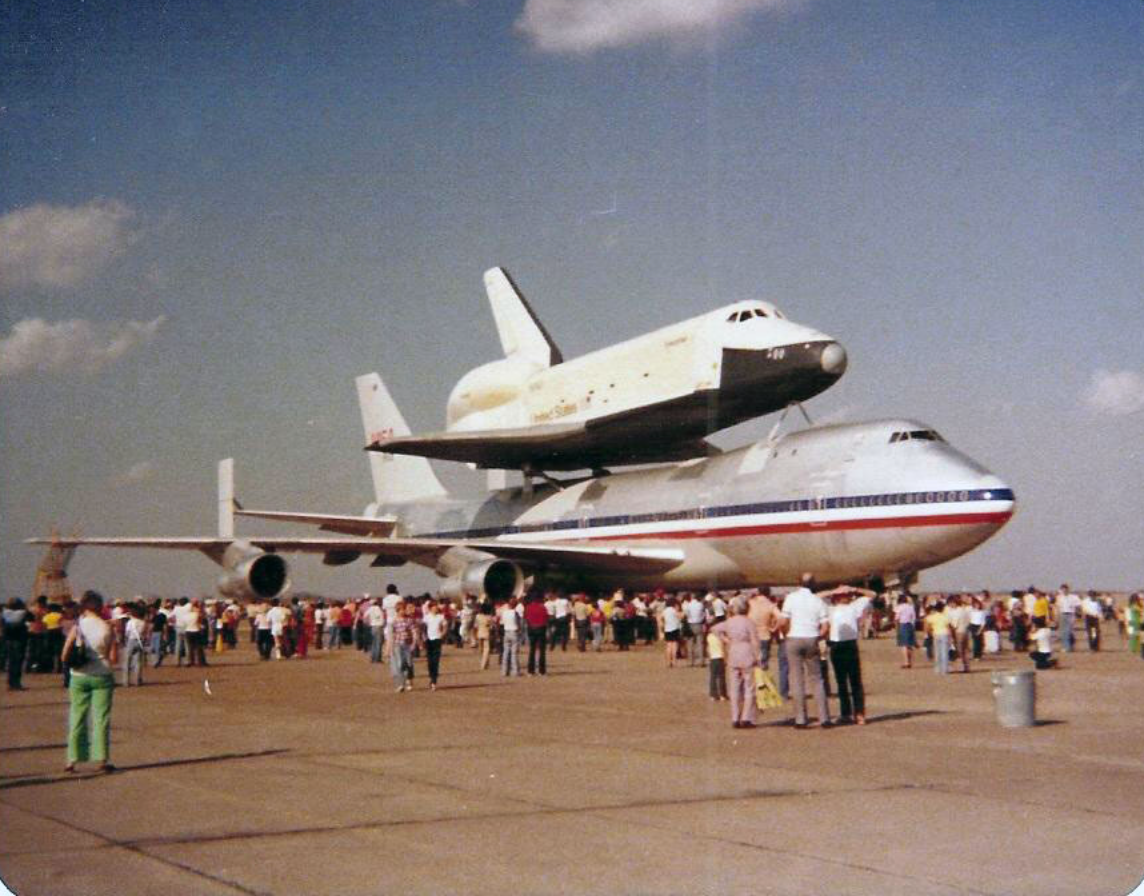 The Shuttle transport system would rely on affixing the shuttle to a modified, Boeing 747–200 platform. This one is still wearing it’s American Airlines livery. Source: Wikipedia.
The Buran
While it never reached operational design a special mention probably should go to the Soviet-designed Buran. With the collapse of the soviet union leading to the overall collapse of the soviet space program, the Buran was a natural casualty of these events. It is worth looking at though as it provides some additional content.
With cold-war espionage between states at near legendary levels, it’s fair to say that Buran’s design may well have been introduced as a result of information gained from the US shuttle program. However, when looking at some of the requirements of a reusable spacecraft, many of these overlap leading to designs that will inevitably look similar to their counterparts.
It’s fair to say that for economical spaceflight, being able to discard & recycle your boosters and then glide to a safe landing means that wings and SRB boosters all become essential parts of the design. Given that much was lost to the history books at the end of the Cold War, it’s probably fair to say that we’ll never fully grasp just how much was coincidence as opposed to espionage.
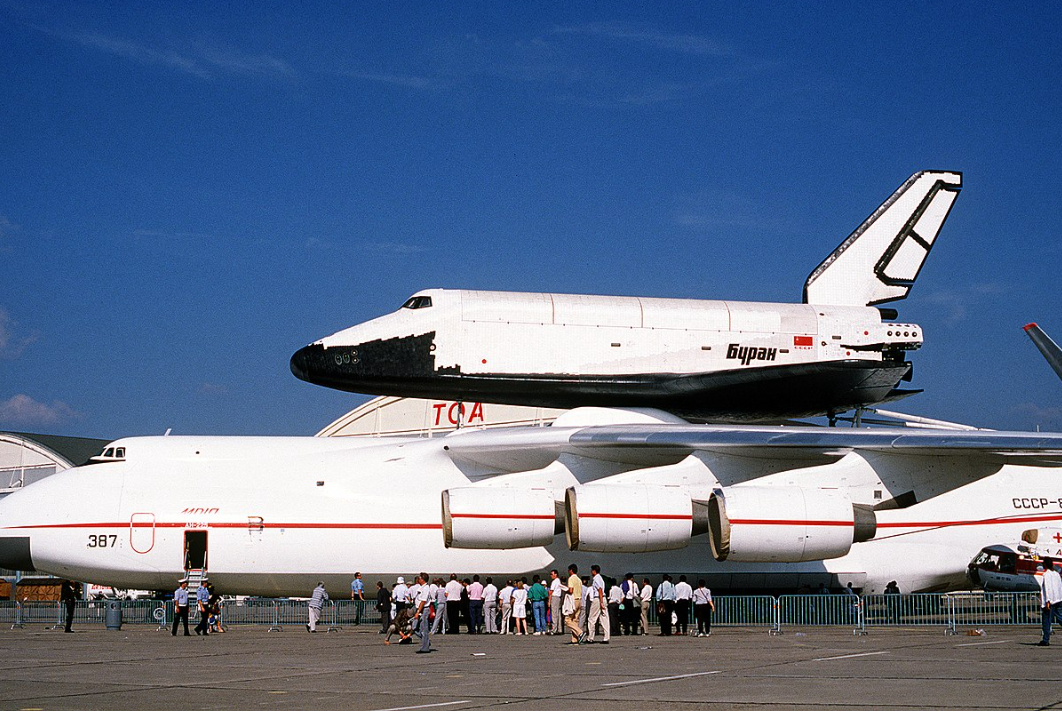 The Buran would rely on many similar concepts to the space-shuttle. Source: Wikipedia.
The Buran programme would be wrapped up in 1993 after performing just one test flight in 1988. The prototypes would survive nearly two decades in storage before eventually being destroyed after their storage hangers collapsed in 2002.
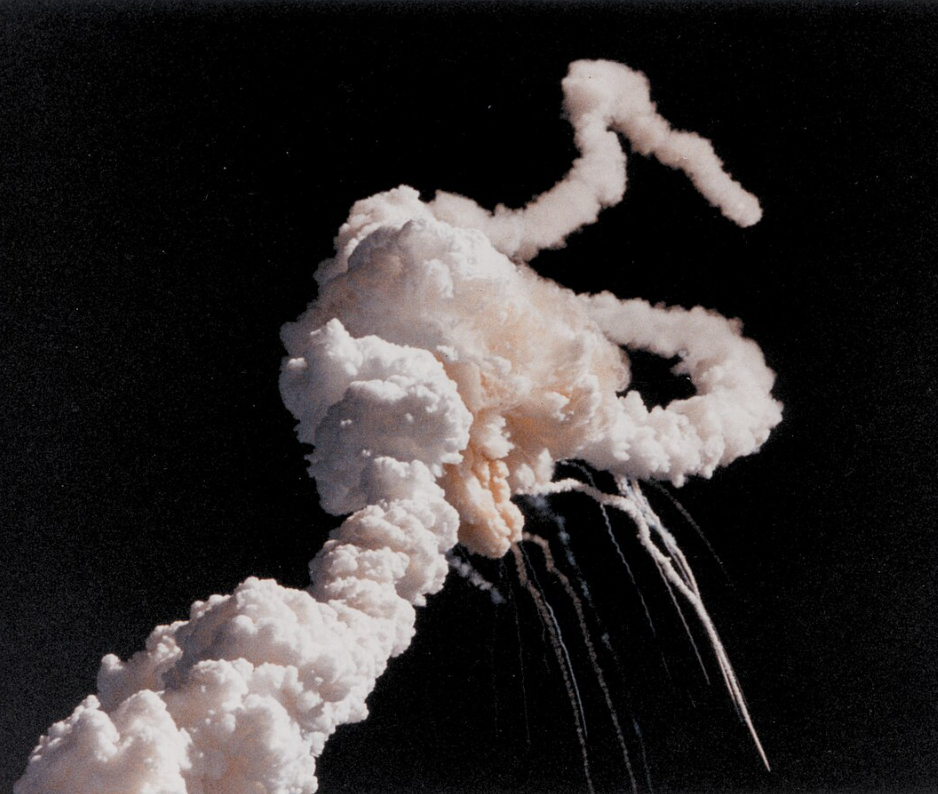 Two variants of the shuttle would be lost during its time in service. Challenger and Columbia would both fail to return home safely. Source: Wikipedia.
Design Limitations
While the shuttle program would contribute much to NASA’s overall posture, it did have some intrinsic limitations around its overall design. Some of these limitations could be easily worked around, while others would cost NASA astronauts their lives and drag the entire shuttle program into doubt.
Probably the biggest of these issues would be the sheer volume of maintenance each orbiter would need to overhaul for its next flight. Not only did the airframe require checking but consumable parts like thermal tiles and solid rocket boosters would also require inspection and replacement. This would lead to a large number of manhours between each flight, blowing out the budget and causing critics to argue that the affordability component wasn’t affordable at all.
While this was a problem, it wasn’t really life-threatening but it’s fair to say that some of the other problems most certainly were. In fact, the two hull loss incidents of the Shuttle came from inherent design problems that would never be fully rectified. Columbia would be lost after foam insulation struck the orbiter, while Challenger would be lost due to a known O-ring problem in the fuel system. This would cause a “blow-by” situation where the seal would fail to provide a complete seal, leading to a complete loss of the airframe.
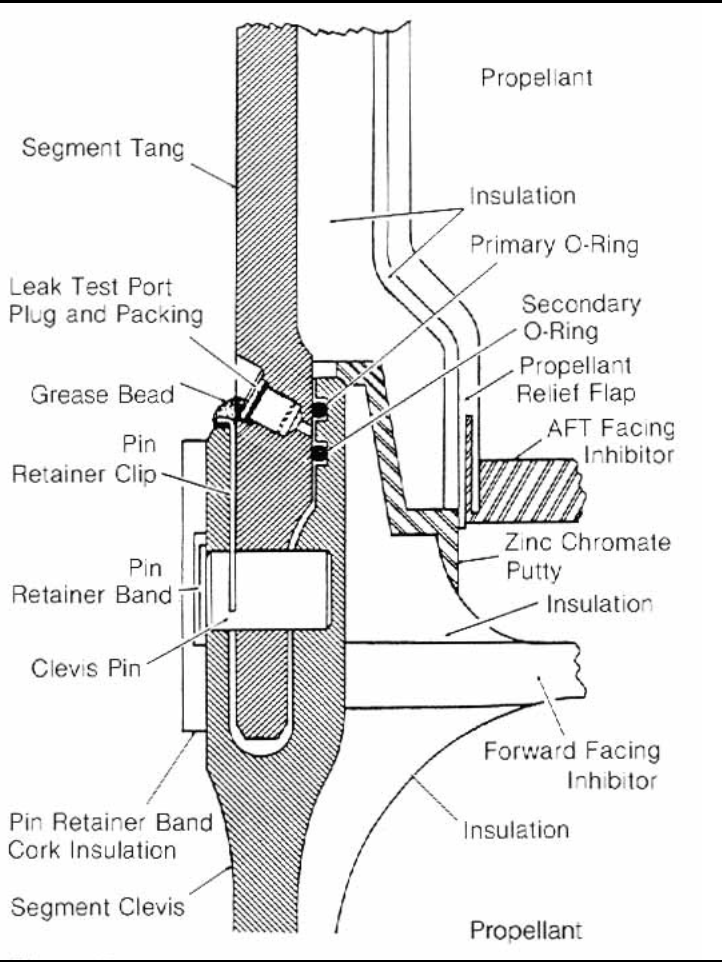 A faulty O-ring in the Solid Rocket boosters would lead to catastrophic failure. Source: Wikipedia
The highly public nature of these flaws would eventually shut down the American shuttle program outright and put NASA under intense scrutiny.
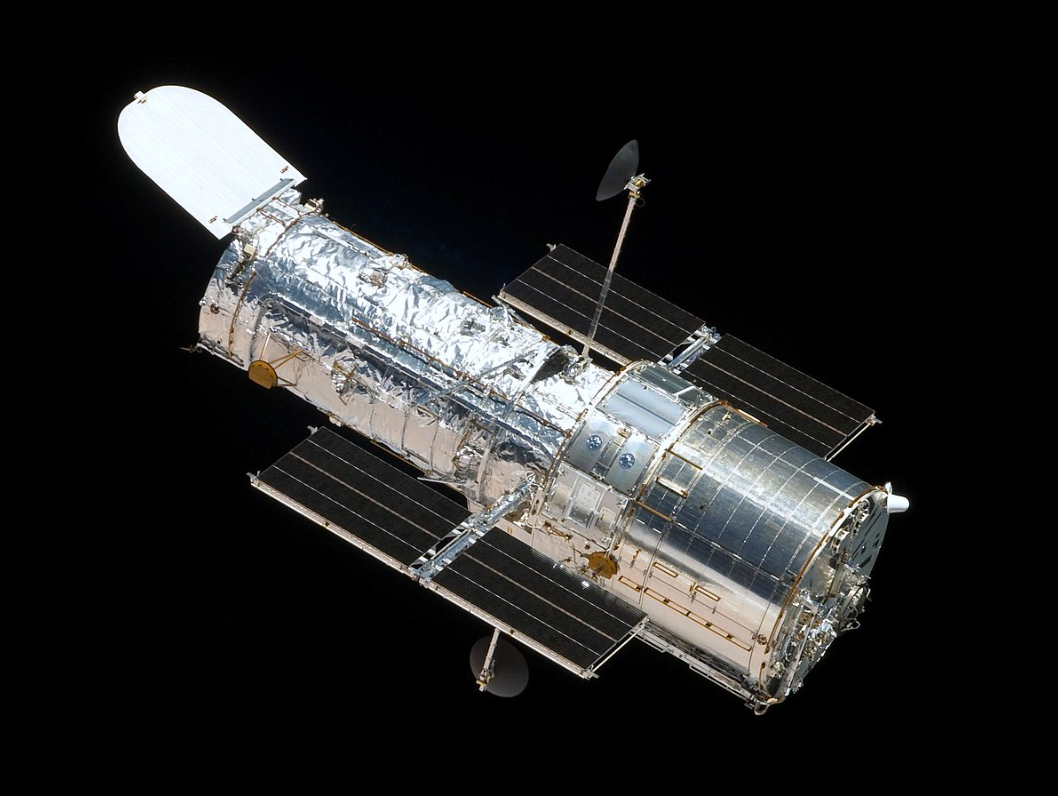 Despite its flaws, the shuttle would save the Hubble telescope from outright failure. Souce: Wikipedia
Achievements
It’s easy to look at the criticism as well as the hull loss events and think the shuttle was little more than a white elephant. Realistically though, despite its flaws, the shuttle was an absolute workhorse for the American space program. During its time in service, it would launch satellites, carry both Russians and Civilians, launch and repair the Hubble Space Telescope and even contribute to the Soviet Mir space station program.
And it would do all of this in the early days before taking centre stage in one of humanity's greatest spaceflight achievements. The construction of the International Space Station.
With the program being the domain of multiple countries, the space shuttle wasn’t the only system bearing the load. However, due to the entire program focusing on prebuilt systems that would be assembled in space, the large payload bay of the shuttle meant that it would play a key part in bringing everything together.
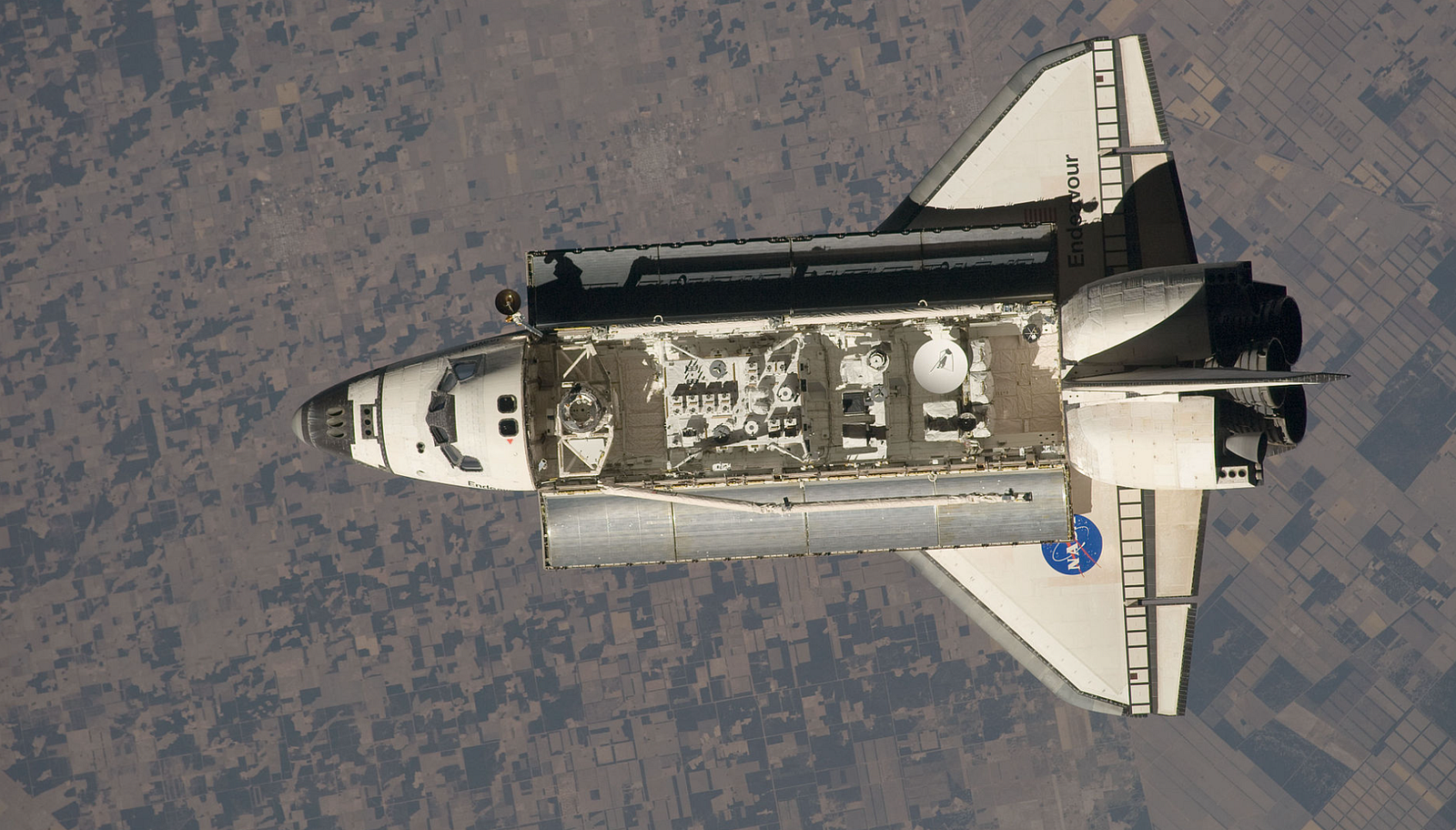 Over 150 EVA events would be carried out in the assembly of the ISS. The ability of the shuttle to carry a large payload was a key part of this. This is Endeavour during the STS-127 mission with her bay doors open. Source: Wikipedia.
It wasn’t just Americans contributing to this role though. While it was an American project, the carriage of other nationalities throughout the program helped NASA lay the foundations for true multi-nation cooperation in space.
The space shuttle deserves far more credit for helping to build our modern world than many realise.
If you found this article insightful, informative, or entertaining, we kindly encourage you to show your support. Clapping for this article not only lets the author know that their work is appreciated but also helps boost its visibility to others who might benefit from it.
🌟 Enjoyed this article? Join the community! 🌟
📢 Join our OSINT Telegram channel for exclusive updates or
📢 Follow our crypto Telegram for the latest giveaways
🐦 Follow us on Twitter and
🟦 We’re now on Bluesky!
🔗 Articles we think you’ll like:
- What The Tech?! Rocket Engines
- OSINT Investigators Guide to Self Care & Resilience
✉️ Want more content like this? Sign up for email updates






