
Logic Gates are almost the most fundamental parts of computers (with the most fundamental being the transistors they are made out of... I guess you could go all the way down to atoms and quarks and stuff too... but, y'know... don't do me like that...) They're used to perform boolean logic calculations using bits.
There are 7 primary logic gates: AND, OR, NOT, NAND, NOR, XOR, and XNOR and what they do can be illustrated by what are called truth tables. Let's go through each one, note that each gate (except for the NOT gate) can have more than 2 inputs:
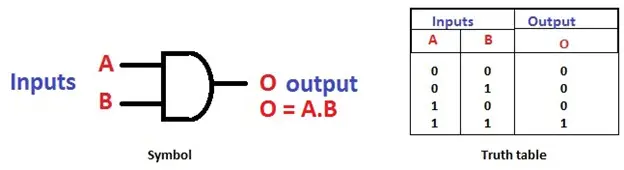
AND:
The AND gate is fairly self-explanatory. If input A AND input B are both "1" (or "true") (or if all inputs are "1") then the output is "1." Otherwise, the output is "0" (or "false.")
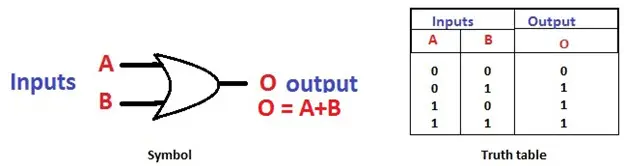
OR:
Similarly OR gate is also self-explanatory. If either input A OR input B are "1" then the output is "1." The output can ONLY be "0" if BOTH (or all) inputs are "0".
NOT:
The NOT gate is also known as an inverter because it, unsurprisingly, inverts bits.
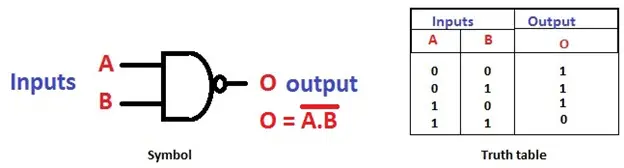
NAND:
A NAND gate is functionally an AND gate with an inverter added onto it. The reason it exists, however, is that a NAND has 2 qualities:
1. By itself, it is a universal gate, meaning it can be used to implement all other gates and logical functions.
2. One NAND gate is actually cheaper and simpler to make and design than one AND gate.
NOR:
A NOR gate is basically to the OR gate what the NAND gate is the the AND gate, and has the same 2 qualities:
1. It is a universal gate.
2. A NOR gate is simpler and cheaper than an OR gate.

XOR:
An XOR gate (sometimes it's labeled "EOR" or "EXOR"), also known as an "Exclusive OR" gate, it a little bit tricky. It works like an OR gate, but there's a twist: if BOTH of the inputs are "1," the output is "0." If both of the inputs are "1" or both are "0" the output will be "0" or "false."

XNOR:
And the XNOR, or "Exclusive NOR" gate is to the NOR gate what XOR is to the OR gate.

This may all seem simple (and it is) but it's useful to know about and be used to it if you want to understand the technical side of crypto. Because if you are reading through anything sufficiently technical, it'll be assumed that you know all this.







