“Before Crypto, he wasn't like this."
Before he started investing in crypto, he wasn't this kind of person.
He was the type who could step in dog poop and still not complain.
But one careless sentence from a friend made him snap.
People around him were confused.
In such a short time,
It was like he became someone else. Of course, not everyone changes.
Some people invest in crypto and their temper stays exactly the same.
So the real question is not "Is crypto good or bad?"
The real question is, What is crypto to you, and what are you truly chasing?
Other people's stories are not your system
Some people believe crypto is unreliable and will eventually collapse.
Some people became wealthy because of crypto. That's also true.
But those are other people's stories.
Crypto prices can from one piece of news, one tweet, one rumor.
Most of us cannot predict when that wave will hit.
We just feel the impact.
So it always comes back to one thing,
Are you investing, or are you gambling with hope?
Because the way you invest becomes a habit,
and habits don't stay inside charts.
They leak into daily life.
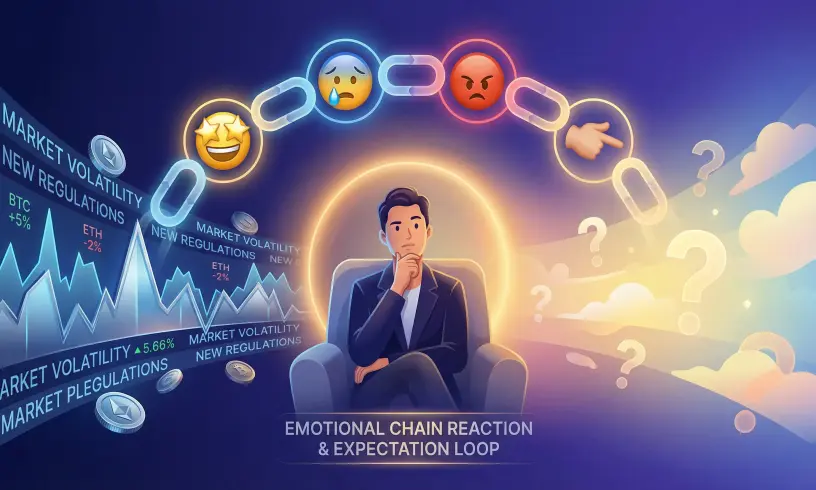
The expectation loop.
Sometimes, when we see crypto news, we feel excitement.
Anticipation. A sense of "maybe this is it."
Se we start checking the chart.
We calculate our budget. We click "buy" at a certain price.
If price goes up, the excitement multiplies.
The expectation feels rewarded. Then we plan the next move,
how much more to buy.
But what if it drops?
Some people are fine because they planned for it.
But not everyone thinks that way.
Once there is expectation, there is also the possibility of disappointment.
Otherwise, why do so many people get hurt by investing?
Here is the pattern,
When price rises,
expectation >happiness > impulsive action (buy more, hold harder)
When price falls,
expectation >disappointment > impulsive action (panic sell, or cling to hope)
Over time, this becomes a habit.
And that opening story starts to make sense.
He invested with a heart full of expectation.
Then the market dropped. Expectation transformed into disappointment.
The difference is this,
his disappointment didn't stay in the market. It turned into action.
Disappointment became anger.
Anger became a way to release the pressure inside him.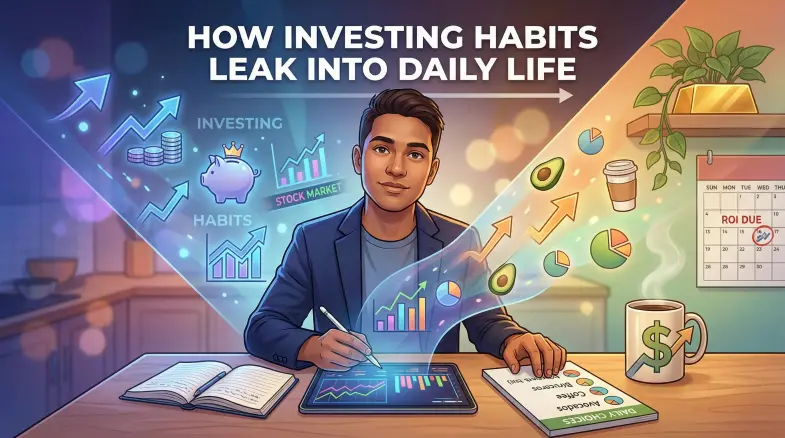
The chain reaction doesn't ask permission,
people rarely say, "it's my fault." That doesn't change here.
When it doesn't feel like your fault,
you start pushing responsibility outward.
That becomes blame. Blame becomes complaining.
Then the negative chain keeps stacking.
Doesn't that affect daily life? It definitely does.
Your body cannot "judge" right or wrong. It only reacts.
When expectation appears, and the reality doesn't match it,
the body produces disappointment, then anger, then irritation, then blame.
It's like imagining a lemon in your hand.
You can almost smell the sourness.
You bite it in your mind, and your saliva starts to flow.
Or think of chocolate.
The rich, sweet taste appears automatically in your imagination.
Your body responds even when it's only a thought.
Emotion works the same way.
If you notice that certain events trigger intense emotional reactions, it usually means a chain has already been built.
And when that chain is strong, every small "not going your way" can jump straight into anger.
If a person never trains that chain, it can even escalate into destructive behavior.
Breaking the pattern,
any emotion can be replaced, if you change the interpretation.
Any disappointment can become learning, if you ask a better question.
What exactly went wrong in this decision?
What did I miss?
How can I prevent this next time?
When you think first and investigate the real problem,
emotion naturally shifts.
Disappointment can transform into curiosity,
because curiosity wants answers.
And here's the key idea,
If investing habits can shape your daily life, then can reverse it.
Start improving your daily life habits, and that will reshape your investing habits.
It starts with one thing. Your first decision from today onward.
(Educational content only, not financial advice.)
Next Post: Your beliefs write your decisions (Then call it Logic)