What a weird time to be alive, huh? I don't know about you guys, but I had a pretty shitty 2019, with high hopes that 2020 was bound to be better. Well, four months in and we have had World War III threats, Kobe dying, and now COVID-19. Nothing like a pandemic to crush those hopes, right? Now, you may be asking what makes me an expert to give my opinions on COVID-19, hell what makes this different from all the other garbage we're seeing that is flooding through everyone's timelines, and day to day conversations? Well, for starters, I'm not here to give out opinions. I'm not going to talk politics, I'm going to present factual data with sources, and try my damn best to ensure it's free of bias. Second, I'm not an expert, I'm a second year medical student, who's currently preparing for a board exam. I'm no epidemiologist, social scientist, infectious disease having PhD. I'm okay with that, because I can understand the research papers that are published, process that information, and form an opinion from it. My goal here is to translate that science and medical jargon into something more readily understandable. Why? Because right now there seems to be two groups of thinking, where in one group, everybody thinks it's the end of the world, and the other brushes it off as the flu. I believe everybody out there should be able to form their own opinions about the virus, but form their opinions based on factual information. This will be broken into different parts assessing viral characteristics, medications/treatments, lab testing, and much more, if you have any questions, feel free to leave them as a comment, I'll try to answer to the best of my abilities. Hopefully you guys learn something throughout this series of entries, and if not, hopefully I could entertain you at least.
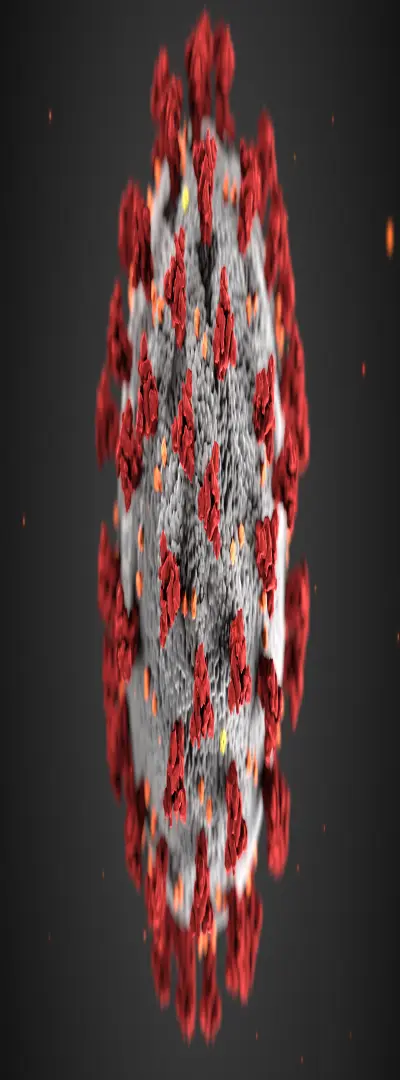
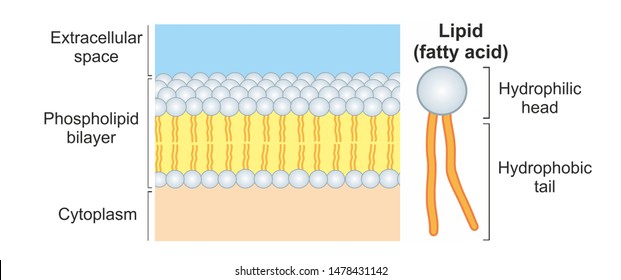
PART I - THE BASICS: So, what exactly is Coronavirus? Well, for starters it's a positive sense, single-stranded, enveloped RNA virus. Viruses are classified by their genetic material, you either have DNA viruses or RNA viruses. One main difference between RNA and DNA, is that RNA are basically all single-stranded, while DNA are double-stranded. These two things are building blocks of your body, they're composed of nucleotides, which are simply phosphate, sugar, and a nitrogenous base. RNA is very important for your cells, this will control things like turning on and off your genes, making proteins, and handling communication to cells via signals. So what a positive sense, single-stranded RNA virus does is it keeps the virus' information in this configuration, gets to a host cell, and uses the host cell's machinery to turn this genetic material into proteins by a process called translation. Basically, think of this guy as a bank robber, he's holding up the cashier, and demanding that the cashier puts the money in the bag. The first proteins that are usually made, are the ones that allows for this to replicate, so now it turned the host cell into it's own little cloning factory, hijacking it almost. Coronavirus is also enveloped, meaning it's covered by something called a lipid bilayer. Lipid bilayers are basically two layers of water loving heads, and these little water-hating tails, organized like this. This lipid bilayer protects the virus, as it's unable to allow for things to pass through it easy which could destroy the virus. This envelope also contains some important structural proteins of the virus, the most important being the membrane (M), envelope (E), and spike (S) proteins. I'll touch more on why these are important later. An envelope can make a virus particularly annoying, because even though it's relatively sensitive to things like heat, these envelopes adapt pretty well, and change it's make up, which can help it evade our immune system. Think of it like camouflage, if our immune system can't see it, it can't fight it off.
So, now we know what this thing consists of, but okay, how does it effect us? Well, when the virus is introduced into your body, it attaches to the host cell using something called the ACE-2 receptor. Remember that spike protein from earlier? This is what holds the virus to the cell, so there's a connection between spike and ACE-2 receptor. Well now, the virus has to get inside of cells right? This is where they use TMPRSS2 to get in. Think of TMPRSS2 as a lock-cutter, coronavirus attaches to ACE-2 forming a little chain, so now TMPRSS2 comes in, cuts a piece that chain, and now the virus can get into the host cell and start it's replication process. In a future part of this series we're going to talk about therapies that target this interaction, and many other mechanisms, so stay tuned for that. So now that someone's infected, how the hell does this thing infect other people? Well, it's theorized that main transmission is via respiratory droplets. Respiratory droplets refer to basically any cough, sneeze, or even talking. The virus is pushed out, and lands on another human's skin, and when it finds a nice little surface like the eyes, mouth, or nose that's easy to get through, it can infect a new person. Unfortunately, new research has found that COVID-19 can stay viable in the air and on surfaces for up to three hours, though it hasn't been broad scale tested yet, so it's significance is unknown as this time.
So when can we get infected? Well, it's theorized that the incubation period is on average 6.4 days, but ranges from 2 days to 12 days. Incubation period refers to the time the virus gets into the host, begins replication, making its proteins, before symptoms appear. A virus has to actively be shedding to be infective. Viral shedding refers to it just being able to replicate. In COVID-19, viral shedding precedes symptoms by 1-2 days, this is where people are the most infective, they don't feel sick, but can pass it along, so they're not undergoing any precautions and just going out in public. It's theorized that 25-50% of infections come from this period (same source as the average incubation period, btw.) This can last for up to 7-10 days post-symptoms in mild to moderate cases, and up to 2 weeks in severe cases. If you were wondering where the "if you're exposed, have 14 days of self-isolation," comes from, it's from the incubation period, as you can see there's a 2 day window added on the end to wait to see if someone becomes symptomatic or not. There's talks of viral load affecting the shedding pattern, but nothing has been confirmed yet. Viral load basically refers to the amount of viable viral particles in a standardized measurement unit. People with more exposure (think front-line health care workers, etc.) will have higher viral loads. Think about it logically, more load = more chances at replication, if shedding is basically replication, it makes sense that it'll replicate with more viral particles around. The risk of transmission is obviously highest with closest contacts, that's why things like wash your hands, don't touch your face, etc. are put into play.
So with that, you now know the general characteristics of this virus. You know what it's composed of, how it attacks our cells to get inside of us, and how it's transmitted. In the next section, we're going to talk about preventative measures, why the symptoms present how they do, way to protect yourselves and analyze some of the data out on it right now, including mortality rates, rates of transmission, rates of hospitalizations, age-demographics effected, and much much more. Again, as always, if you have any questions, suggestions, or anything you wanna learn from this topic, please feel free to leave a comment and I'll address it to the best of my ability. If anything in this seems a little confusing or doesn't make sense, also leave a comment, and I'll try to explain it in a different way that's relatable. Until next time, folks.