
Greetings Publish0x community 🖐
Today I want to talk about the reward system and possible incomes you could achieve while using DeFi platforms. Please consider that APY is the abbreviation of Annual Percentage Yield before starting to read.
What is APY, briefly?
As I stated above, APY means ‘’annual percentage yield’’. In other words, we can say that APY is the excepted return to your capital after a constant period of time. When you check any platforms for APY, it’s generally calculated based on a 1-year return ratio. If you see a 10% APY it means that after 1 year of time, your total cash is the sum of your beginning capital and 1/10 of it. But please be careful that this ratio is expected! So that it’s not a must to see the exact value after 1 year.
If you are dealing with a bank offering you a possible 6% return, it seems to be an exact ratio. But again be careful! Because the government takes some of this return under the name of taxes. So the ratio presented to you by the bank manager may be different than the real return.
Let’s come to our main topic, DeFi platforms, and their APY ratios. At the time of writing this article, there different possible chains to run a platform but nearly all of them use the Ethereum chain. Some of them providing as high as 500% or even 1000% APYs but some of them only offer you as little as 5% APYs. Today, I will show you some basic points to find the most appropriate platform.
Finding the Best Chain to Contribute
Even though Ethereum is the most well-known, the most used one, and Ethereum 2.0 is live, there are still some questions about it. When you are searching DeFi Pulse let’s say, assume that you click one of the listed ones. You will face directly with the huge APY ratios and generally a mark that shows the Wallet Connect option. Those may be quite annoying when you are just exploring them.
Besides the interface of the platforms, using the Ethereum chain cost too much. If you used any DEX platform in 2019, you could figure out the mean fee to make any transaction as little as some cents. But the world has changed after 18 months and nowadays, the network fees make highs along with the ATH of Bitcoin prices. So Ethereum chain doesn’t seem to be my first choice of action. Don’t worry, we have many options to check.
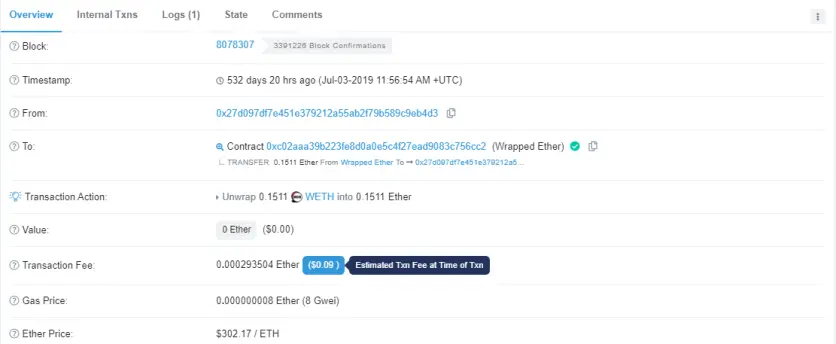
The above picture is an example of using DDEX. It costed me to sell some tokens as little as 25-30 cents in total.
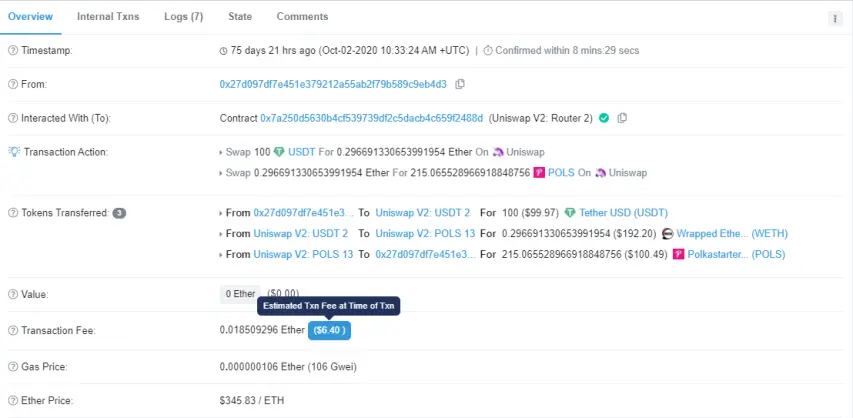
And this screenshot belongs to the same wallet. Even though the Ethereum price didn’t change too much at the time of the transaction, the fee cost me about 20 times more for only buying, when we calculate the selling side, it’s too much to handle. So I decided to change the network and my first choice is one of the newest examples, BSC/Binance Smart Chain.
Binance Chain and Binance Smart Chain has the advantage of lower fee amount comparing to the Ethereum network. I have used Binance DEX in early March and one transaction cost me about 0.000375 BNB. This value can’t reach even a dust amount. But BSC costs much more. Some days ago, I transferred some BNB into my private wallet and it costs nearly 7 cents in BNB.
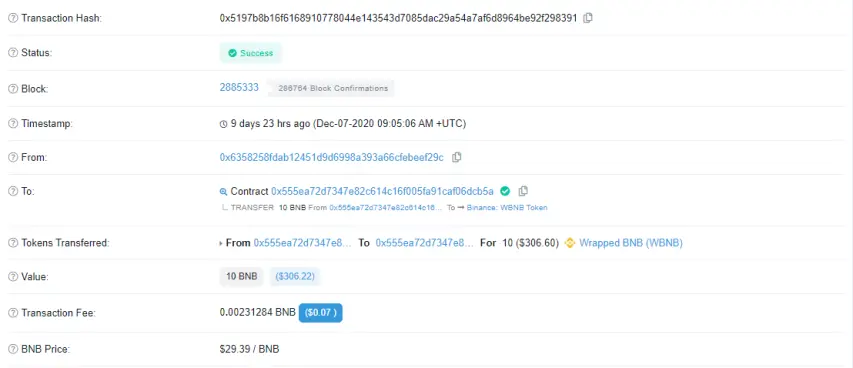
Although it’s lower than Ethereum, you must pay some amount of fee. So that I tried to find a network that I can use without paying any transaction fees. After some research, I faced with HARD Protocol to use which runs on the KAVA chain. And I decided to give it a try…
Finding Best Platform and Asset to Use
After deciding on the KAVA chain to use, I first checked my previous article to refresh my information about KAVA Ecosystem. Then dived into their Medium blog to find more. HARD Protocol is founded in mid-September with the aim of becoming the world’s first cross-chain money market. On the 15th of October along with Kava-4 Gateway Upgrade, the HARD Protocol platform went live with 3 functions: Supply-Borrow-Earn. You can use HARD Protocol to supply and borrow, then you’re rewarded with HARD coins. It looks pretty well to try.
How to Use HARD Protocol to Earn HARD
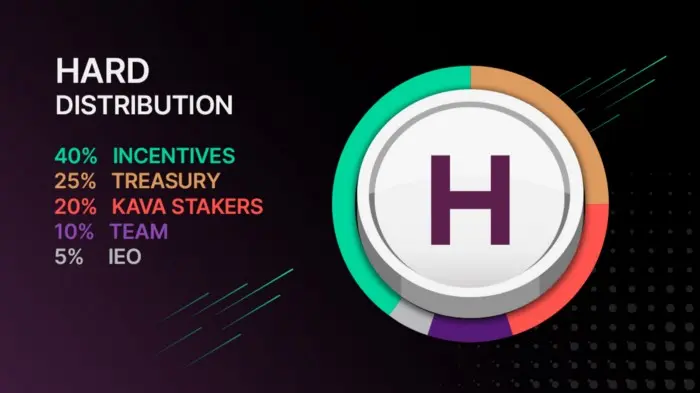
HARD is designed as a governance token of the HARD Protocol and the HARD supply is determined as 200,000,000 in total. On the Genesis Block which HARD is minted the first time in history, 80,000,000 HARD is deployed and many more set to come in the next blocks. As you can see in the picture below, 40% of the total HARD supply is left for the HARD Protocol users.
There are 7 different options to use. They’re USDX, KAVA, HARD, BNB, BUSD, BTCB, and XRPB. At the time of writing, the lowest APY belongs to XRPB (15.62%) and the highest APY is for HARD (99.35). I decided to use a native KAVA token to supply.
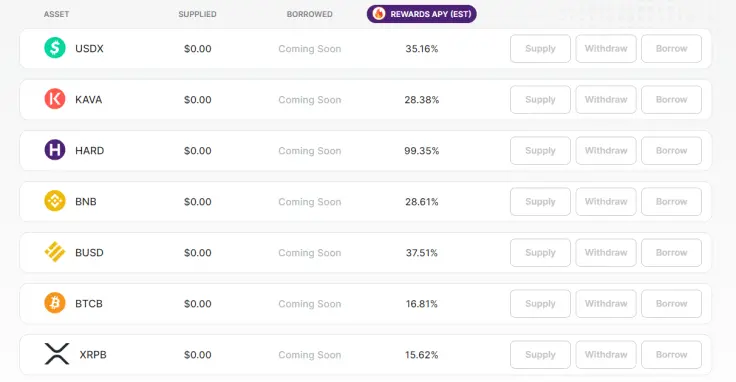
After connecting the wallet, please select the Supply button to deposit your tokens into the platform. When you do as such, you will see a screen showing you the amount of KAVA you want to supply and the optional marking for a fee! Yes, on the KAVA chain using transaction fees is optional.
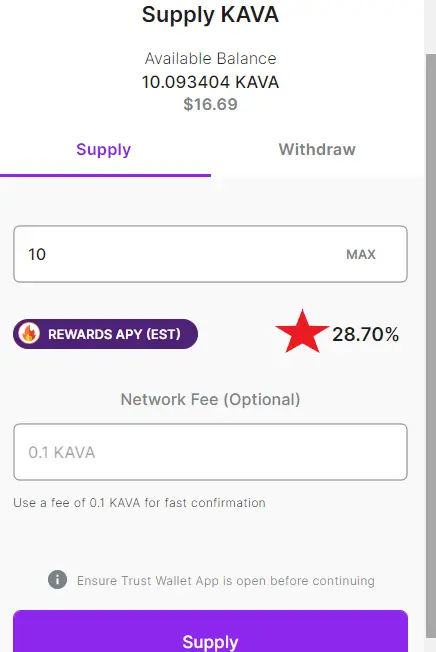
After approving the transaction on your wallet, it’s done. Now you’re earning HARD at every block confirmation.
What is the Result? Comparing It with Expected APY
After 1 week of harvesting HARD tokens, I received 1.032404 HARD. It’s equal to 0.87$. If we multiply it by 52, it equals about 45$ with today’s HARD price. At the time of supplying my KAVAs, they equal about 190$ in total. So 45$ yearly return for 190$ worth KAVA creates 23.8% APY instead of 28.38%. So please be aware that the APY ratio showing on the dashboard is not a constant value and make your decisions carefully.
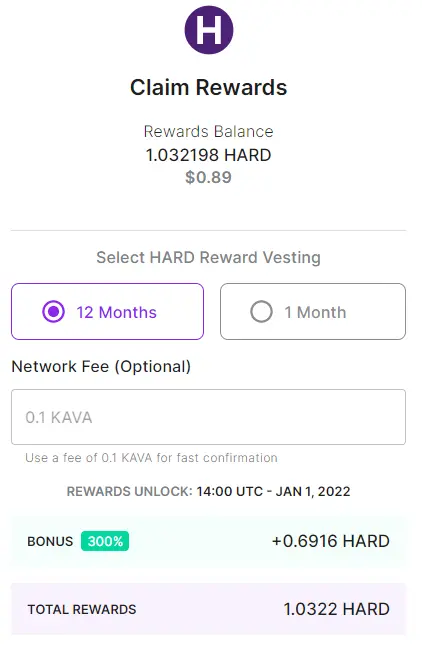
NOTE ABOUT HARVESTING HARD: The HARD tokens are harvested on every block confirmation but they’re not directed to your account at the same time. You should first claim them on the HARD Platform and wait for their unlock period. There are 2 different options to claim the HARD token unlocking period. One of them is 1-year unlock time. This is not suitable in my opinion but if you want to get all the HARDs as shown on the platform you must wait 1 year more. The second option is 1 month unlock period. It seems more suitable but if you select 1 month period of unlocking, your HARD rewards will be reduced by %75. So be aware of this situation before supplying or borrowing. There’s no withdrawal time for supplied tokens.
Final Conclusion
This article doesn’t contain any type of investment advice. It’s only to give information to the Publish0x community. Please DYOR (Do Your Own Research)!
If you are interested in writing articles about ANYTHING on Publish0x, you can follow this link.






