
In my penultimate post, I wrote that the next thing I wanted to write about was Netflix. So, in this article, we’ll break down how Netflix didn’t buy old franchises like Disney did, but instead built an IP flywheel from scratch - and then integrated games, offline locations, and live sports into it to keep subscribers engaged.
Netflix officially revealed that over the last decade, the company spent a staggering $135 billion on content (original series and licensing)! For 2026 alone, its content budget is expected to be around $20 billion. According to Wells Fargo analysts, Netflix’s original series generate 25% higher ROI (return on investment) for the company than licensing other people’s movies.
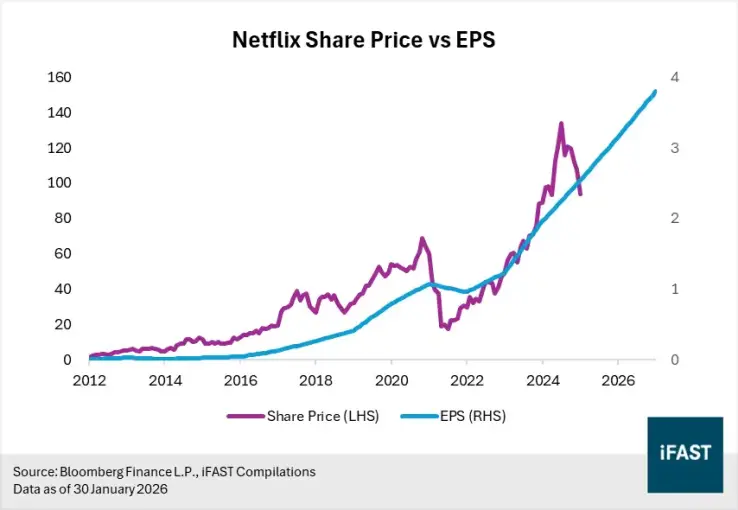
Netflix stock price
Above, I already mentioned the integration of games, offline locations, and live sports. So let’s get to the point of what I mean. A user can watch a series and immediately play a game based on it - for free. As of 2026, Netflix Games has around 100 mobile games available, with total downloads exceeding 271 million. Squid Game: Unleashed reached 18 million downloads, becoming one of the main drivers. Netflix has spent around $2 billion on launching its gaming business.
Although I presented all of this as a huge success, the reality is that Netflix launched its games back in late 2021, and for the first two years, it was basically a failure. Analytics showed that less than 1% of all Netflix subscribers played its games every day. People simply didn’t understand why a movie app suddenly needed mobile game downloads.
“The streaming giant failed to disrupt the video game market, but armed with enormous resources and time, it is making another push to reach a new level that could leave its competitors behind,” Matt Craig notes in his analysis for Forbes.
Competing with the Disneylands. The launch of the “Netflix House” network in Dallas and Philadelphia. These are real physical locations with themed restaurants, merchandise stores, and interactive entertainment based on the worlds of Stranger Things, Bridgerton, and Squid Game - basically, all of their projects in one place.
Live Events and Sports. A massive $5 billion, 10-year deal with WWE Raw, boxing matches such as Jake Paul vs. Mike Tyson, and NFL games broadcast on Christmas Day. This creates “appointment viewing,” making people less likely to cancel their subscriptions every month.
I can sum it up with just one thing: Netflix is a classic example of how a company outgrows its own industry. Today, the streaming giant is turning into an aggressive monopolist that grabs onto everything it can - from mobile games to live sports and actual restaurants.And it’s not doing this because everything is going great. It’s doing it because of a harsh and now increasingly obvious market reality - one that is becoming characteristic of almost every company with a market capitalization of several hundred billion dollars or more: building and maintaining a trillion-dollar empire while staying in just one lane is simply impossible today.
Thank you so much for reading this article! I hope you found it insightful. Have a wonderful day ahead.





