
INTRODUCTION
It is from the famous physicist and chemist Michael Faraday who lived in the 19th century. The working principle is based on simple electrostatic laws, you can see in many places in daily life. Faraday cages protect the enclosed volumes from electrical field changes that occur outside. The interesting point is; they must not spend any power in doing so. First we should describe the electrity. Let’s make an analogy and imagine 9 prisoners who we shoud fetter to transfer from the vault to somewhere else. It's sad, but the shackles in prison are made for eight people. You have nothing to do. You must fetter eight of the prisoners. You must be careful throughout the transition so that no one else can escape. There are certain rules in the atomic orbit as it is in the case of the shackles of eight people. It is certain how many electrons can be placed in each orbit. Some atoms have such a number of electrons that after placing the electrons in all the orbits, only one electron remains. When a lower level orbit is fully charged, the last electron of the atom stays alone in the last orbit. Since it is alone, the attraction by the nucleus is very weak and is almost free from any attraction from the nucleus and is free. Of course, matter consists of billions of atoms, which means billions of free electrons. These billions of free electrons float in matter and form an electron sea. Here is what gives conductivity, this is the sea of electrons, the free electrons in the atom.
Where Are We Using It?
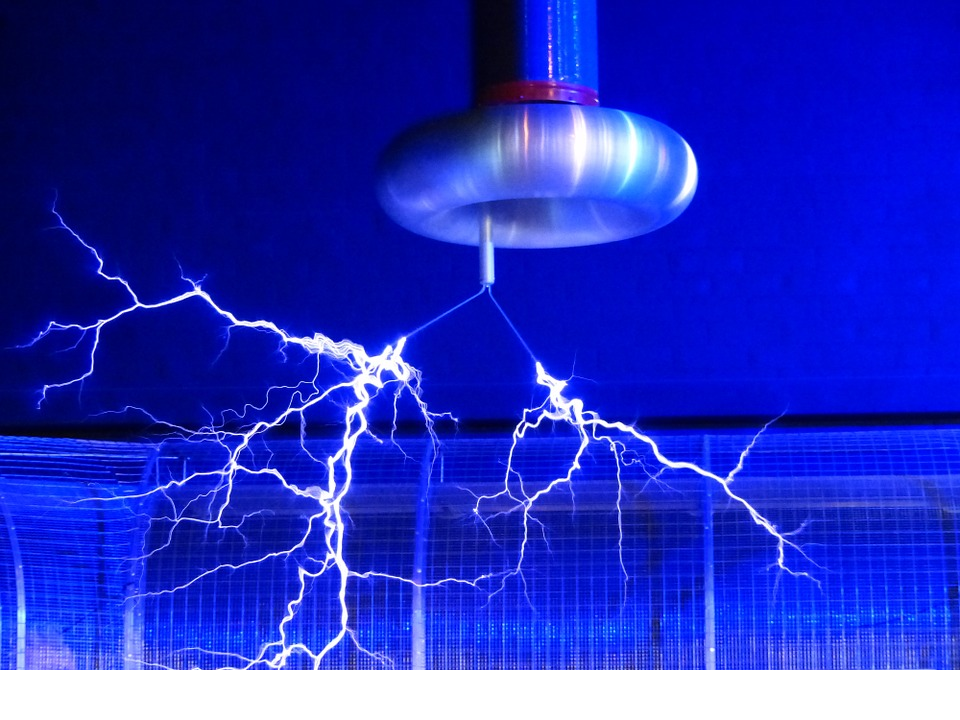
I do not know how much you want to have a Faraday cage, but if you have it, you do not have to plug and run it! On the other hand, the Faraday cage is not something that is difficult to own. For example, aluminum foil is sufficient. Having only enough to enclose a certain volume meets our needs.Well, how far do we need the faraday cage in practice? Quite a lot. Without Faraday's cage and his physics, we would have to sit down and think about another solution to protect our buildings from lightning strikes.

Another method would be needed to protect the buildings from spies, where some confidential information was sent and received. But let's not be too pessimistic. If there was no such thing as a Faraday cage, there would be good things also; for example, we would not have to put radio antennas on the cars out of them! The fact that the car radio antennas are outside may be bothering you, too. I've often found myself thinking about whether this antenna could be put in somewhere. It's not aesthetically because there's an antenna on top of the car.
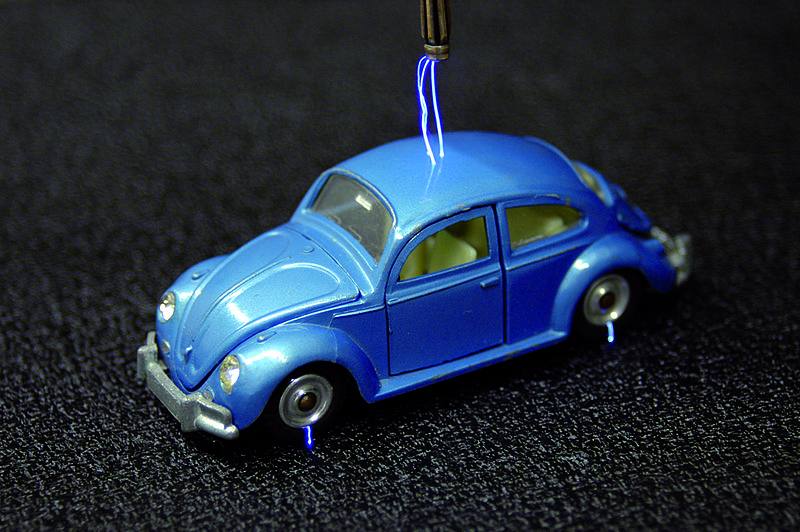
By Martin Apolin, CC BY-SA 3.0, Wikimedia Commons
I think putting the car radio antenna on top of the car is like putting the home radio antenna on the roof. But no matter what happens, it is impossible to escape the rules of physics that govern the entire universe. This means that even if you are the engineering wonder of the twentieth century, physics will not favor you. Unfortunately, Radio antennas of the cars are the result of a necessity. Cars serve as a Faraday cage with their metal bodies. Therefore, it is not possible to reach the radio waves inside the car. Probably the car designers were disturbed by this, but I think they had no choice but to build the car with a wooden trunk.

CC BY 4.0 via Wikimedia Commons
At this point, you can question how mobile phones we use can be easily work in cars. After all, radio and cell phones work with electromagnetic waves, and if electromagnetic waves cannot penetrate the Faraday cage, you expect mobile phones to not work. It's not because our Faraday cage is porous. As you know, the entire car body is not made of metal. Windows in cars are spaces on the surface of the metal. And in practice, these spaces reduce the power of our Faraday cage. Therefore, the cage does not behave as we expect against any electromagnetic wave, no matter it's strong or weak. It has to react according to the power of the incoming electromagnetic wave.

Because radio waves are low-energy, the cage can resist their entry, but the cage has nothing to do with the high-energy electromagnetic waves that mobile phones operate in. These high-energy electromagnetic waves are very high-frequency and their wavelengths are too small to compare to the pores of your Faraday cage. Therefore, the cell phone signals are entering and exiting the non-metal spaces of the car body, and the car body is not aware of this! And is it possible to intercept cell phone signals with a Faraday cage? Of course, it is possible. If you want to have a powerful faraday cage against electromagnetic waves, you will need to minimize the pores in your cage as much as possible. The most precise solution is to use a continuous conductive material with no cavities on the surface.
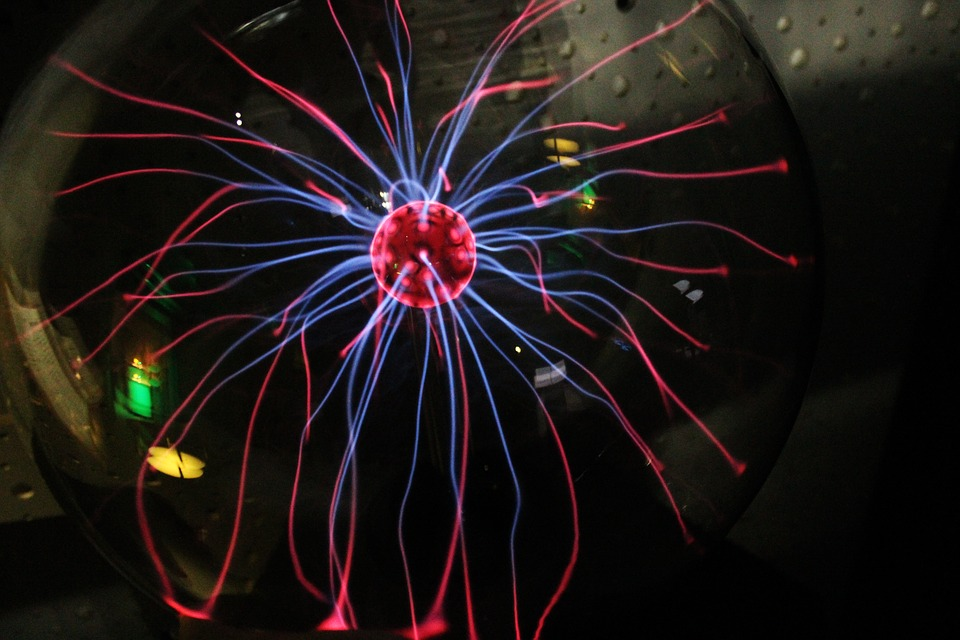
There's no need to do a lot of material research. An aluminum foil will be enough to stop cell phone signals. You can start your experiment when you wrap your mobile phone with aluminum foil with no space left on its side. You will not be able to reach your phone if you carefully wrap your phone and make sure that there is no space. Because aluminum foil serves as a Faraday cage and will not allow electromagnetic waves to enter. Now we know that all faraday cages are not cage-shaped. With a permanent conductive material, a Faraday cage can be formed without a porous structure. A cage with no space on its surface does not have an electric field changes or electromagnetic waves in any way into its surrounding volume, and if it is porous, it does not have an electric field changes again. But it responds to electromagnetic waves, and it can be successful in small pores. The smaller pores the cage has, the more successful it is in shielding electromagnetic waves.
Physics Behind It

After we understand what the Faraday cage is, where it is used, and its differences, we are ready to examine the physics behind it. What exactly is it that these metal cans are able to deflect electric fields? You can try to wrap your mobile phone into a piece of paper. As you can imagine, you will not get any results. We're supposed to be talking about a conductive material for the Faraday cage. So let's start with the conductivity. What is a conductive substance? Is the classification of materials as conductors and insulators correct and sufficient?
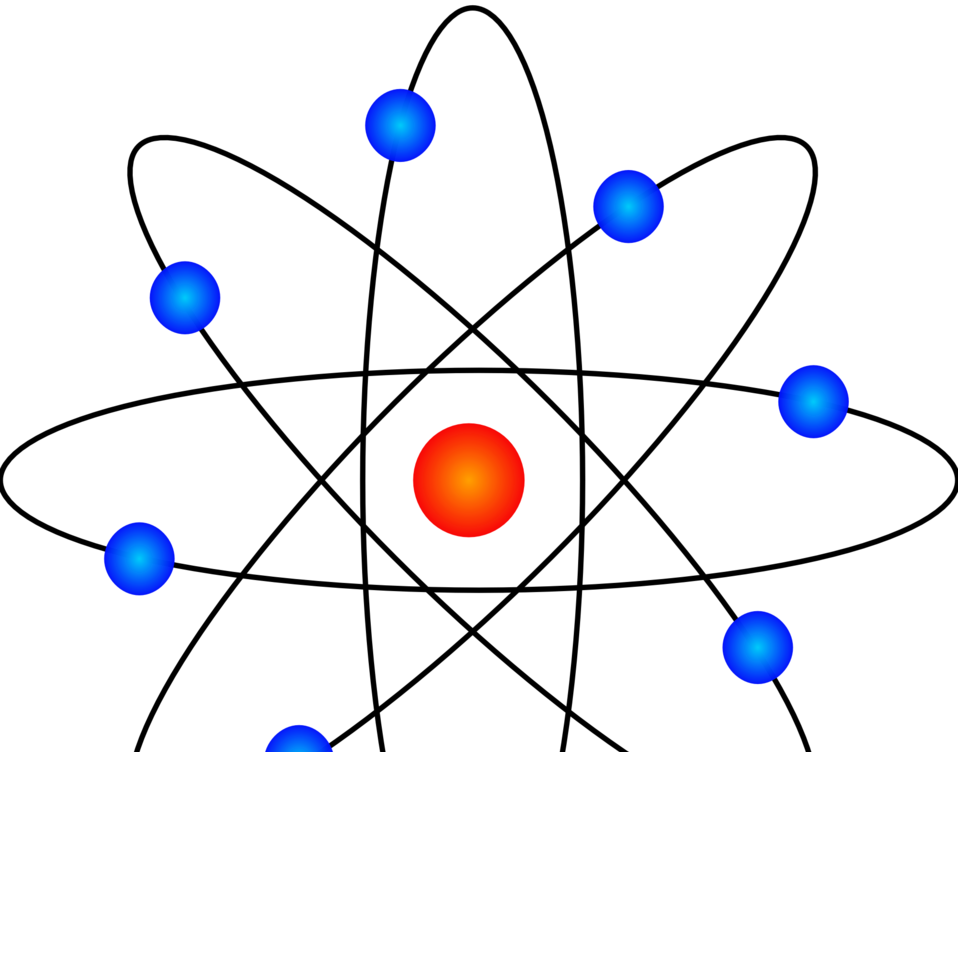
Source: Publicdomainfiles Public Domain
Electrical conductivity is the result of events occurring in microscopic dimensions of matter. To understand it, we have to descend into the world of atoms. As you know, the atom is a structure with positively charged protons and electrically neutral neutrons in its center. In the Bohr model of the atom, electrons are arranged in a circular orbit around the nucleus. This is because the electrons are in the outermost shell of the atom, and the electrons are in the outermost shell of the atom. We are interested in the largest of these circles in terms of conductivity.
Some of the elements' electrons found in nature are very far from the nucleus, sometimes alone in their orbit. This is a natural result of the placement of electrons in orbitals. Imagine you're a prison guard, and you're on the job of fettering nine prisoners from their feet and taking them from one place to another. When a lower level orbit is fully charged, the last electron of the atom stays alone in the last orbit. Since it is alone, the attraction by the nucleus is very weak and is almost free from any attraction from the nucleus and is free. Of course, matter consists of billions of atoms, which means billions of free electrons. These billions of free electrons float in the matter and form an electron sea. Here is what gives conductivity, this is the sea of electrons, the free electrons in the atom.
There is a discourse that can be regarded as cliché for anyone who has little knowledge about electrostatics: All the materials are conductive! Exactly. However, the conductivity of some materials is so small that in practice their conductivity cannot even be mentioned. We put them in the class of insulators. As you would expect, the electrons within the atoms of the insulating materials sit right in their orbit, so the nuclei apply a strong attraction to the electrons. In our example, this time, we can assume that we took eight people from one place to another and we can relax. Nobody escapes one time! However, the electrical conductivity of the materials is more than just classified as conductors and insulators. Some materials are "almost" conductive and they are semiconductors. In the final orbit of the semiconductors, there maybe three to four or five electrons.
By inductiveload, CC BY-SA 2.5, Wikimedia Commons
Another conductivity class is superconductivity. Superconducting materials are zero resistance and can carry electricity without loss. We understand the main points of conductivity. On the road to the physics behind the Faraday cage, we have to examine the electric fields.
Electric Field
As you know, there are two electrical charges in nature. We express them as positive and negative. positive and negative attract each other. In the case of positive-positive or negative-negative, They push each other. These relationships are the strict rules of nature. All this explains the electric shock, why we can't get through the walls, and so much more. If we try to study the relationships between the charges more closely, we will encounter an electric field. We can say that the interactions of all the remote forces in nature are examined through a field. Electric charges interact with the fields they create around them. We call this area the "electric field" where electrical charges are generated. We choose and show the direction of the field from the plus to the minus, just like in the selection of positive and negative electrical charges. However, it is worth mentioning right now that this is definitely a false statement. In fact, 'high potential' must be true, and of course, -2 is a number greater than -5.It may be necessary to clarify that the electric field is a concept of physical reality that fits our observations and reconciles the 'distance effect'. There is a direction, but where is the direction of the direction is totally a choice of physicists. For a moment, imagine the direction of the electric field, from negative to positive. You will not encounter any problems in practice! Now we can bring this information about the conductors and the electric field to a conclusion and reach the result.
By Geek3,CC BY-SA 3.0, via Wikimedia Commons
A Conductor In An Outer Electric Field
We have a chargeless conductive material and we know that there are a lot of free electrons in the conductive materials. If a positive charge is placed next to this material, the free electrons in the conductor will be directed to the side where the charge is located. The point charges create an electric field in their surroundings and they perform their electrical interaction at this point. We can create a volume of the conductive material. This volume does not change any characteristic of the conductor. Charges in the external electric field are also reshaped. The direction of the electric field can be regarded as a high electrical potential and a negative electrical potential since the low potential is correct. Therefore, a negative charge accumulation occurs on the conductor where the electric field reaches the surface. Positive charge increases as negative charge decrease on the other side of the conductor. The other side is charged with positive electricity. The point to be mentioned here is; the charge distribution at the surface of the conductor is directly dependent on the external electric field. The charge difference of the conductor increases as the external electric field increases.
CONCLUSION
The surface charges shaped by the magnitude of the external electric field form an electric field in the conductor with the same magnitude as the external electric field but in the opposite direction. In fact, this is exactly the magic sentence that summarizes the working principle of the Faraday cage! Therefore, the net electric field in the conductor is zero! This is the physics behind the Faraday cage, which is useful in practice and which we encounter frequently without being aware of in our daily lives. As long as you're in an appropriate Faraday cage, hundreds of thousands of volts outside will not interest you. Physics works, you can count on him!
REFERENCES
- Electric Potential Due to a Point Charge
- A Faraday cage or air gap can't protect your device data from these two cyberattacks
- Electromagnetic radiation









