
Like with everything in life, if you found something you are truly interested in you should at the very least try to understand it better by looking where and how it originated. I'm by no means a code writer or a cryptography expert, I barely passed business mathematics and the high school excel exam but that did not mean I was fearful or intimidated when I started to learn about the world of Bitcoin and cryptography and neither should you. I truly believe and have seen it time and time again, that as long as you sincerely try, nothing is too difficult to master.
So what is cryptography really? Well, encryption of course, but in it's most basic form, it is essentially communication. Yes it is numbers, math, codes, formulas, secrets etc etc but what does all that aim to accomplish? It aims to safely and privately communicate and/or verify communication. The word cryptography itself is based on the Greek 'kryptos' which means 'hidden'. So just like with ancient languages, we need to at least know a bit more about cryptography's origin and past to better understand it's modern day versions and hence cryptocurrencies. "Pointless" some might say, "no one cares about the past and obsolete languages, so why should we care about obsolete cryptography?" Well, you know how French, Portuguese, Spanish and Italian all look and somewhat sound alike? That's because these languages derive from the by now ancient and obsolete Latin. Even Germanic languages (German, Dutch, English) are severely impacted by Latin. No one walks into a store and start talking Latin right? But we still teach it in school today. I mean, we don't expect anyone to be fluent in it, but we expect you to at least know and understand the basics of it's origin and thus de facto also better understand the basics of the language which you speak today. So on that note:
The Pigpen Cipher
One of the oldest and perhaps most infamous cryptographic method is the Masonic Pigpen Cipher. Using symbols and the tictactoe grid😂, the Pigpen Cipher is a rather easy method to crack for experts if examined long enough. It will only be a matter of time before patterns start to emerge and small words and later on entire sentences can be deciphered.
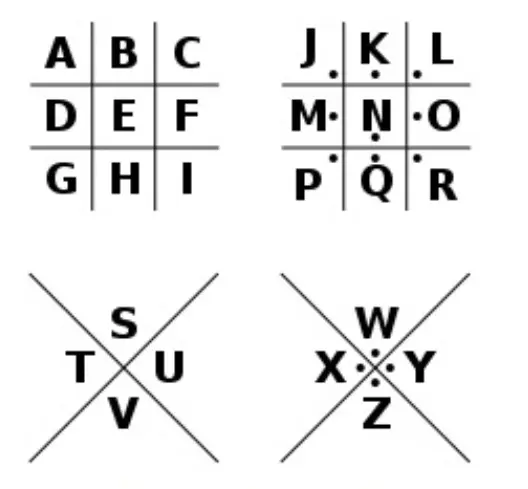
If you just look at the already deciphered codes in the above sheet and learn how the Freemasons would have said BTC,
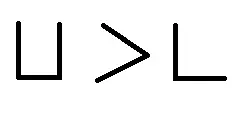
then you will probably already be able to fill in the blanks and decipher the next code without looking at the sheet.

Modern day use of old cryptography methods
You know those auto-response codes you get at most SEPA banks when you try to send a transaction? When you try to send e.g. 50 Euros to a friend in Portugal, your bank first shows you a random string of numbers which you have to type in what they call the 'identifier machine'. This method and machine is actually an old Soviet invention which automatically responds with a second string of random digits based on the first random digits you put in, which then is needed by the site/app you got the initial code from to verify the transaction before you can send money out from your bank account. Otherwise anyone with just your bank number/username and password could drain you account from afar. But now with an extra machine which randomly responds with a code, hackers and scammers now need to have access to both your log in data and your specific personal identifier machine, as each machine comes with it's own identification number and responds with different codes.
This method was eventually cracked though as the cryptographers outside the Soviet Union started noticing patters in the response digits. For example, the initial code 7782311 at a later point in time once again responded with 9985534 and based on this knowledge, it was only a matter of time before the method became completely useless to high level communication regarding national security. Well, not completely of course since banks are using the method today, but with alterations to minimize the risk. But nevertheless, the same old issue regarding repeating responses to a specific set of numbers remains, but because each code is only provided once, the response should on paper only be required once as well. So that response code you used to send 50 Euros, can not be used again later on send 50.000 euros by hackers/scammers.
Modern day cryptography and cryptocurrency
I'm going to quote Kaspersky here because I'm wise enough to know I'll just confuse everyone including myself. As Einstein said 'if you can't explain it simply, you yourself don't understand it well enough....so why bother. OK that last part was my addendum to the quote but it still works.😂
Hmmm, secret key, private key, public key? Alas, we are getting into the world of blockchain and Bitcoin. And yes I am going to repeat myself for the umpteenth time: Don't keep anything you truly value on centralized crypto platforms. Not your keys, not your crypto.
I can go on for quite a while about cryptocurrencies and how we nowadays sort of diverted away from what was intended, but really everything you truly need to know has been available since 2008. The trick I use, well, at least try to apply for most my cryptos, is to not steer too far away from what we were told 15 years ago. I really don't see any point to it, might as well just stick to SWIFT bank transfers with that same old identifier. At least you are better off dealing with a licensed bank in your own country than dealing with some online chat assistant half way around the world from some of these ludicrous altcoins that emerged.






