
Cryptocurrency folk are a confused and suspicious people -- especially when the free market is able to do practically whatever it likes without facing serious repercussion. If somebody phishes poor little Timmy's Bittlecoins away, there really isn't a lot he can do about it. Or, if somebody puts a lot of money into a centralized exchange that later turned out to be a fraudulent organization playing the long con for an exit scam, we all gotta pretty much just shrug and say 'Tough cookies. Oh, speaking of which, make sure to erase your cookies from that website before something worse happens.'
What, you gonna call the Crypto-Police to solve your problems? That's kind of the point of a decentralized currency -- it relies entirely on the protocols established through cryptography to ensure security in transactions. There exists no central authority to act on behalf of the many issues we face with money. The responsibility falls upon the user of the currency to ensure that their transactions are intentional, their vendors are trustworthy, and that their accounts are secure. That is the fundamental risk one accepts when they place some of their value in the crypto market -- fundamentally, we are exchanging some guaranteed safety for greater financial independence.
So What's Actually The Most Secure Means of Storing Your Crypto?
Plenty of people are more than happy with keeping their funds in an online wallet -- especially if they're purchasing from an online exchange that happens to offer such a wallet. This could be for any number of reasons, of course: perhaps they're on good terms with the exchange. Or maybe the withdraw fee is too high to justify pulling the funds to somewhere else just yet, but the amount is low enough that it wouldn't be the end of the world to lose it. Or perhaps it's an online wallet of their own design, stored on their own server and domain. Or they could be day-trading: if all you're doing is buying and selling cryptocurrencies in the short-term, then why even bother with small number transactions to a wallet? Mining fees are a thing, and as the old adage goes, "It's easier to count twenty Benjamin's than it is to count two-hundred-thousand pennies." That goes both for mining hardware and mental hardware.
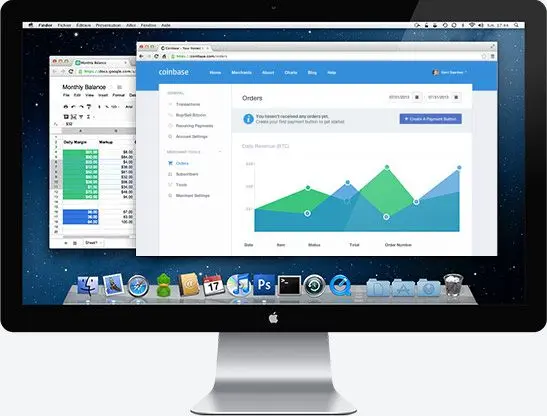
Of course, there are no shortage of people who disagree with this philosophy. 'The audacity,' I can hear some of you thinking. 'To trust an exchange to not pull another ol' Robinhood maneuver and make my funds entirely unavailable the moment I need to swap them.' And I agree with you, for the most part. Besides the difficulty that comes with the risk of online attacks and identity theft, there comes the problem of placing your trust in an online exchange that has almost no reason whatsoever to be concerned with accountability. I'm extremely reluctant to trust a bank with my own money if I can't get a human representative on the phone when I need to, and I like to think the same reasoning applies for a crypto exchange. Some services like Paypal won't even let you withdraw your funds at all. It's tantamount to placing your cheese behind a glass window screen and slapping your name tag on it. Remember the old adage: "If you don't control your keys, then you don't control your cheese."

So What's Actually The Most Secure Means of Storing Your Crypto?
Plenty of people are more than happy with keeping their funds in an offline wallet. Often dubbed a "cold" wallet. These wallets can take on many different appearances, but there are two especially popular forms. Desktop applications that store your keys on your own hard drive is one. Another is a genuine hardware wallet. Often taking an appearance similar to a USB drive, these devices store your ledgers in a personal manner -- they require no connection to the internet in order to function as valid currency. Because of this, there is no way for a hacker to push his grubby fingertips through your internet cables and steal your passwords from either of these kinds of wallets because, well, you don't actually need to have your internet turned on in order to store your currency.
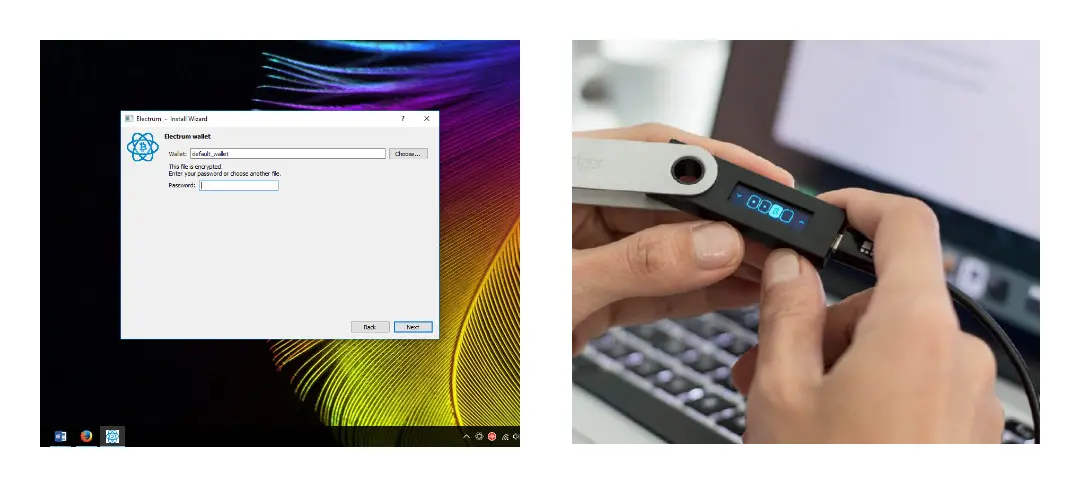
But of course, hardware wallets don't come without their own headaches either. No storage medium is perfect. Even flash memory degrades with time, as the electricity required to keep the code intact relies on tiny reserves of intact electricity. Left unused for twenty years, vital portions of this code will dissipate. And without that code, the operating system that your wallet depends on will have no instructions, no guidance for booting up or writing data -- much less to say displaying your account balance. And considering that the technology behind cryptocurrencies has recently celebrated its 10th anniversary, it suddenly doesn't seem like all too much of a stretch to imagine poor little Timmy attempting in vain to resurrect his hard drive with one-hundred Bittlecoins that he forgot he bought way back in 2012.
So What's Actually The MOST Secure Means of Storing Your Crypto?
Plenty of people are more than happy with keeping their funds in an paper wallet. For those of us who got into the crypto scene more recently and weren't ever really paying attention in the awkward heyday of the industry's development, the prospect of putting digital funds on a paper format might strike one as odd. But the irrefutable fact of the matter is indeed that a paper crypto wallet -- when developed correctly -- carries some unyielding benefits. A paper crypto wallet cannot be hacked, because you cannot plug a piece of paper into the internet. A paper wallet cannot run out of batteries, because it has no batteries. A crypto wallet can only be stolen if it is physically removed from somebody's possession. While a paper wallet isn't exactly the easiest thing to employ for everyday transactions, it is undeniably a very safe option.
 Now granted, I'm more than happy to confess all the major headaches associated with making a paper wallet. First and foremost, there's little reassurance that a keylogger or screen viewer installed on your computer isn't spying on your every action to try to piece together what your private key is. To ensure with absolute certainty that the Russian Government isn't reeling up to get their hands on your funds means you basically need to go through the following process:
- Load up a computer with a new operating system running entirely on a flash drive, or better, on the ram of your computer, booted from a CD. Make sure that your hard drive is physically disconnected from your computer. TailsOS is a handy option.
- Using TOR, find a paper wallet generator of your choosing for the currency of your choice.
- Generate your private keys using an entropy program -- an application that takes the random mouse-wiggles and keyboard inputs from the user and uses them to generate your keys. This method is more robust than a pseudo-random number generator.
- Connect your computer to a dumb printer, one without an internal drive, and which is also disconnected from the internet. After you've printed your wallet, shut down and unplug both the computer and the printer and let them sit without electricity for a while. This is to ensure that the images you're printing aren't saved on any RAM present on either device.
Now unfortunately, this method of securing your crypto isn't entirely airtight either. Paper wallets can be lost or stolen. Unprotected wallets can suffer water damage, rendering the private keys unreadable. And no paper wallet is secure from the gnashing teeth of little Timmy's four-year-old brother. Natural disasters happen too -- especially if you're like me and you live in California or Australia, where everything's on fire constantly. The charred remains of a private key aren't altogether useful for storing your legacy.
So What's ACTUALLY The Most Secure Means of Storing Your Crypto?
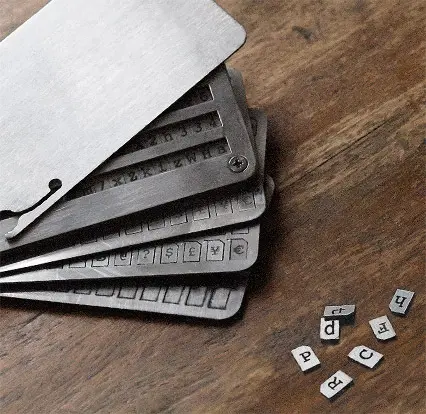
Plenty of people are more than happy with keeping their funds literally engraved in a slab of metal and secured in a vault, buried in their backyard. Doing this ensures that no fire, no flood, and no tooth of little Timmy's brother could ever manage to erode away the path to one's precious funds. Like a paper wallet, it cannot be hacked. Unlike a paper wallet, it cannot be laminated or printed because it is a literal slab of metal. Naturally, the process of establishing your private keys with the utmost security is a headache to dwarf all other headaches. We all gotta be big-brain time in order to have the cranial volume sufficient to support a headache of this magnitude.
- Load up an copy of a secure OS from a flash drive, and boot it up on LG Smart Refrigerator. Contact a removals van ahead of time to schedule the disposal of your refrigerator's remains when you're finished with this procedure.
- Using another flash stick that's been scrubbed beforehand, download the webpage for a paper wallet generator off of github in HTML format. Verify the program over PGP with the developer ahead of time to ensure that it's valid software. And make sure you use TOR and a VPN for any of your internet browsing, and make sure that your LG Smart Refrigerator is never connected to the internet at any time.
- Generate your private keys using only the sporadic flailing of a dwarf hamster suffering a sugar rush, duct-taped to your computer mouse. This is to ensure that your keys are entirely random -- with entropy like that, not even a galactic level super-mind artificial intelligence could emulate your behavior from which it might derive the private key.
- Transpose your private key and/or seed generator words onto your slab of metal in a dark room surrounded with a Faraday cage and with a blindfold on. This is much easier to do if you're using braille. Make sure your Faraday cage is powered by a generator, and not your local grid.
- Seal up your slab of metal inside of another slab of metal, and store it some place safe. Unplug your computer and smart refrigerator and incinerate the RAM from either device.
Now of course, this is a rather secure measure of protecting your private key, but unfortunately, it has its shortcomings too. While a slab of metal may be protected against fires and floods, it's not secure against rust and nuclear explosions. And in a world where the doomsday atomic clock hovers precarious at 100 seconds to midnight, some people might not rest easy knowing that the $50 worth of crypto they bought could be erased by a meager blast produced by a haphazard North Korean missile.
 (Real inconvenience to my Saturday, if you ask me.)
So What's Actually THE Most Secure Means of Storing Your Crypto?
- Load up a copy of a secure OS from a flash drive, and then throw it out the window of a moving vehicle. This should throw the Illuminati off your trail long enough for you to do what you need to do in the next steps.
- Using a computer that's not connected to the internet but is connected to a gasoline generator locked in a room with a Faraday cage around it, generate a set of keys and a seed phrase. This should be done by way of random dice rolls, combined with your aforementioned sugar-hyped hamster method.
- Write down both keys and your seed words on a sheet of papyrus and dedicate the next fourteen days to memorizing them. Do not leave the locked room until you're able to recite both in your sleep. It may help to invent a story where each word begins with a letter or number in your private key. For example, "Ba6p..." becomes "Bob ate six pears..."
- Once you're finished memorizing both to perfection, burn the paper using the engine of the generator. Disconnect every discrete component from the computer. Keep the hamster as a pet for the next three years to ensure he doesn't talk. He's a hamster, not a rat.
- Smuggle the discrete components of the computer aboard the next Beresheet and/or Chandrayaan lunar exploration missions, so that the remnants of the memory are either crash-landed or secured on the surface of the Moon. I'm pretty sure this is what was intended when all the folks on crypto-communities keep talking about crypto going to the moon, but I'm not yet totally certain.
- And for good measure, book an appointment to have your tongue surgically removed from your mouth so that you don't accidentally tell other people your private key when you're sleep talking.

So is this actually THE most secure means of storing your crypto?
Well...
Dude, I don't know.
I have no idea if there's a more secure method out there somewhere. Doubtless, there is. There's no shortage of people ready and able to inspire paranoia in others for the sake of personal profit. Since the dawn of mankind, advertisers have sought to invent problems where there were none and deliver a product to remedy the issue. Of course I'm not about to say that personal responsibility doesn't matter for managing one's cryptocurrency. And I'm absolutely not about to claim that going through these steps can't be a lot of fun. But precaution should always come with balance between security and liquidity.
This applies to anything worthy of value. At the time of writing, I happen to have some fiat currency stacked in my personal wallet -- the wallet that stores bills I keep in my back pocket whenever I venture outside my home. If somebody really wanted to, they could hold me at gunpoint and steal my money, and there's not really much I could do about it. But I accept the risk of this low-probability event happening to a relatively small sum of my money, because I value the liquid nature of cold cash. It's much harder for me to trade bonds, stocks, or the deed to a house when I'm attempting to pay for a pizza. But these tokens of wealth hold a far greater deal of value to me, and so I apply extra security measures to them.
I'm of the mind that cryptocurrency will play a bigger role in our future. It may not be as ubiquitous as the dollar is, but by exchanging some of my wealth for crypto, I am -- by proxy -- betting on the notion that it will hold some appreciating value, both in its worth and in its utility. In respect to utility, I think we'd all do well to treat cryptocurrency as a currency. This requires normalizing how we secure it, save it, earn it, and spend it.
I wouldn't go around sharing pictures of my debit card on the internet twenty four hours a day, every day of the year. But I'm also not afraid of carrying it around with me in my back pocket, reassured with the knowledge that I know what to do if it's lost or stolen from me. Because I know that harboring that fear produces another barrier between cryptocurrency as an abstraction and cryptocurrency as a legitimate means of exchange.
So do what you will with your cryptocurrency. Just remember, you can't easily spend money that you can't easily access. The whole point of a currency is its ability to be exchanged. Security is important, but it's not the reason we have currency. It's only one of the many tools that ultimately help us enjoy its value.






