
Every now and then, a story will make the headlines about some wealthy entrepreneur completing a big purchase using Bitcoin. Typically the story will be along the lines of some rich cat who will have bought their house or a private jet using cryptocurrency; one particularly brave and intelligent buyer even managed to secure the title of her house as an NFT in exchange for Ethereum. There's no question whatsoever that these sales are indicative of the maturation of cryptocurrency as a medium of exchange. However, I think it's important to re-contextualize our milestones. The societal changes brought about by technology do not necessarily come in stride with the latest-and-greatest, but more often, as a result of mass-distribution. There's an argument that the technology necessary to manufacture the iPhone likely came into being in the 1990's, even if it wasn't until 2005 that its widespread production and manufacturing could be raised as a legitimate question, and it wasn't even until the next decade that our shared global culture began to feel and notice the effects brought about by having reliable access to the internet stored in our pockets during every waking moment.
In January of this 2023, Bitcoin will celebrate its 14th birthday. In these last fourteen years, it has gone from being almost entirely unknown to widely recognized. And although fourteen years isn't very old for something like a currency, it's still long enough for a few prospective merchants to open their doors to accepting it as a medium of exchange in tandem with (or even in favor of) local fiat currencies, such as the United States Dollar. Pursuant to this, I thought I'd take a bit of time to talk about a few of my recent purchases conducted exclusively through cryptocurrency as a bit of a showcase of exactly what is possible without fiat. Living in San Diego county, I've had the privilege of accessing the local metropolitan area, and with it, the freedom of exploring the relative concentration of local cryptocurrency merchants. However, it should be noted that not all purchases were -- or need to be -- conducted locally. Indeed, Bitcoin is a global currency that functions without regard to political borders. In our modern global economy, one can and should expect to make any of the purchases outlined below regardless of their location in the continental United States.
As this article contains legally gray topics, it should be noted that none of the following photographs should stand as admissions, and that the author would like to go on record to state that all attempts have been made to conduct any and all cryptocurrency transactions in a manner abiding by the law. I'd furthermore like to point out that no endorsements were conducted in the making of this article; all feedback, positive and negative, is made as an honest assessment of the business practices of each organization in question.
Foodstuff: Care for Chocolate and Coffee?
It's fascinating to me that we already live in an era where it is regularly possible to purchase premium chocolates, freshly roasted coffee, gluten free bread, or peanut butter cups via Bitcoin -- and that's both shipped online or offered in-person. Long gone are the days when you'd have to politely phone somebody and ask them to buy you a couple of Pizzas for BTC at an inflated markup. Nowadays, if you really wanted to, it's quite possible to get yourself virtually any food item, regardless of dietary restriction, shipped right to your home at fair market price. For the person fortunate enough to be sitting on a decades-old stash of Bitcoin, food may never be a problem ever again.
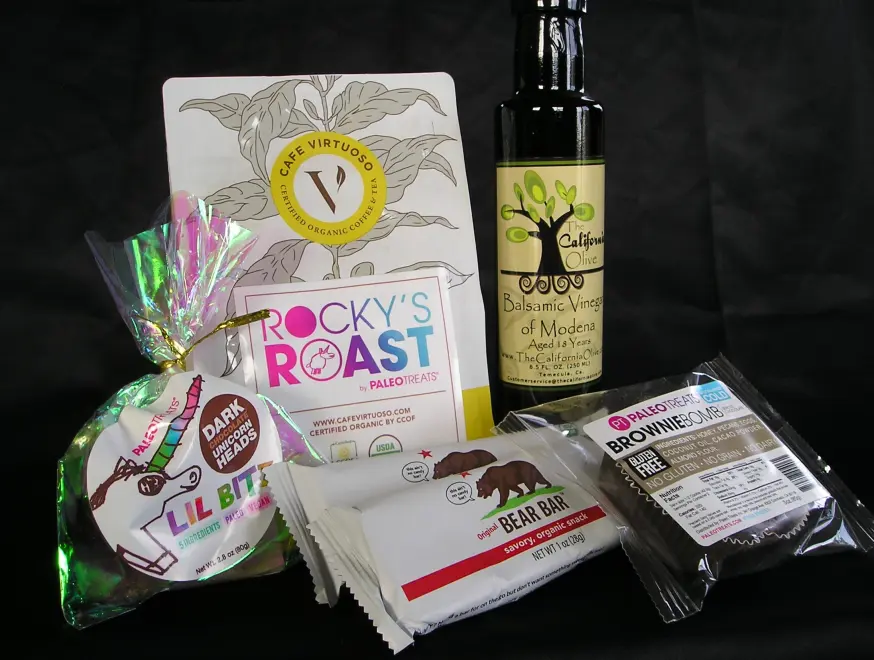
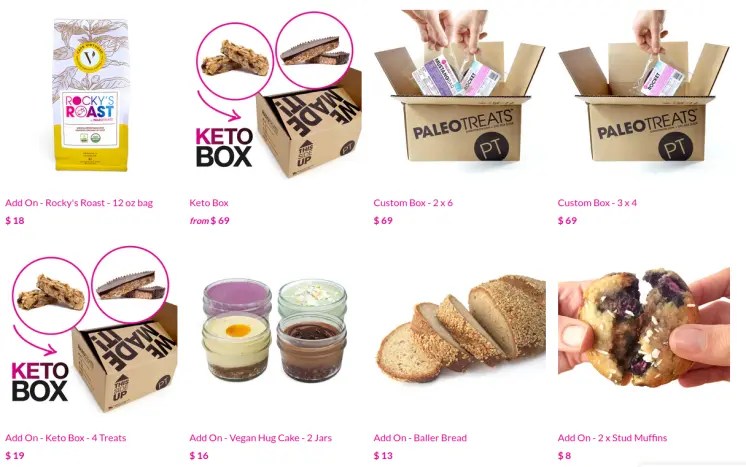
My go-to storefront for crypto purchases lately has been Paleo Treats. I'm a sucker for their Lil' Bitz chocolate treats and the Rocky's Roast coffee, but I'm also a huge fan of their impressive variety of paleo peanut-butter cups. They'll even offer you almond butter cups if that's your cup of tea. As a gift for a friend, I've also purchased their premium balsamic vinegar, a couple of energy bars, and some promo stickers -- just for fun. Regardless of your medical conditions, food allergy status, or dietary restrictions, so long as you have the coinage for it, there's a good chance they've got something delicious waiting for you.
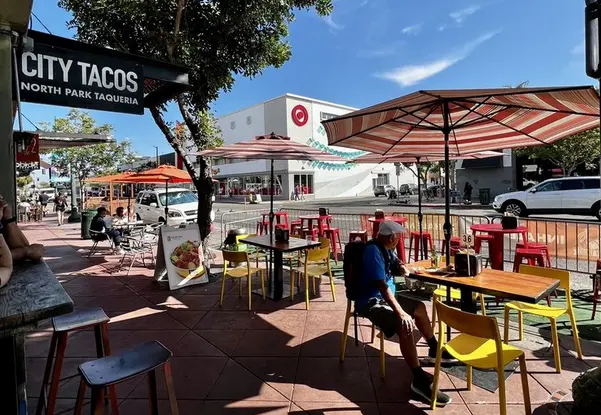
However, not every experiment pans out, and not every listing is up-to-date. Despite what coinmaps and the Bitcoin subreddit might otherwise suggest, City Tacos in North Park no longer accepts the cryptocurrency for tacos, burritos, or beer. When I stopped by to inquire about the matter in greater detail, they claimed that they've abandoned the practice some years ago.
Cannabis and Psilocybin: A Hypothetical Overview of the Market Today
Buying cannabis online is nothing new -- hell, the very first order placed over the internet was for a bag of weed. But the thing I find most wild about cannabis is how its shared perspective has evolved under the lens of modern scrutiny. Through the of advancement of decriminalization laws, we've watched the act of buying weed transform from a criminal undertaking into a commonplace transaction. And as our widespread understanding of cryptocurrency began to modernize, so too did the act of buying cannabis off the internet begin its transformation -- for commercial purchases performed domestically, the most egregious offense committed by the buyer would no longer be possession, but rather sales tax evasion, if anything. Where once were entire black markets, there now exist rough outlines of gray market industries where one is left to assume that all laws are being correctly observed by all merchants. This effect is even more clearly pronounced by new jurisdictions voting in psilocybin decriminalization laws across the United States.
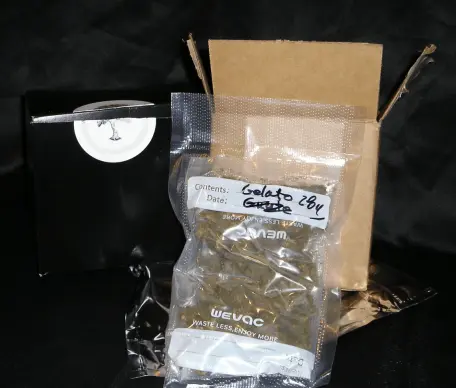
Naturally, I cannot endorse nor condemn these organizations in an honest assessment, as I cannot profess to violate federal transportation law. However, I can say that out of all the gelato strains of hybrid cannabis I've managed to purchase with crypto in accordance with the laws of my jurisdiction, I haven't found a batch I didn't like.
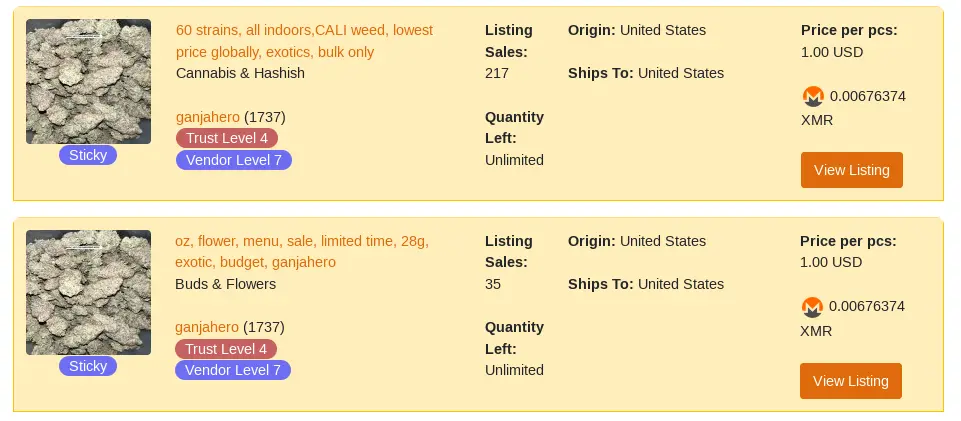
(An unrelated sample picture pulled through a legal search into the dark web. You're not doing anything illegal by downloading software to access a portion of the internet.)
Firearms: Obtained Legally and Otherwise
For those outside the world of crypto, there seems to be a pervasive misconception that some massive underground network of arms dealers are hard at work, illegally trafficking unruly quantities of weapons from around the globe. And while these purchases historically have happened -- and will occasionally sometimes still happen -- it should come as no surprise to the trained observer that the vast majority of USA firearm purchases are legal by nature. In the United States, there exist more guns than people, with the vast preponderance of them purchased with regular old fiat dollars: per capita estimates suggest 120 guns per 100 citizens, as of 2022. This alone would imply that so long as it's a far easier affair to obtain most firearms through legal means, then it'd be just as easy to obtain firearms with Bitcoin through the legal route too. And indeed, there exist modern public suppliers at the ready with an impressive variety of goods. Our example today will be Central Texas Gun Works.
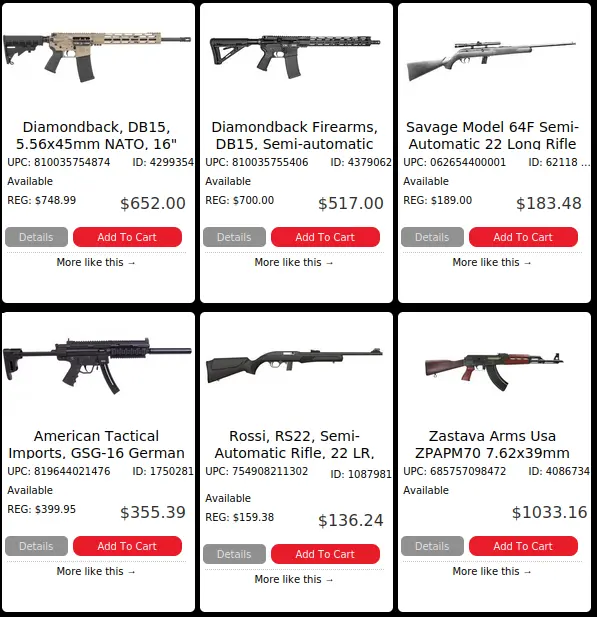
My experimental first-purchase was conducted through Central Texas Gun Works, who offered me a Hammerli TAC-R1 -- a .22lr rimfire rifle, and hence a weapon exempt from California's assault weapon's ban. This was in exchange for 2.5% of a Bitcoin. It should be noted that this price was before the transfer fee, DROS, and sales tax were pinned on. It should also be worth noting that tax is typically paid in fiat dollars exclusively, on the basis that a governing authority is typically hesitant to legitimize the value of a currency it wasn't responsible for minting.

While I had fun with the experimental purchase -- and while I am highly favorable of the product for how much I paid for it -- I cannot recommend conducting business with Central Texas Gun Works for online orders. My waiting period for my purchase was nearly a month longer than advertised, and playing phone tag with the company was starting to get really old when their excuses began to repeat themselves. Despite my fears of being scammed, my local transfer dealer received it without a hitch. If anything, it seems to me as though this organization is more likely to prioritize concealed-carry permit courses and other training as its primary business focus more than handling online orders. While there exist multiple vendors for firearm purchases through Bitcoin, the legal firearms market is still fairly young, and not wholly resilient to the complications involved.
It should be noted that already, as our cryptocurrencies have transformed from a niche interests to a relevant assets, conversations have already arisen debating how Bitcoin will inevitably be classified in a court of law. The current legal precedent argues that encryption may be classified as a munition in the United States. Title 22, Part 121 of the Code of Federal Regulations still argues that a surprising quantity of the elements necessary to conduct a cryptocurrency transaction can be classified as 'weapons' from a certain perspective:
“(b) Information security or information assurance systems and equipment, cryptographic devices, software, and components, as follows:
(1) Military or intelligence cryptographic (including key management) systems, equipment, assemblies, modules, integrated circuits, components, and software (including their cryptographic interfaces) capable of maintaining secrecy or confidentiality of information or information systems, including equipment or software for tracking, telemetry, and control (TT&C) encryption and decryption;
(2) Military or intelligence cryptographic (including key management) systems, equipment, assemblies, modules, integrated circuits, components, and software (including their cryptographic interfaces) capable of generating spreading or hopping codes for spread spectrum systems or equipment;
(3) Military or intelligence cryptanalytic systems, equipment, assemblies, modules, integrated circuits, components and software;…”
Some people are willing to accept this definition, on the basis that defining cryptocurrency as 'munitions' would protect acts of ownership and transaction under the 2nd amendment. And while I can see the reasoning behind this approach on the basis that bitcoin transactions of this nature serve as a fantastic example of a unique means of weaponizing speech, I'm dissatisfied with the logistics of this argument. Setting aside the implicit requirement of filling out an FFL transfer form whenever I'd like to send a Bitcoin payment to a user from another state, I worry that using an argument exclusive to the United States would risk diminishing the utility of the currency. Many more nations besides just the US have free speech laws, and several of those nations even have laws that are more liberal and forgiving than ours. By treating the ones and zeros of a cryptocurrency transaction for what they are -- the rigorously defined common agreements found in a universal public ledger -- then it becomes much harder to restrict, criminalize, or outright prohibit the use, acquisition, and trade of cryptocurrencies.
Of course, in the bigger picture, it hardly matters. Cryptocurrency exchanges are conducted solely in accordance with the laws of mathematics -- to criminalize Bitcoin while successfully enforcing the prohibition of its transactions quickly becomes an exercise in futility. Anybody with a laptop, a USB stick, and a stable internet connection can successfully buy or sell cryptocurrency without so much as another human soul being the wiser.
***
I think one of the things that fascinates me so much about making purchases with Bitcoin is the wide variety of regular goods made available to the everyday buyer, even given the relatively small number of vendors on the market. Despite how young Bitcoin is as a currency, it's already a partly-viable means of transaction for a lot of regular, everyday items, alongside our more grandiose sorts of purchases. I also think its fascinating to watch which small companies keep their act together, in part because in many respects, I'm making an investment in their company. It's often said that a fair open market is like a democracy of ventures, where consumers vote with their wallets. When one chooses to make a transaction using a commodity instead, there's always the chance that a provider of a service would stand to gain an appreciation in value for choosing to conduct business with you.
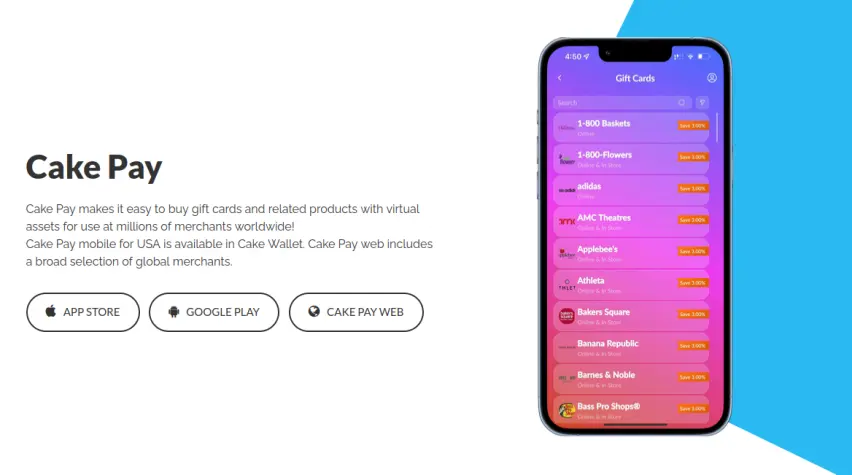
Another matter to consider is the manner in which using cryptocurrencies regularly in everyday transactions helps to legitimize the tender as a medium of exchange. While this is already remarkably accessible through third-party intermediaries, such as Cake Pay for gift cards and Crypto.com for debit cards, we should remind ourselves that it's already entirely possible to conduct transactions with willing vendors without anybody else involved. That's one of the things that makes cryptocurrency so unique -- as a regular unit of credit, with legitimacy in a shared ledger, it has inherent value because it is regularly backed by people who choose to accept it in return for the goods and services you'd rather have. A supply of Bitcoin is its own demand -- this phenomena may be best highlighted in Henry Hazlitt Economics in One Lesson:
"...This is inevitable when we consider that demand and supply are merely two sides of the same coin. They are the same thing looked at from different directions. Supply creates demand because at bottom it is demand. The supply of the thing they make is all that people have, in fact, to offer in exchange for the things they want. In this sense the farmers’ supply of wheat constitutes their demand for automobiles and other goods. The supply of motor cars constitutes the demand of the people in the automobile industry for wheat and other goods. All this is inherent in the modern division of labor and in an exchange economy."
I think that there is some factual basis for this argument. In a manner of speaking, when I'm eating gluten free cookies or sipping locally roasted coffee, I am eating and drinking my Bitcoin. And when you look at it like that, it makes a good argument for its worth as a medium of exchange. For all it's unique qualities, for all its bells and whistles, Bitcoin is ultimately just another kind of money. And after all, what good is money you don't get to spend on anything?






