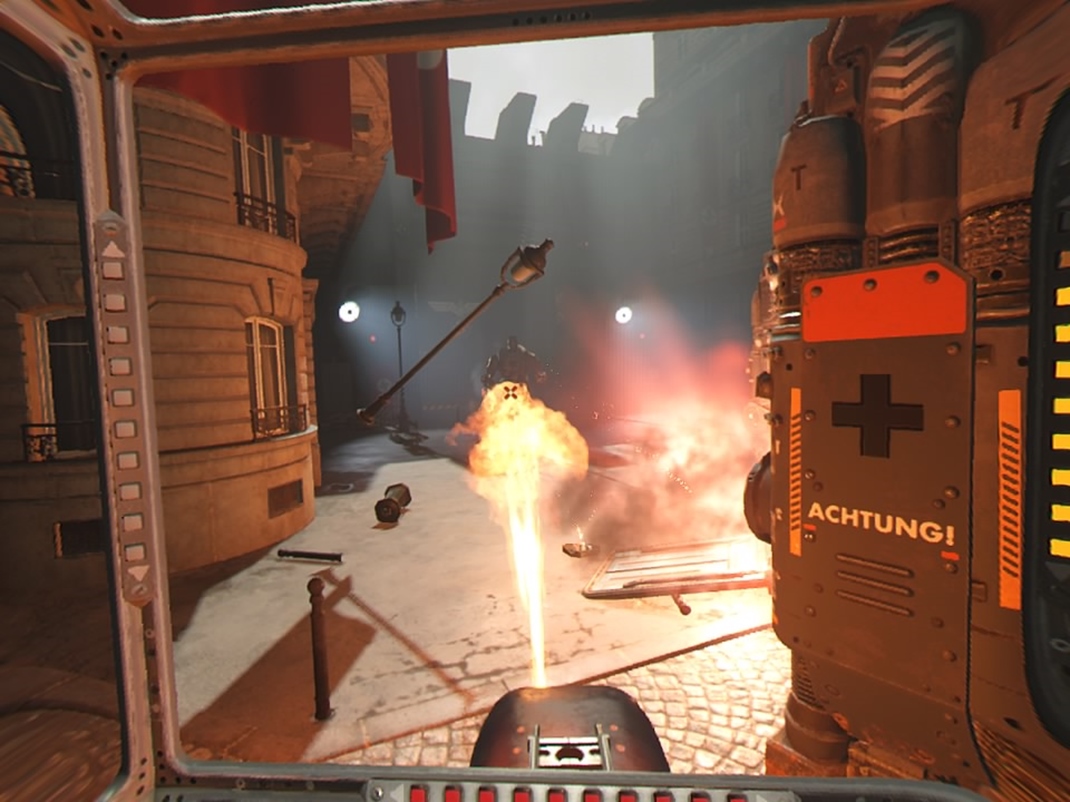
Bethesda is perhaps the only big publisher today to push virtual reality games, not just smaller games, but also bringing their biggest brands to VR. We could play Skyrim VR, Fallout 4 VR, Doom VFR and now there is Wolfenstein: Cyberpilot. Perhaps, with the exception of Fallout, none of their VR games broke through, but they still don't give up. Many put great hopes on Cyberpilot, but as it turns out, they still haven't found a clear recipe on how to prepare a quality and fun VR title. They can select individual ingredients, but they cannot work with them.
Let's analyze the game for petty - there is the liquidation of the Nazis, a successful brand, dynamic gameplay, interesting sessions and so on. Just when these ingredients were thrown into a pot in Bethesda, the result is something that will put a pharaoh's curse on you at home. Not to mention that there are still really many things the game is acutely missing. It won't take long, actually just until the end of Level 1, until you get the feeling that instead of playing properly, someone has just released a technology demo that you may not want to entertain as such, but wants to present the technology options. For example, PSVR sometimes works as a miracle despite the limitations, but that's it.
Want a story? Take a magnifying glass because you will have to look for it honestly. The year is 1980 and Europe is still under the Nazi oppression. Although the resistance movement is still fighting, it has not achieved much success so far. However, this can change now when you join them. You do not know who you are, what you are, only your task. Cyberpilot is telling you, and your job is to hack Nazi combat machines and use them against them to fight the liberation of Paris. But you don't need a game for this information, you can learn from the description of the game in digital stores. After all, the game doesn't even represent them very well.
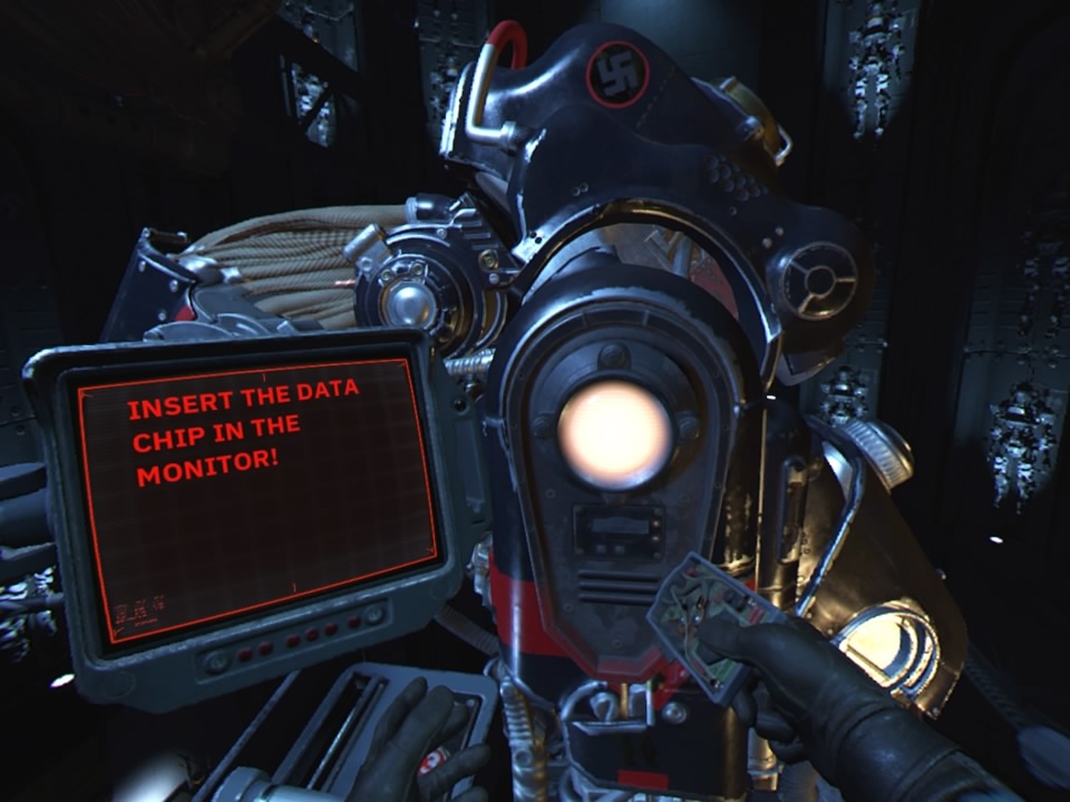
Which is a pity, because in the end the game will show an interesting face of the story, but you will not enjoy much of it, as there is only the last mission ahead of you. Something interesting is happening here, but too late to significantly change your perception of the game. Perhaps the authors will catch it at least in the future in the sequel to the main series, because it is definitely not a bad idea. If you are waiting for some connection with other games, there is not much outside the world. Direct links to The New Colossus or to Youngblood, which is set in action after the Cyberpilot event.
Similarly, the game content. There may be something interesting, but what if, despite its miserable length, the game is packed with boring cotton wool to at least stretch the time you spend with the game. There's no point in going around the mash - you only spend two hours playing the game. In VR games, a similar game time is quite traditional, but certainly not beneficial. It's just very little. In the game itself, it is transformed into four missions and among them is the cotton wool where you listen to a character from the resistance that guides you through the story and your tasks. And you kind of feel like a trained monkey when you have to do trivial activities just to keep the game from going to an hour. So you use the virtual stick to look combat machines, select them from chips and plug in again. You simply take the thing from point A and put it in point B. Occasionally the game gets complicated and you have to return it to point A.
The PSVR version is specific in this respect due to its technological limitations, when the camera does not have the highest viewing angle when shooting, and even the controller will start to “run away” over time. For example, you have to open a cabinet down, but the camera no longer sees it. It was during these passages that I had to constantly re-center the position using the Start button to reach places that were not easily accessible from the home position. Not to mention that you control the game with Dualshock and you have to make sure that the camera still directly sees its light. So if you reach for something to the side, the controller must always be facing the camera. The authors could have solved these things by not having to go straight to things, but using a cursor just like fighting.
SUPERHOT VR and other successful VR games have shown that pure action and high dynamics can be a way to not only engage players in virtual reality, but also keep them there for fun. From the paragraph above, you probably understand that there is not too much danger. What a pity, because the action, while simple, still has that dynamic id Soft style, where you get in the way of Nazi soldiers in various forms along with their combat machines and your task is to destroy them. Just this time not with weapons, but with the equipment of the machine you are currently controlling. There are three you can know from other games: Panzerhund, Dron and Zitadelle.
You will spend one mission in each of these machines and eventually combine them all in the last mission to rotate them to help you move forward. Panzerhund is smaller and more agile, destroying enemies mainly with a flame thrower and can also use the cars in the environment. The drone is designed for stealth and with it you will move along the back and over the heads of enemies to either bypass them or dispose of inconspicuously. Well, Zitadelle is a huge, but colorful colossus with a great firepower. Every machine has its own equipment, special ability and you have to replenish your life
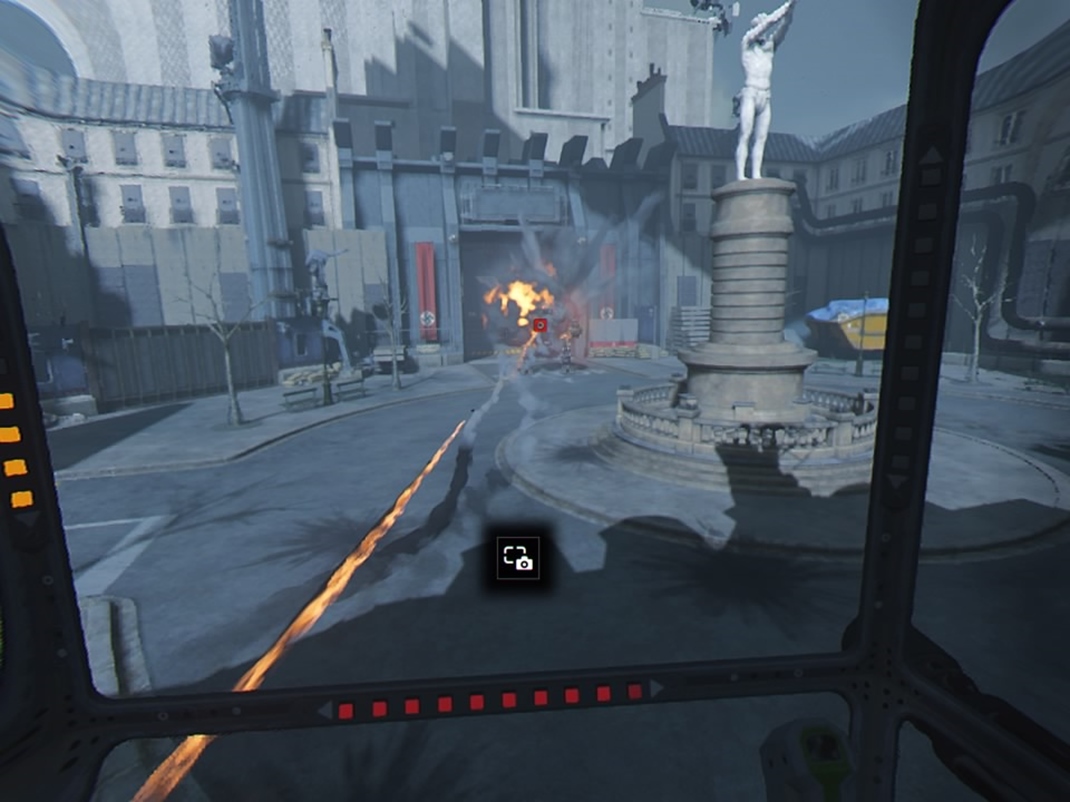
The action in the game is quite straightforward. You walk through the closed streets of Paris, where you destroy enemies and regardless of the difficulty do not put much resistance. Of course, they can withstand quite a bit, but they are quite static. It's like classic on-rail games, just here you move yourself. In its simplicity, however, it is fun. The problem with the enemies, however, is more evident in the Drone mission. Stealth is not supposed to be around a character that is almost motionless. The challenge is not even hacking, just turning the knob. Again, at the end, the game shows its potential, and if this were to be the case, the game would turn out much better. Alternate machines, which changes the gameplay, it has a better pace and have fun.
Well, the game is short and partly filled with unnecessary cotton. For example, the SUPERHOT VR was mentioned for a short time, but you could enjoy the next hours thanks to the challenges, so you got a decent value for your money. Unfortunately, you won't find anything like that here. There is only a single-player campaign with these 4 missions and no added value. You won't even find any turns in the game where you can collect secret documents, for example.
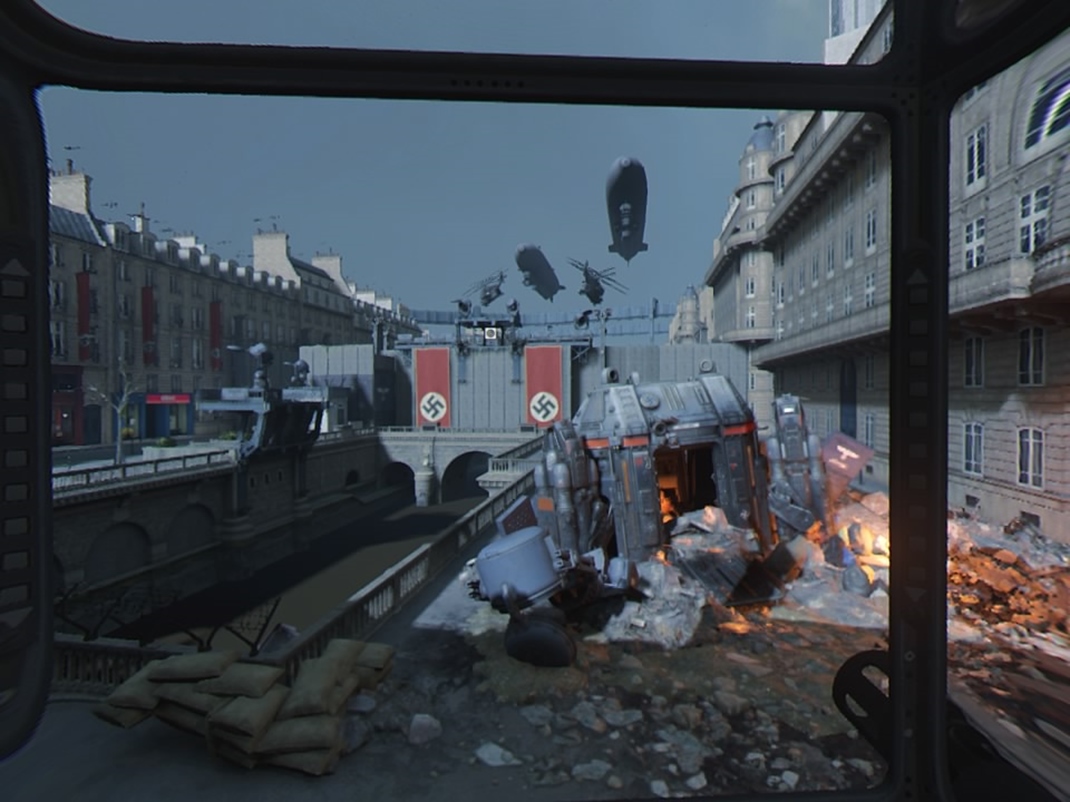
I have a very contradictory impression of the audiovisual. I have already indicated that the PSVR version is a bit of a miracle. It moves very well, it does not look worst. But at the same time the game doesn't look good. Art is far ahead of the technical quality. In the streets of Paris you will come across moments when you just look around and enjoy their game play. All the more if airships fly over you and there are other things in the area that nicely create a really decent atmosphere. It is all very blurry, which terribly moves the overall impression down. Given the absence of characters there is not much dubbing, but you enjoy the music and if you like synthwave, come here on your own.
I don't like spending more time writing a review than playing a game. This is not often the case, but such short games do not come out so often. That is also the reason why I had only one word - techdemo. That's Wolfenstein: Cyberpilot. There are signs of potential here, as well as bright moments at which you can really enjoy yourself. Just because of the short playing time and quite a lot of cotton wool quite a few. It's good that Bethesda still trusts the CoR, but they should try harder. You need to take the good of your previous 4 attempts and hopefully it will turn out better next time. This is just a very sad demonstration of how to bury the potential of the world, brand and games as such.