
The Total War series includes more than a dozen titles, yet it has not yet made its way to the players and is able to draw them into battle again and again. Although the recently released Total War Saga: Thrones of Britannia has wobbled and slightly succumbed to the bar of set quality. In their latest addition, the Creative Assembly chose a new environment and sent us to crumbled historic China, where it really boils. In short, ideal conditions to start a total war.
The content of a more or less traditional campaign is therefore clear. You have to fight your rivals and try to dominate the dragon land. But this time you can rely heavily on your allies. Especially if you choose one of the coalition leaders at the beginning. But you can also find allies when playing for other factions. Another option and greater challenge is to play as a governor, and the choirs are also choices. And Yellow Turbans, a fraction added in the form of DLC on the day of the game's premiere. When choosing a party and a leader, you can also choose the form of experience that the game will offer you, and this is especially evident in combat.
If you choose Stories, the generals will show up on the battlefield as independent heroes with strong abilities. Their performance increases with experience, injuries and levels. Most interestingly, they can meet enemy generals in duels. All you have to do is send a challenge in the whirlwind of battle and the enemy hero will accept it. Or the other way. You can then watch the battle of a pair that ordinary soldiers watch from behind (though sometimes they get under their feet) and hope that your general will eventually win and hurt or kill his tough opponent. The Three Kingdoms Records mode is in the classic spirit, and your generals are always accompanied by their personal section. The emphasis is on tactics with the troops and you need to pay more attention to the fatigue and morale of the troops to succeed.
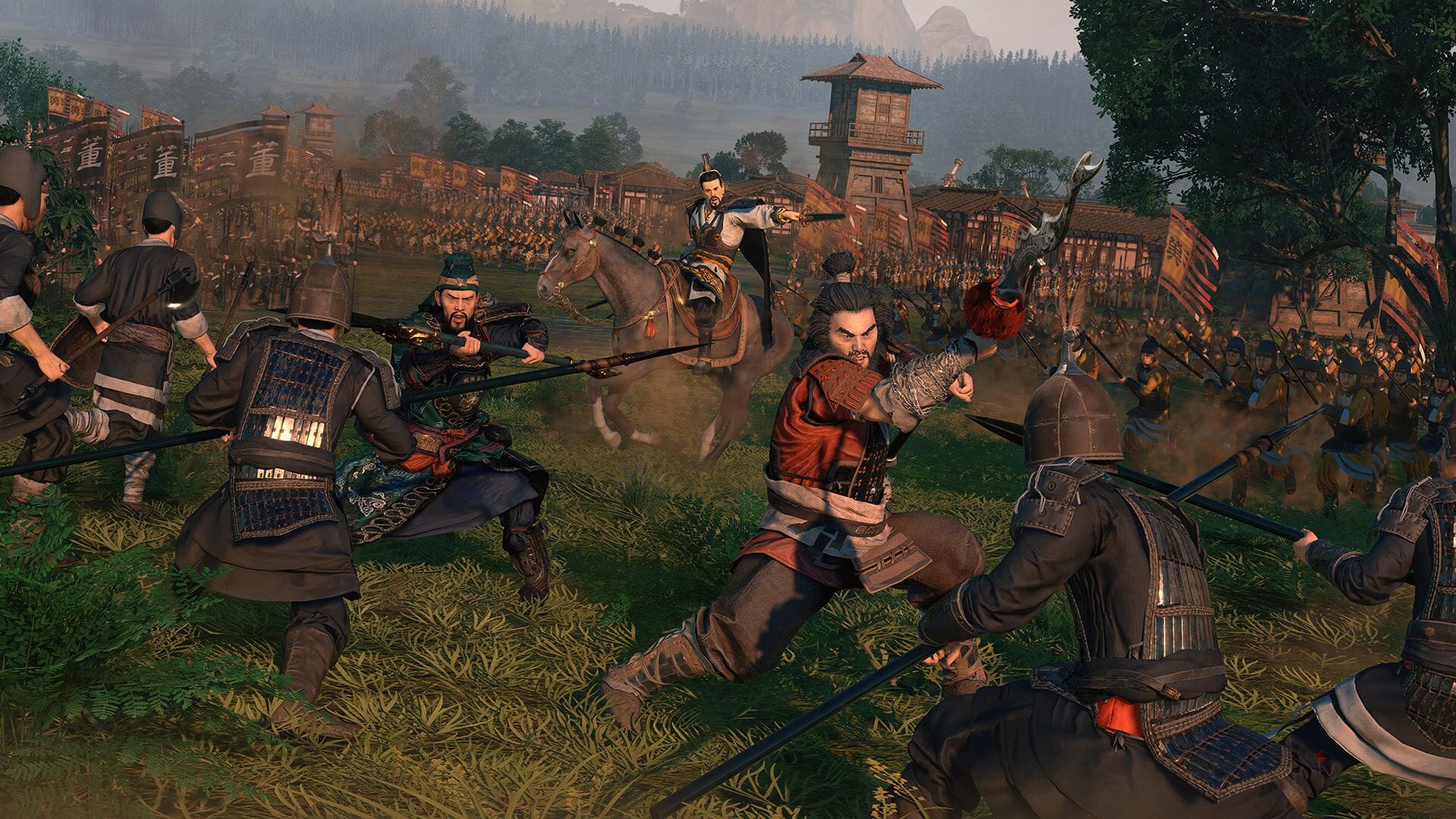
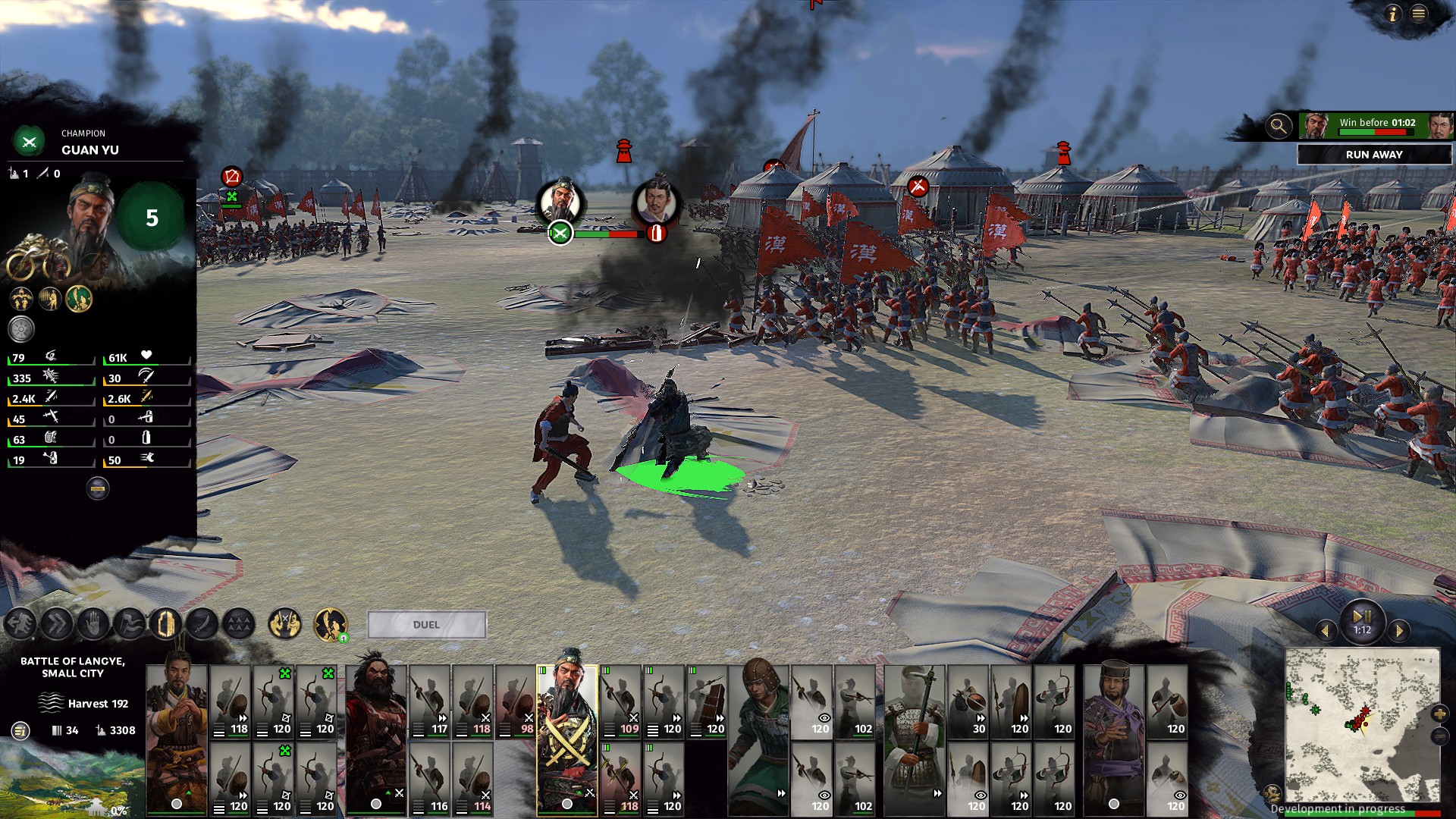
And when we have started fighting, we can say that their base has not changed significantly, but there are some minor adjustments. While these fights are a plus, replacing the unit layout scheme before moving it to another location with a new designation is rather a negative. Instead of the point markers, there are boxes, rectangles where it may not be immediately clear to which side the section is facing and how the soldiers will be joined. Otherwise, count on the standard in the form of various units, which have their strengths and weaknesses, can use the terrain, hide in the forest, use catapults and other aids to siege fortresses - this time also undermining the defensive rampart.
You identify the combat sections by flags, group them into any larger groups, change their formations, and use their specific abilities. Fighting takes place in real time with the possibility of acceleration or pause, and in this case only on dry - naval battles do not wait. And sometimes they are lengthy - with enemies you often spend long minutes, even if you smother them.
Significant adjustments relate to the actual recruitment of units on the country map. You no longer produce separate sections, but commanders with the troops. And you can buy additional units as needed. However, each commander is assigned a maximum of six sections. So the game explicitly imposes the possibility to combine more commanders together, otherwise you will not reach a multiple army. In addition, at the beginning there are limited numbers of troops with which you defend your dominion and conquer the country. You will have more armies that require supplies in a foreign territory only a little later when your superpower level rises or you acquire the appropriate technology. These are now described as reforms in a single but well-branched tree, where you unlock economic and military benefits, buildings and practices. As a rule, it takes five rounds to adopt the reform, as the campaign is again in turn-based mode.
The campaign includes conquering and developing cities and adjacent craft and farm buildings. You need finances, food, you have to pay attention to the satisfaction of the population, otherwise there is a rebellion culminating in the fight with the rebels. Diplomacy is much more important and space than it used to be. In virtually every round, you have to take a stance on the numerous demands of other leaders. You speak about the admission of new members to the coalition, often respond to the offer of exchange of helpers, peace or non-aggression agreements and troops crossing your territory, financial demands. Diplomacy is also a way to conclude bargain deals, but also arrange marriages. As you progress, you follow your family tree, manage your court, family, and candidates for office, chief commander, or manager. As you occupy and upgrade your settlements, your prestige is rising, new opportunities, such as espionage, are opening up, and you will gradually become count, marquis, commander, king, and ideally the emperor himself.
Individual characters of generals and prominent personalities have a decent RPG development. Everyone gets experience, levels, new weapons, armor, mobile animals and followers. You can change all this, the range is expanding and you choose items with the greatest bonuses in different areas. In addition, the character gets points to unlock abilities, and you see her relationship with other generals that need not be underestimated.
Ideally, if you include commanders with the same priorities and minds in one army, otherwise it will cause discomfort. And their loyalty should be noted, for those dissatisfied can betray you. On the other hand, the low level of loyalty of the defeated enemies opens up the opportunity to invite a capable general to your ranks. Otherwise, you can also choose a ransom or execution to get rid of the person for good and usually get a bonus item. Your characters are valuable, you can also assign them to perform smaller tasks that you select from the list, and can also be captured and executed in combat if you refuse to pay a ransom.

In addition to mining you also fight in your own custom battles, where you set parameters or in historical, where you have preset conditions, battlefields and units. Artificial intelligence does not excel, its actions are machine, sometimes chaotic and illogical, but sometimes it can torment you. And there is also a ranked battle where you will be ranked in the world ranking based on your performance. In addition to this multiplayer form, you can play a campaign with other players.
Developers decided to radically change the look of the game. There is a visible attempt to beautify, although there is a lack of detail when approaching the terrain on the campaign and battlefield map. Anyway, it's a step forward. You may get used to the customized UI under load, but you will gradually orient yourself.
Three kingdoms after lukewarm Britain and a failed online arena have put the Total War series back on their feet. It seems to be moving in the right direction. The game brings a more modern visual in unprecedented conflict, a campaign with various, more or less practical adjustments and enhancements, and great emphasis on diplomacy. Diversification of the traditional struggle are the fights of generals, and on the other hand, a disturbing element is the change of marking when regrouping and moving units and even AI could be better. Despite the slightest clues, however, it is a return to the quality we were accustomed to with the best parts in the ageless Creative Assembly saga.






