
Remember this is just my opinion.The bitcoin bubble seems to grow and grow endlessly. It is beginning to resemble the greatest phenomena of its kind in history, including tulip-mania in the sixteenth century Netherlands, speculation on the shares of the Southern Seas Company in the eighteenth century and many others. All these bubbles, like the current bitcoin bubble, are always formed on a wave of optimism about the value of some assets and the expectation that the price of these assets will continue to rise, even in the distant future. However, every time the bubbles splash and the price of an asset breaks down.
The expectation that the price of bitcoins will continue to rise in the long term is largely linked to the conviction of many people that bitcoin and other "cryptovalots" are the money of the future. Nothing could be further from the truth. In fact, bitcoin is an archaic currency, just like gold in the past. Archaic currencies are created using rare production factors. For example, gold is obtained by digging deep into the ground with many machines and a lot of work.
you can talk about bitcoin yourself. Bitcoin is created (or rather "extracted") - as cryptic enthusiasts say by analogy to gold) using huge amounts of computer processing power. The machines needed to extract bitcoins consume a lot of electricity, and thus rare - in economic terms - energy sources (oil, coal, nuclear power, renewable energy sources). According to some estimates, the amount of electricity needed for annual bitcoin production is equal to the demand of a country such as Denmark. This is an incredible cost, especially if we take into account the externalities associated with electricity production, such as CO2 emissions.
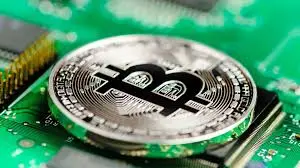
Although bitcoins are considered the currency of the future, they are actually - like gold - the money of the past. What is striking is the contrast between bitcoin and modern currencies, which are called 'fiduciary money'. (from the Latin fides, or faith, because they are made "of nothing"). Of course, producing paper money also costs a lot, but we use banknotes less and less often, and electronic money (payments by debit and credit cards). Electronic money is produced with a minimum amount of rare (limited) resources. With decreasing communication costs, these outlays will decrease further and electronic money will become even cheaper. That is why electronic money, not bitcoins, is the currency of the future.
However, there are other - perhaps more important - reasons why bitcoin and other cryptovalots do not have a future as means of payment and value gauges (i.e. they cannot fulfil the two basic functions of a currency). First, the supply of bitcoins has been determined asymptotically (there is a set, but never reachable threshold for their quantity), so their spread would lead to permanent deflation (i.e., negative inflation). This would be because the world economy is growing and it needs more and more money in order to be able to trade more and more globally. In a bitcoin economy, this challenge can only be met by gradually lowering the price of bitcoin-denominated goods and services, i.e. negative inflation. Quantitative money theory maintains that the second way to deal with this problem is to increase the speed of money circulation, but it cannot grow infinitely. That is why the bitcoin economy would have to deal with permanent deflation, which is not a particularly attractive prospect.






