
Higher Debt Burdens Change Policy Dynamics
Under normal circumstances assuming that an economy is balanced and has modest debt levels, it can withstand moderate economic recessions. The ability to tolerate recessions changes when an economy has an excessive amount of debt - the reason for this is because debt holders have a much more difficult time repaying the debt when the economy contracts.
A deep contraction can trigger bankruptcies and liquidations, which has the potential to turn into a deflationary spiral similar to what the economy experienced during the Great Depression. After several tough deflationary years during the Great Depression, policymakers opted to devalue the currency and increase fiscal stimulus to reignite economic growth.
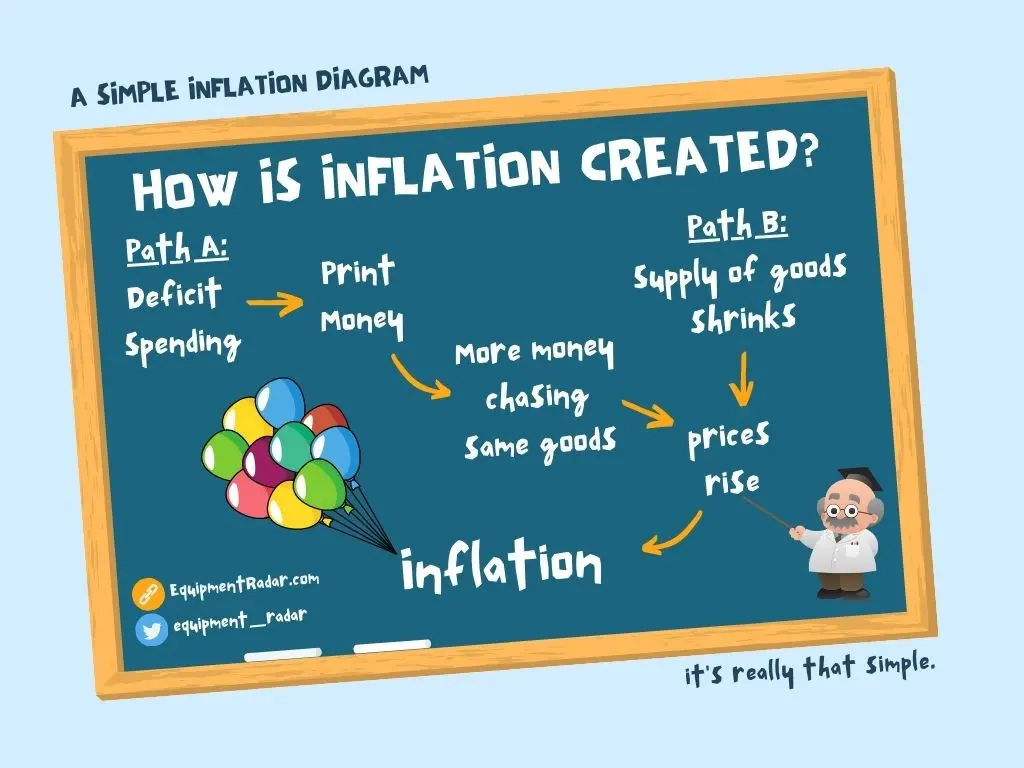
It does seem highly unlikely that the USA will default on its government debt. Any government that can print its own currency and also borrow in its own currency (ie USA, Japan, China, etc) can simply print more money to repay its debt obligations. The printing is not a free lunch - printing more money ends up creating inflation.
Global Debt Has Grown Faster Than GDP For Over 60 Years
Since the 1960s, debt-to-GDP has risen for the United States and most other countries. Debt has grown at a faster rate than GDP for about 60 years - long-term this is unsustainable. Whatever is not sustainable eventually ends - the question is... when will it end?
The recognition that things that are not sustainable will eventually come to an end does not give us much of a guide to whether the transition will be calm or exciting. - Tim Geithner, Secretary of the Treasury during the Financial Crisis
Global debt data collected by the Bank of International Settlements show that global debt-to-GDP has grown considerably for most of the world. The US Government Accountability Office (GAO) 2020 government financial statements and projections forecast deficits and debt-to-GDP expanding to unprecedented levels through 2050.
Historically, debt-to-GDP would rise after wars and then return to low levels as the country paid back the debt and GDP grew (GDP grew faster than debt). The rise in debt-to-GDP over the past 15 years has been driven by fiscal spending to prevent a deep recession. Pumping the system full of stimulus cash and raising debt-to-GDP works for only so long before it no longer works. Debt cannot grow faster than GDP in perpetuity. At some point the system breaks, and we could reach that point in the near future.
When looking at debt, it's important to look at the system-wide debt that includes government, corporates (businesses) and households. Most governments can control the issuance of their currencies, but households and businesses cannot - as a result, the fates of indebted households and businesses are at the mercy of policymakers. Usually, policymakers are required to step in and bail out over-indebted households and businesses (similar to bailouts during the Financial Crisis and China's Evergrande at the moment).
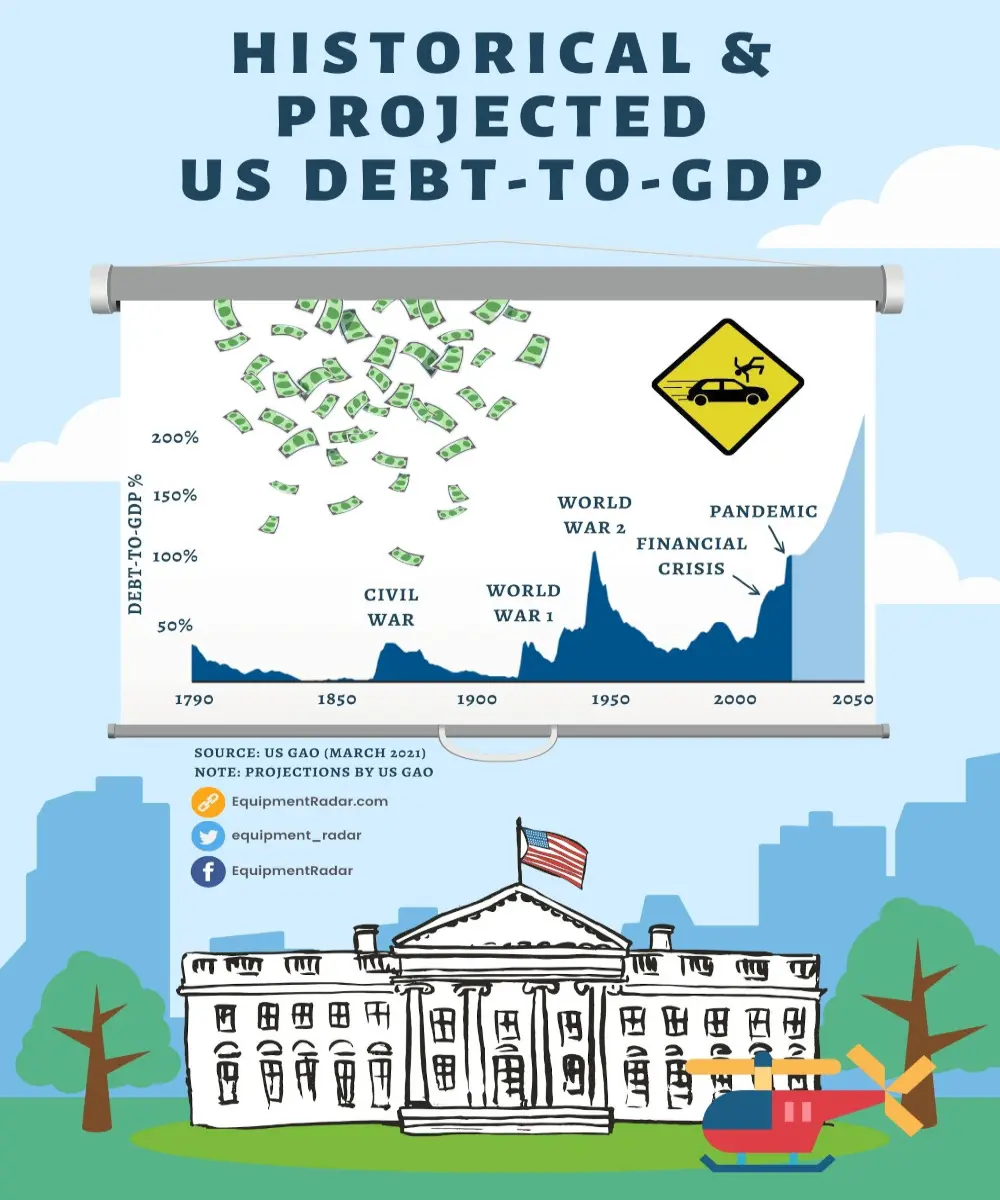
Takeaway: The US government's budget office forecasts that debt-to-GDP will rise dramatically. It is important to note that projections do not assume a moderate or severe recession (which would further increase debt levels). Interest expense paid on the national debt will grow meaningfully going forward.
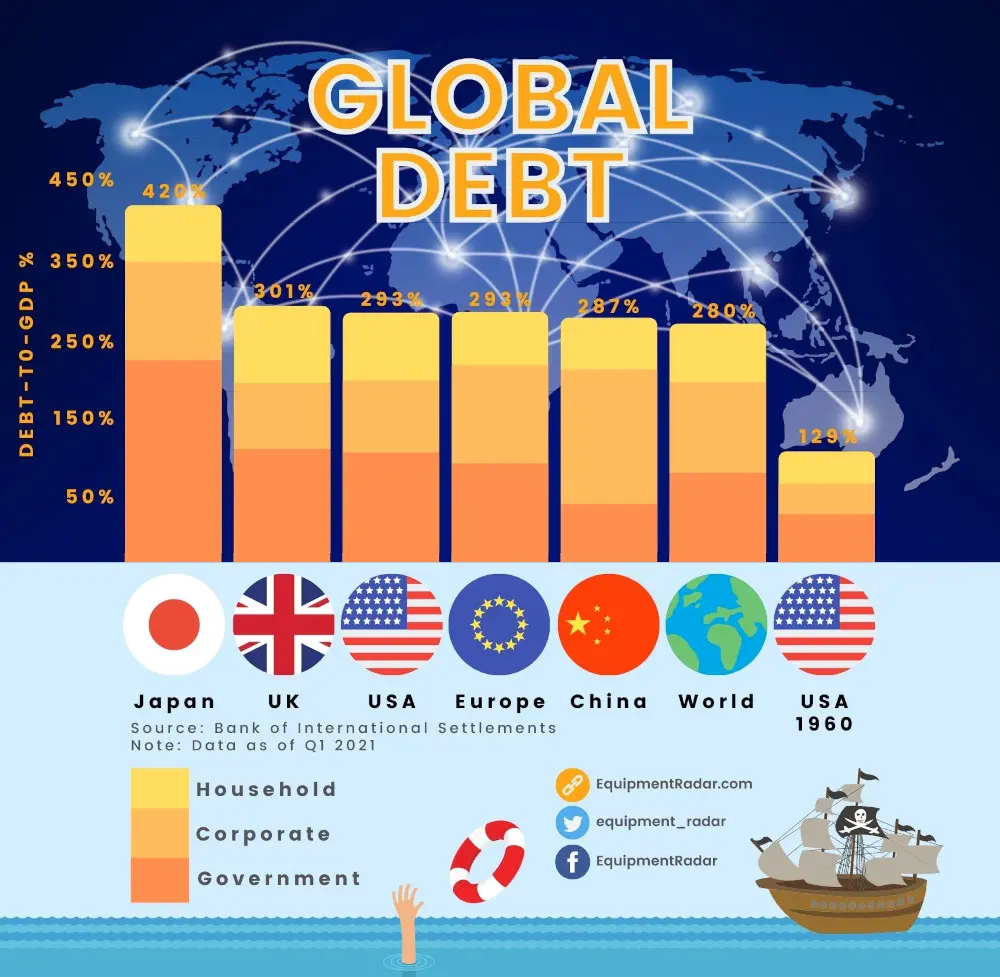
Note: The entire world has elevated debt levels. We are all in the same boat. As you can see, Japan's system-wide (government, corporates and households) debt is above 400%. It's possible this gravy train has more room to run before it hits a wall... time will tell. In the USA system-wide debt-to-GDP increased from 129% in 1960 to 293% today.
View entire 3,600+ word article at Equipment Radar






