
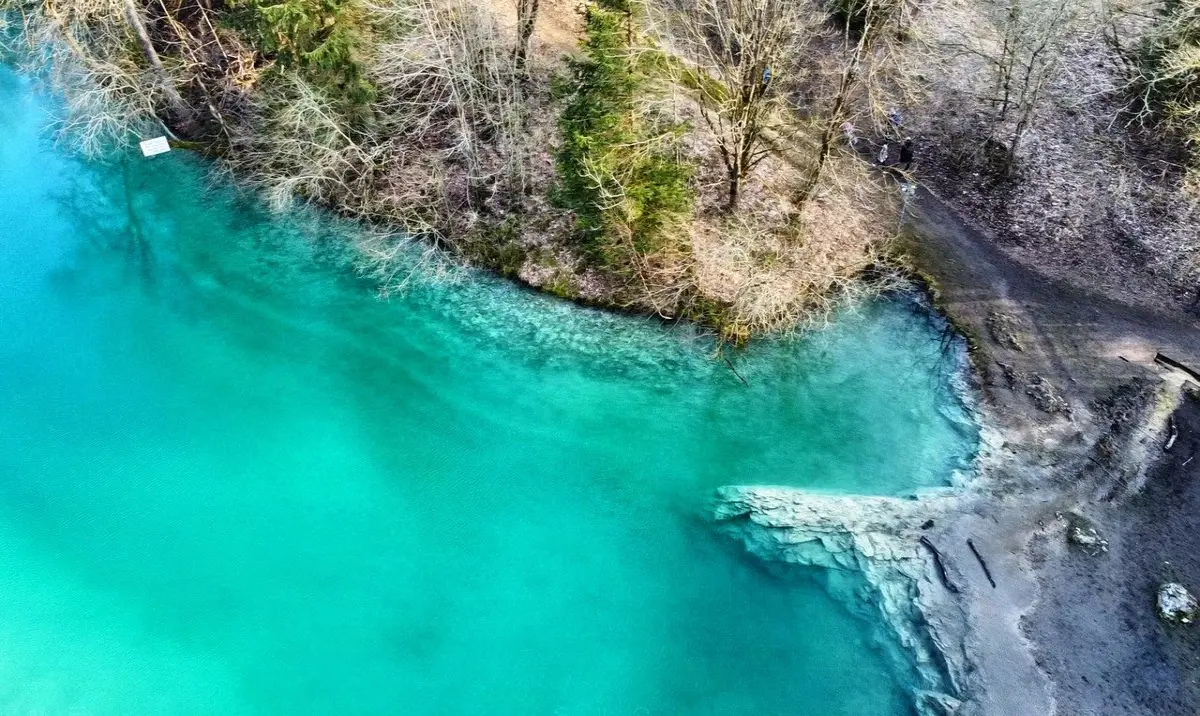
The blue eye of Germany: How an enchanted lake returned after seven lost years from his dry grave...
It is a miracle after seven years: In the middle of the German Harz Mountains there is a magical little lake that has fascinated people with its bright turquoise water for 100 years. At the small Harz town of Hüttenrode, an industrial site was transformed into the shimmering azure waters. But finally the blue eye disappeared - day trippers and tourists stood helpless in front of a gaping hole in the rock.
There was nothing left of what was once the “blue eye of the Harz”, a 30 by 60 meter long pond filled with brilliant turquoise water. Only Google Maps still showed the blue water. The lake was dry. A desolate limestone tub through which visitors wandered in shock.
Of course - the lake wasn't always blue in the past. But even in the green phases, which begin when too many people ignored the actual bathing ban, the crystal clear water turned over and algae recolored the turquoise South Sea puddle, the body of water, classified as a geotope by the State Office for Geology and Mining, remained an eye-catcher.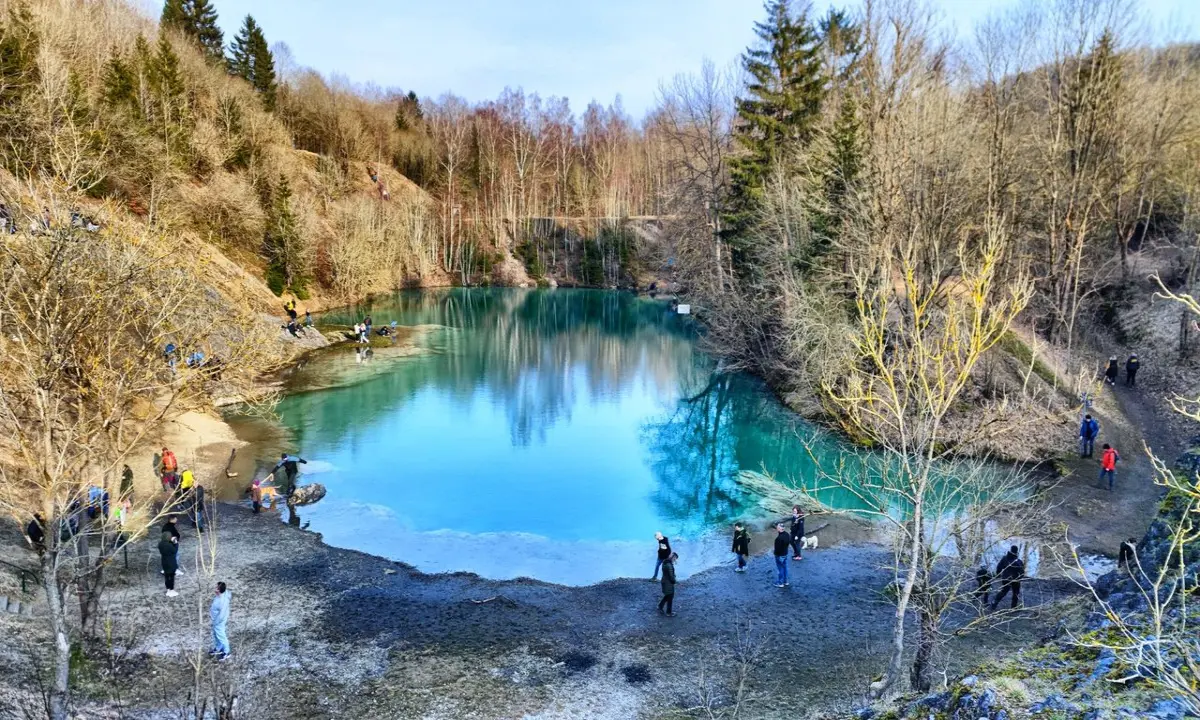
Crowds of excursionists traveled along the circular route on weekends, there were regular guided tours and hiking apps recommended the Blue Lake as a “unique natural backdrop” that simply had to be seen.
But wait: Nothing here is pure nature. Like the rugged canyons that gape in the rock walls around the Blue Lake, the rock basin, which is up to 15 meters deep, is not the result of geological processes, but rather a consequence of human activity. The Blue Lake is actually an opencast mining hole that owes its existence to the former Garkenholz quarry.
Limestone mining began here in 1885 to produce quicklime. The Elbingeröder Reef, created 387 million years ago when a very pure layer of limestone formed from corals and algae in an ancient sea several hundred meters deep, was considered a real gold mine at the time.
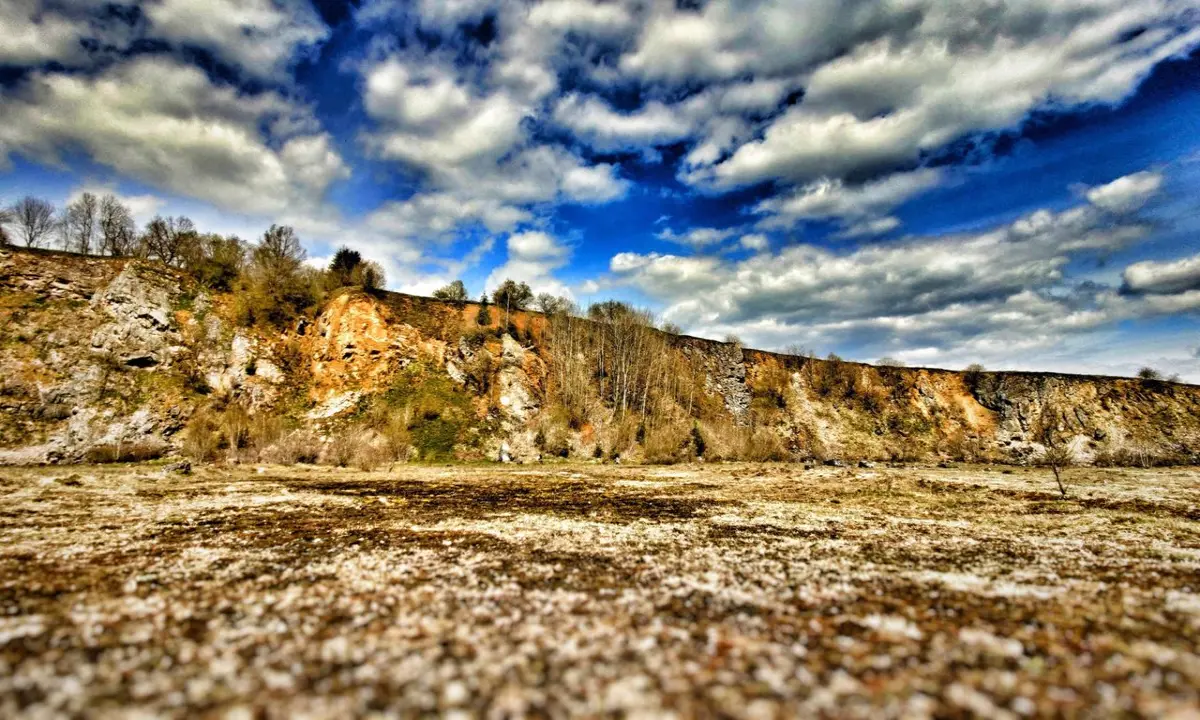
A railway line was built, which at that time ran along the exact dam that is now used as a hiking trail to the lake. Operational buildings and rail lines for transport trucks are being built. Little by little the stonemasons ate their way into the terrain. The limestone was crushed in large crushing plants and transported towards Blankenburg or Rübeland.
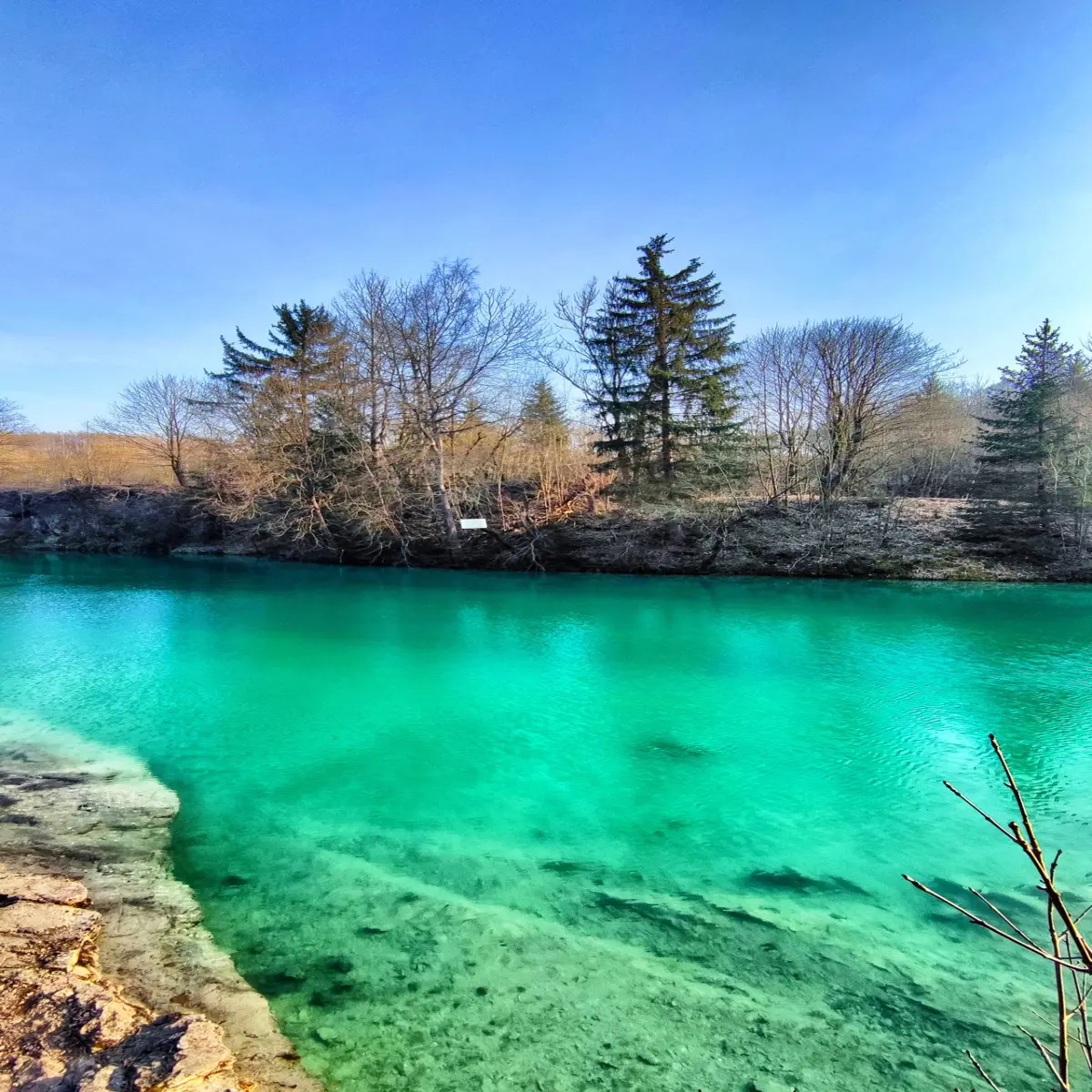
Like the dry lake, the steep and towering rock faces are also witnesses of that time. What looks like a natural idyll today is a lost place that has been rebirth as a nature wonder. Not only the traces of mining have disappeared, but also all memories of the most terrible events that the rocks had to witness. The Nazis murdered hundreds of Russian prisoners of war in a camp. After the end of the war, the Russians set up a prison camp in the isolated area. The paramilitary GDR combat groups later took over the area. The now protected biotope becomes a shooting range.laimed with trees, bushes and dry grass since it was closed down in 1946.






