
A Short Intro on Liquidity Issues in DeFi
Decentralized Finance (DeFi), otherwise known as open finance, is an emerging trend in crypto that’s only just getting started.
We’re witnessing the dawn of an open, permissionless, and decentralized financial ecosystem that’s transforming old financial products into trustless and transparent protocols.
That’s what DeFi is.
Through DeFi, financial products and services for borrowing, lending, banking, and trading are being built using decentralized infrastructure such as public blockchains and smart contracts.
These novel DeFi products are becoming increasingly more popular and some of the most relevant ones are instant token swap services such as Uniswap and Compound.
These types of token swap services are critical for ushering in a decentralized and tokenized world and the most important aspect they bring to crypto is liquidity.
Liquidity is one of, if not the number one most important aspect of any market.
The reason liquidity is so important is because it affects how the price of an asset will move. If an asset has low liquidity, it means that one trade could move the price dramatically in either direction, rendering illiquid markets unattractive to big players and to the mainstream.
Unfortunately, this young crypto market suffers from major liquidity issues.
Current market dynamics silo liquidity into hundreds if not thousands of exchanges and trading pairs, which further reduces liquidity for traders. This proves to be a major issue for large players as it dramatically increases volatility and risk as offloading a big position can come with massive slippage and cascade the market downwards.
That said, for cryptocurrency to become a more attractive and mainstream financial market, its liquidity must drastically improve.
This is why multiple DeFi projects are coming out with novel liquidity incentives to increase liquidity and decrease slippage.
Currently, the top 4 DeFi projects with liquidity incentives are:
- Compound
- Balancer
- Ampleforth
- Bancor
1. Compound - $COMP
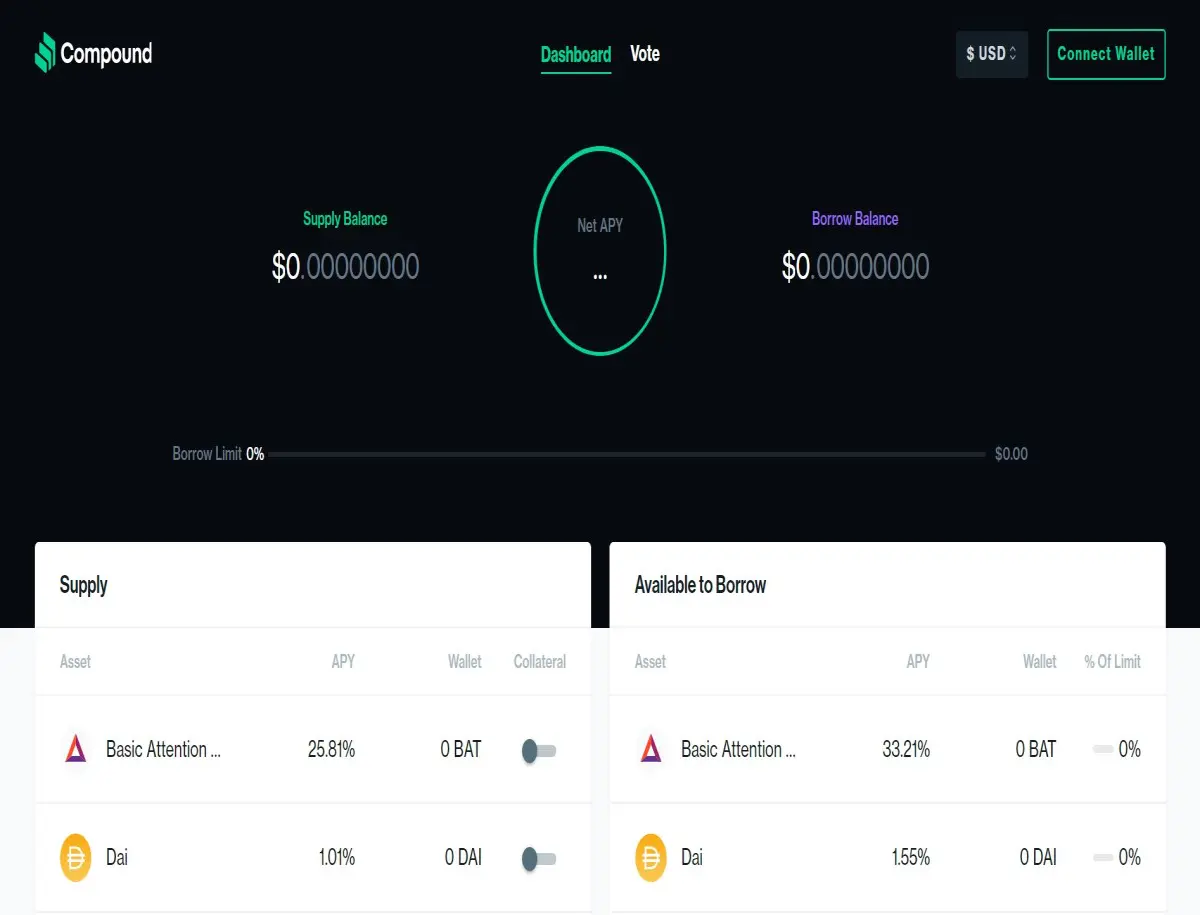
Compound token swap interface (source)
What is Compound?
Compound is an algorithmic, autonomous money market protocol on Ethereum that enables users to earn interest on their digital assets or borrow digital assets against collateral.
As of June 2020, Compound became the #1 DeFi protocol on Ethereum with more than $570 million locked USD value.
Also in June, Compound launched its $COMP governance token which emerged as the largest decentralized finance (DeFi) token by market capitalization after just 1 day of trading.
What is $COMP?
COMP is an ERC-20 governance token that empowers its community of holders to participate in the governance of the Compound protocol. COMP token holders and their delegates can influence changes to the protocol by:
- Debating which direction to take the Compound protocol
- Proposing new features and changes
- Voting on proposals
Why and how is $COMP distributed?
The COMP token is being distributed to users who provide liquidity to the Compound protocol. It’s being distributed this way to incentivize users to contribute liquidity and also to increase Compound’s ecosystem of users, who will collectively steward the protocol into the future with good governance.
As a user, how can I receive $COMP via Compound’s Incentive Program?
Users of the Compound protocol automatically receive COMP tokens for either supplying liquidity or for borrowing assets via the protocol. 50% of the distribution is earned by suppliers and 50% by borrowers. Each day, approximately 2,880 COMP are distributed to users of the protocol.
Users can contribute liquidity to the Compound protocol via the Compound.Finance App.
2. Balancer - $BAL
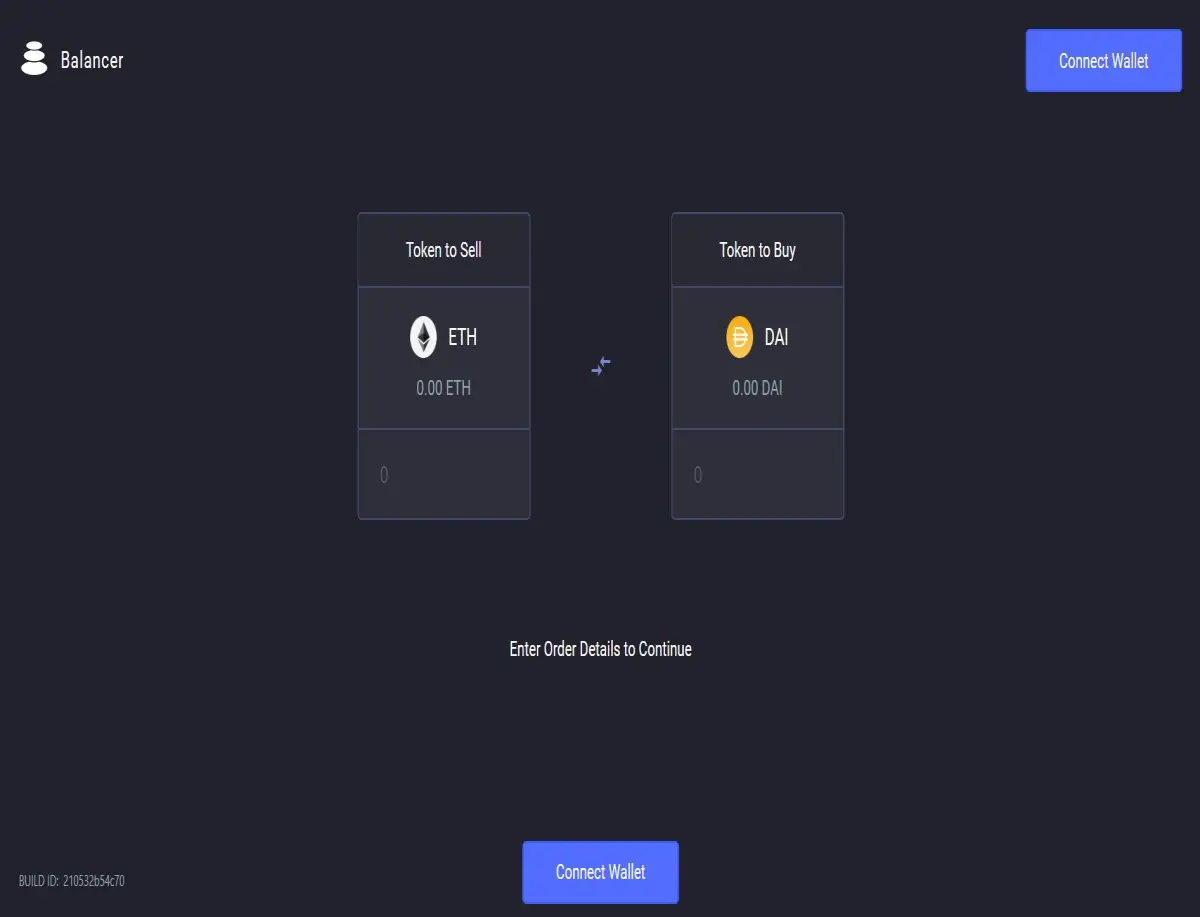
Balancer token swap interface (source)
What is Balancer?
Balancer is a non-custodial generalized automatic market maker (AMM) protocol that enables any portfolio to continuously self-rebalance itself while also generating fees.
In doing this, Balancer is an automated portfolio manager, liquidity provider, and price sensor that provides users with a flexible and trustless platform for programmable liquidity.
The Balancer protocol just launched in March of this year and is set to play an integral role in providing dapps with reliable pools of liquidity.
What is $BAL?
BAL is Balancer’s native ERC-20 token which is used for the following:
- Reward liquidity providers for providing liquidity in Balancer pools.
- Act as a governance token, enabling BAL token holders to determine the future of the Balancer protocol by voting on proposals for protocol upgrades and changes.
Why and how is $BAL distributed?
On June 1, 2020, the BAL token began getting distributed to users providing liquidity to the Balancer protocol. From this date forward, each week 145k BAL will be awarded to users with liquidity in Balancer pools, totaling 7.5M BAL per year.
Balancer’s liquidity incentive program aims to create a really strong incentive for early adopters to grow liquidity and get involved in the governance process.
As a user, how can I receive $BAL via Balancer’s Incentive Program?
Users of the Balancer protocol can receive BAL token rewards by providing liquidity to existing Balancer pools or by creating their own pool.
Balancer pools can contain 2 to 8 different tokens with any custom %-distribution of value for each of them (ie. 40% BAT / 20%LINK / 10% DAI / 30% ETH, or some other combination).
Users can contribute liquidity to Balancer pools via the Balancer.Exchange Pool interface.
More info here
3. Ampleforth - $AMPL
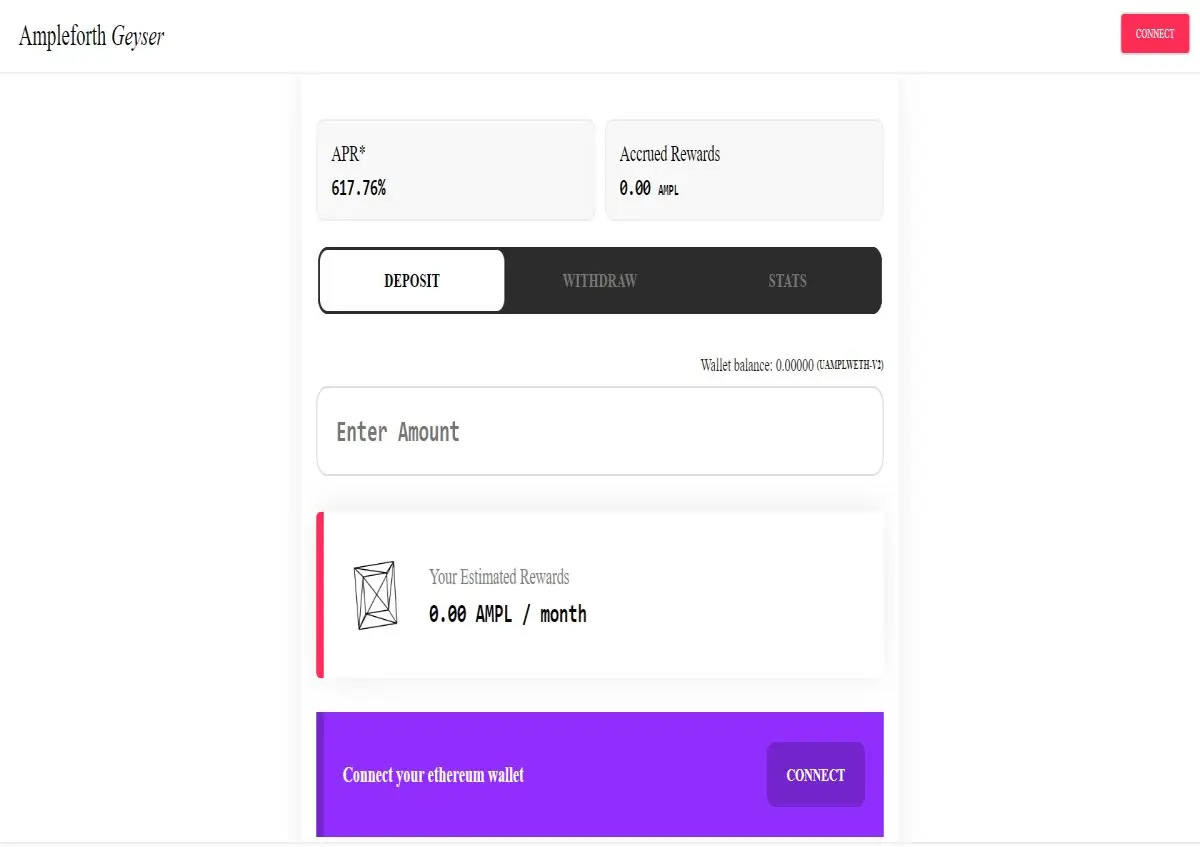
Ampleforth Geyser Interface (source)
What is Ampleforth?
Ampleforth is a synthetic commodity money protocol that automatically adjusts supply in response to demand. When the price of the protocol’s AMPL token is high, a user’s wallet balance increases. When the price is low, their wallet balance decreases.
Ampleforth is one of the most innovative and interesting projects emerging in DeFi and it just recently launched its AMPL token distribution program on June 23, 2020.
What is $AMPL?
AMPL is Ampleforth’s native ERC-20 token which is a synthetic commodity money, like Bitcoin, but with near-perfect supply elasticity, like fiat.
AMPL’s unique qualities make it ideally suited as:
- A Diversifying Asset as it is uncorrelated to Bitcoin and other cryptos.
- A Reserve Collateral in decentralized banks, making it a DeFi building block (lego).
- An Alternative to Central Bank Money that’s adaptable to supply and demand shocks.
Why and how is $AMPL distributed?
Ampleforth’s AMPL token is now being distributed via the newly launched AMPL Geyser to those who provide liquidity on Uniswap V2. The awarded amount of AMPL that liquidity providers receive is directly related to how much, and how long they provide liquidity for.
The reason AMPL is being distributed in this way is to boost liquidity on Uniswap and to promote the adoption and awareness of Ampleforth and its unique AMPL token.
As a user, how can I receive $AMPL via Ampleforth’s Incentive Program?
Ampleforth users can start contributing liquidity and earning AMPL tokens in three simple steps.
The way it works is:
- Deposit ETH and AMPL into Uniswap V2
- Receive UNI-V2 LP Tokens
- Stake those UNI-V2 LP Tokens in the Geyser Programm (I'll be releasing a guide on this too very soon)
Then stakers receive a share of the AMPL tokens held in the Geyser’s AMPL pool for providing liquidity.
4. Bancor - $BNT (Upcoming)
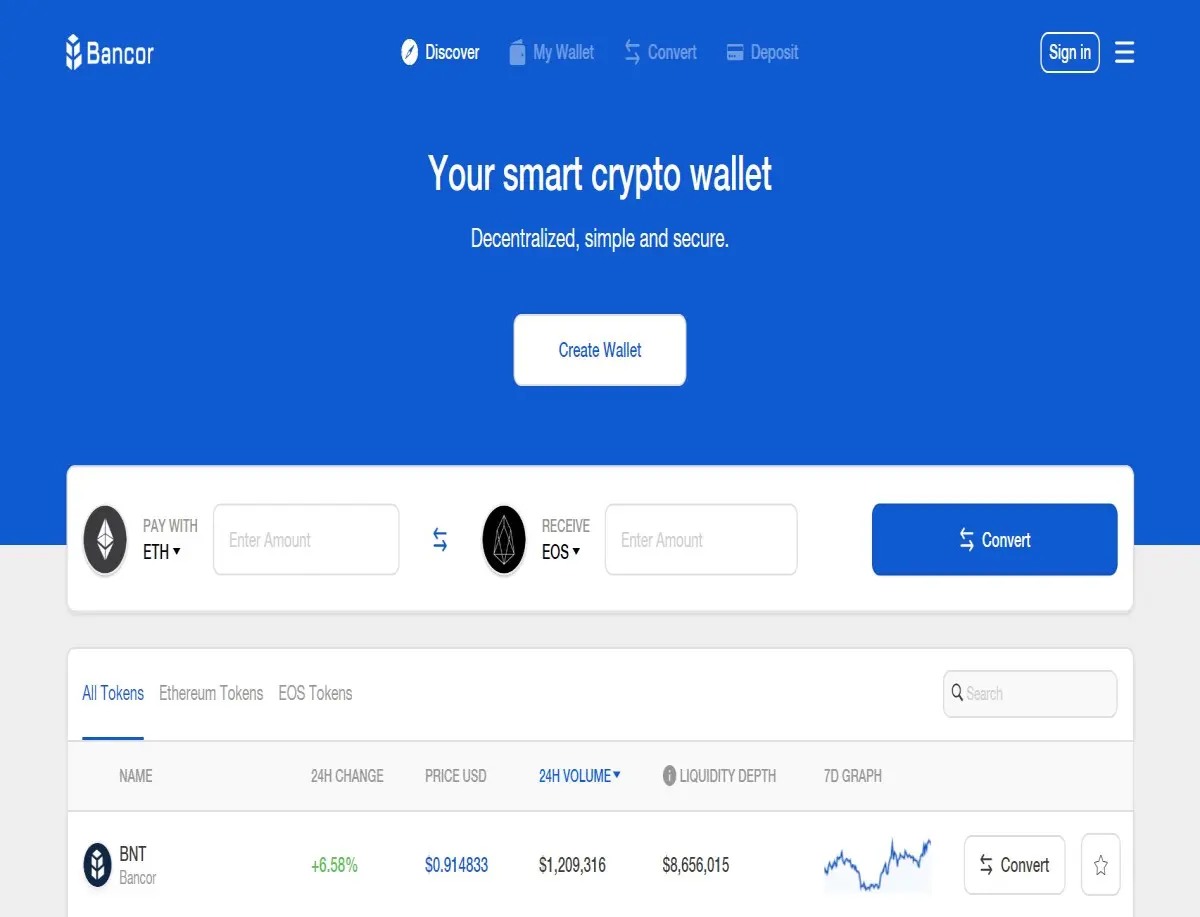
Bancor.Network token swap interface (source)
What is Bancor?
Bancor is a novel smart contract Automated Market Maker (AMM) platform on Ethereum that uses a mathematical bonding curve to calculate digital asset prices and to track liquidity provider contributions.
In simpler terms, Bancor is a decentralized exchange (DEX) protocol that uses pooled on-chain liquidity from users around the world, for non-custodial token exchange.
Bancor recently launched its V2 upgrade on April 29, 2020, which introduces a new type of AMM that allows users to provide liquidity without holding a separate reserve token. This upgrade enables users to provide liquidity without giving up their long position on the token.
What is $BNT?
BNT is Bancor’s native ERC-20 token that plays an integral role in the functionality of the Bancor protocol:
- BNT serves as the intermediary token that connects Bancor pools across blockchains.
- BNT is a staking token in Bancor liquidity pools, where liquidity providers receive newly minted BNT as a reward for providing liquidity.
- BNT serves as a governance token allowing token holders to vote on proposals for the protocol.
Why and how is $BNT distributed?
Newly minted BNT will be distributed to liquidity providers who deposit (stake) BNT into Bancor liquidity pools along with the token they’re providing liquidity for.
For instance, if a user supply’s 10% of the MKR/BNT pool’s liquidity, they will receive 10% of the pools staking rewards on top of their share of trading fees.
This method of distributing BNT to liquidity providers is being implemented to incentivize BNT token holders to become active participants in the network.
As a user, how can I receive $BNT via Bancor’s Incentive Program?
Once Bancor staking goes live, BNT token holders will be able to deposit BNT tokens into a Bancor liquidity pool when providing liquidity. They will then be able to collect staking rewards paid out in newly minted BNT for supplying liquidity.
More on Bancor's upcoming liquidity incentive program here.
Will We See the Rise of DeFi Incentive Programs?
As the DeFi space grows in popularity and becomes more widely adopted, I think we can expect to see many more incentive programs that reward liquidity providers for taking on risk by providing DeFi protocols with liquidity.
DeFi Incentive programs can be incredibly lucrative and have a big impact on the growth and adoption of DeFi. They attract all sorts of token holders to their corresponding DeFi protocols by rewarding users with their tokens atop of fees of LPs make.
Compound’s recently launched COMP token surprised many people with its massive success after launch and other DeFi tokens are quickly rising in the ranks as well.
That said, maybe it's only a matter of time before Uniswap releases its own governance token and incentive program?
Only time will tell, and you can bet that I’ll be there covering every aspect of it.





