
In my last article https://www.publish0x.com/datascience/data-the-new-oil-xmdwz (data - “the new oil”), I explained how data has become a valuable resource in the modern day and how the trillion dollar companies have been able to capitalize on this resource to immerse fortune. In this article I will make an effort to explain how you can get started with this juicy profession and what a better way than to start with my own story?.
I studied a Bachelor of Statistics at Makerere University, Uganda with a computing major and right after school; “data science” was the buzz word that greatly intrigued me. I had prior been introduced to computer programming but honestly, I never felt like it was my thing. The problem here was that I couldn’t easily find a more definitive use case that clearly matched my interests. Sure, I had been introduced to data mining concepts, but all that wasn’t backed with clear real life examples and I can now say, I was delayed by the education system to actually appreciate these concepts. With a prestigious degree in statistics, I still felt incomplete that I knew nothing about data science and kinda cheated by the system. At that point, I knew that I had to get dirty on my own and get self-taught.
What is data science?
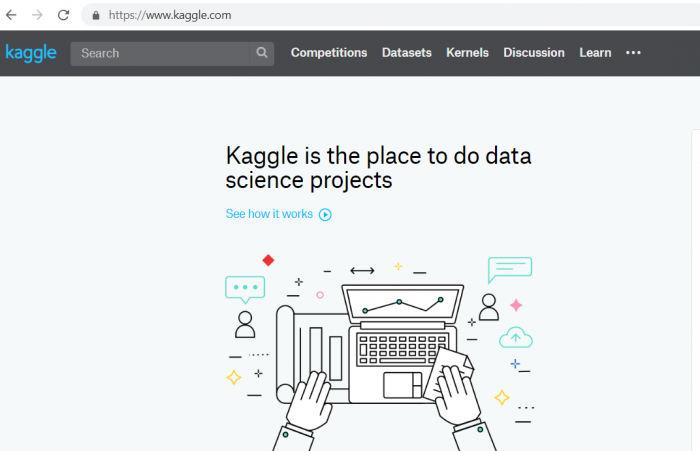
Like someone reading this article right now, I spent fairly 6 months trying to understand what data science is, with everyone giving their own understanding and sure, it was never easy to split hairs between the traditional data analysis and data science, but regardless, I kept going, reading and reading. I watched a number of YouTube videos about data science but those by Dave Langer stood out the most for me. In most of the articles I read, or the videos I watched, I was constantly referred to popular data science platforms but Kaggle, data camp and Udemy were instrumental in getting me started. Kaggle is a popular data science platform that features a number of data science problems that are posted by several companies and institutions in search of optimal models that can be used to tackle the problems at hand. Some of these competitions come with a prize tag and other are for learning purposes (which is still a good thing). Famous on Kaggle is the NETFLIX 1 million dollar prize that sought a model to optimize movie recommendations to customers (you should definitely read about it). The easiest way to understand data science is to actually watch a real life problem being solved using data science. Beginner courses like “Machine learning from disaster | survival of the titanic passengers” are real life problems that can help you understand data science and appreciate its relevance in today’s world that’s awash with data.
The tools - Python or R?
I will not labor explaining the various data science tools out there but one thing that’s for sure, you will never go wrong with Python nor R. For anyone new to computer programming, Python is a general purpose computer programming language that’s heavily used in machine learning, artificial intelligence, web designing, embedded systems, and many more. On the contrary, R was derived from the S language both developed by statisticians. I started by using R because being from a statistics background, it felt indigenous and with its functional programming syntax, I felt welcome home. But later I met challenges with deployment since R is non-deployable lest you do that on the R specific server which is still not convenient. I then started reading about python on the side and I still I’m but I think my experience with Python is quite magical. Python is from a computer science family and its implementation is a bit clearer than R. I would advise R to whoever is into research only but for someone seeking deployment and real time processing, Python will be a good slave. I’m still learning Python and am positive it will be quite fundamental given its wide range of use cases.
I can’t exhaust the contrast between R and Python but will probably write a separate post on the two and you can choose where you lie. I don’t intend to bias you!.
Action points
- Watch some YouTube videos on data science
- Checkout Kaggle - the data science platform
- Contrast between Python & R
- Signup with data camp or an equivalent and;
- Get dirty by doing!!
Evarist Twinomujuni






