
Artificial Intelligence is changing our lives: Jack Dorsey, Block CEO (Cash App, Square, Afterpay, Tidal streaming), has laid off approximately 40% of his employees. Pinterest, CrowdStrike, Chegg and dozens of other companies have also made similar announcements in recent months. Much of the work done by humans can be done by machines. According to Anthropic (Claude), the most affected sectors will be:
- Computer science (developers) and mathematics.
- Office and administration.
- Business and finance.
- Law (legal professionals).
- Architecture and Engineering (operational managers).
According to the founder of Stability AI (Emad Mostaque), the biggest inversions were:
1) Invention of the steam engine in 1780 (shifted the value from what one owned, i.e., land, to what one could organize).
2) Transistor in 1947 (significantly improved the production line, cutting down on workers and labor. Ford employed 100,000 workers in 1920, then 5,000 in 1990, producing even more cars).

3) Ever-improving technology (Kodak employed 170,000 people in 1998, and in 2012 Facebook acquired Instagram, which had 13 employees. The entire photography industry evaporated in a decade: the endless inflation of photos and their ease of taking them rendered them worthless).
4) ChatGPT and AI released to the public in 2022 (the largest technological adoption in human history).
Technology is deflationary by nature: every innovation reduces the cost of producing goods and services. The cost of a flat-screen television has dropped by 90% in twenty years, while quality has increased exponentially. The cost of sequencing a human genome has gone from $3 billion in 2003 to less than $1,000 today. HDD, SSD, computer, etc, cost much less today than they did in the 1990s. The marginal cost of intelligence, a resource that for millennia was the exclusive monopoly of the human brain, is tending toward zero. The economic system is based on labor: production by humans. However, humans need food, rest, vacations, etc. AI doesn't have these problems.

All the innovations mentioned above that radically changed the way we live had seen humans adapt: when land became less important than labor, humans became workers. When labor became less important than capital, humans used their intelligence. But when human intelligence becomes less important than AI, humans become... what? Perhaps AI supervisors? AI is thinking about that too because AI Agents now exist.
The big problem is that we've built an economic system that requires perpetual inflation to function. Central banks have systematically compensated for technological deflation with monetary inflation. Every time technology reduced costs, the central bank printed money to drive up nominal prices. The result was a transfer of wealth: the value created by technology was captured by those who own financial assets, not by those who produce or consume. If AI can do almost all the cognitive work, productivity will grow exponentially but in the current system, this will translate into mass unemployment and further concentration of wealth.
WHAT WILL BE VALUABLE IN THE FUTURE?
- Real estate: NO (if robots can build houses without human supervision, if materials can be produced at marginal cost, if energy becomes virtually free thanks to fusion, the cost of housing will tend to fall).
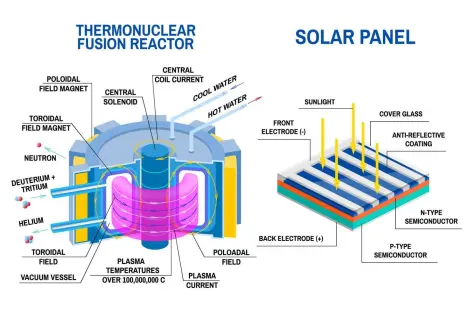
- Energy: NO (Solar panels and fusion are making energy practically free).
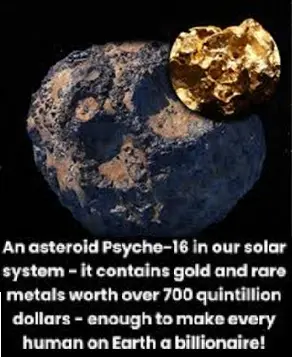
- Gold: LESS THAN TODAY (It's the ultimate safe haven, but gold is scarce only on Earth. Asteroid Psyche-16 contains enormous quantities of iron, nickel and gold, more than the entire world GDP has ever produced. Since SpaceX is reducing the cost of space travel, asteroid gold mining isn't science fiction. The amount is so large that every person on Earth would become a billionaire. The problem? Such a large amount would cause the value of gold to plummet).
- Bitcoin: YES (It's the only mathematically stable and unmanipulable asset. It can't be altered, nor does it depend on banks. Bitcoin is the only scarce commodity immune to technological progress. Technology will make everything abundant, except $BTC. I must reiterate that $BTC doesn't need to become the global payment method; it can't do so due to scalability. $BTC is a store of value for holding wealth and is useful for moving large amounts of money in complete safety. The use of Bitcoin as a store of value and blockchain technology in AI systems cannot be ruled out).
Are you interested in ways to earn crypto bonus? Check it out here: Some Sites To Earn Crypto Bonus (Old & New)





