
When we talk about "𝕮𝖔𝖎𝖓" mean an electronic currency based on a blockchain (where translations are recorded).
Bitcoin, Monero, Ethereum, etc have their Blockchain.
Once the Blockchain is created, however, the tokens must be issued, then exchanged between the users of the cryptocurrency.
Tokens are divisible, therefore it is possible to exchange also token fractions so we will have Satoshi (Bitcoin), Litoshi (Litecoin), etc
So initially we only talked about "𝕋𝕠𝕜𝕖𝕟".
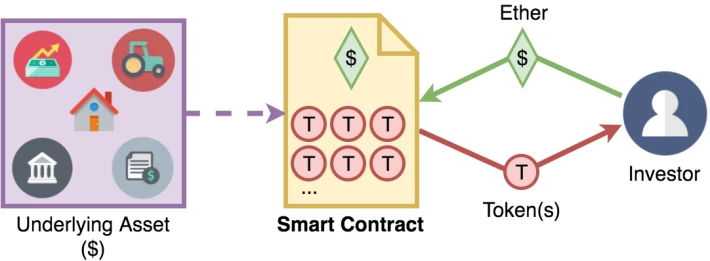
Later thanks to Ethereum's 🆂🅼🅰🆁🆃 🅲🅾🅽🆃🆁🅰🅲🆃, it was possible for anyone to issue their own tokens thanks to "𝗜𝗻𝗶𝘁𝗶𝗮𝗹 𝗖𝗼𝗶𝗻 𝗢𝗳𝗳𝗲𝗿" (ICO), without creating their own blockchain (let's say that ICO is a crowdfunding). Coins are produced for example by ₱ⱤØØ₣ Ø₣ ₩ØⱤ₭ (I provide computing power, solve algorithms and get rewarded with fractions of a coin. Network commissions are called "gas"). The difference between coin and token arises here.
Coins have their own blockchain (not necessarily the transactions are public, for example the Monero and Zcash blockchain is encrypted!), the tokens rely on other blockchains.
So when issuing a token with an ICO, for example on the Ethereum blockchain, this remains only a token (initially).
The most famous tokens are Binance Coin (BNB), EOS, Tron (TRX). Petro is also a token, issued on the NEM blockchain.
Popular ERC20 tokens list
EOS (EOS)
TRON (TRX)
ICON (ICX)
Augur (REP)
OmiseGO (OMG)
Zilliqa (ZIL)
Aeternity (AE)
VeChain (VET)
Basic Attention Token (BAT)
0X (ZRX)
Aion (AION)
A token can later become a coin, as happened to Tron, which launched its own network (a mainnet) with its own registry. So first a token was issued on the Ethereum blockchain, called TRX, then all of its tokens were converted into coins (so its own blockchain was created).
Most tokens are issued on the Ethereum blockchain (🅴🆁🅲20) and stored on this blockchain. ERC20 tokens do not interact in any way with ETH, except at the time of the ICO in which the buyer usually pays them in ETH (depends on the smart contract).
So by issuing a smart contract on the Ethereum network it is possible to create a token.
Creating a new coin is more complex. Many coins were born from Bitcoin hard fork (Bitcoin Cash, Bitcoin Gold, technically also Litecoin, etc. Bitcoin SV was born from Bitcoin Cash, others) instead used completely different blockchains (Ethereum, Ripples, etc).






