
In a whitepaper titled "Decentralized Society: Finding Web3's Soul", Buterin (founder of Ethereum), Ohlhaver (Flashbots Ltd), Weyl (Microsoft Research) detail their vision of a fully decentralized society (DeSoc). How? We will need to create something called "Soulbound Token" (SBT). SBT (Soulbound Tokens) are non-transferable identity and reputation tokens and therefore cannot be traded. They allow a user to verify all their information (education, work history, competitions, certifications, etc) using blockchain technologies. According to Weyl, their spread will come between 2023 and 2024. SBT should be a faster and more reliable way to verify certain information.
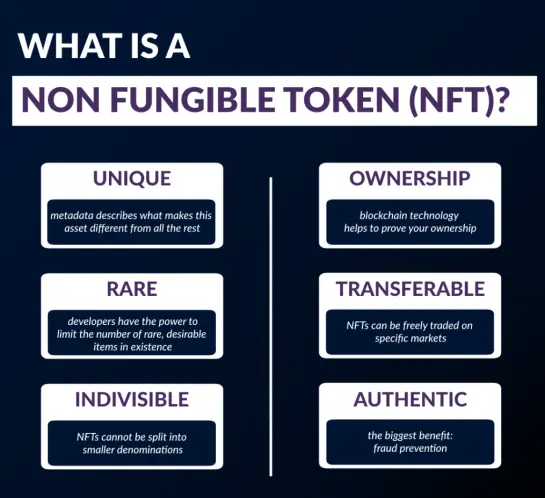
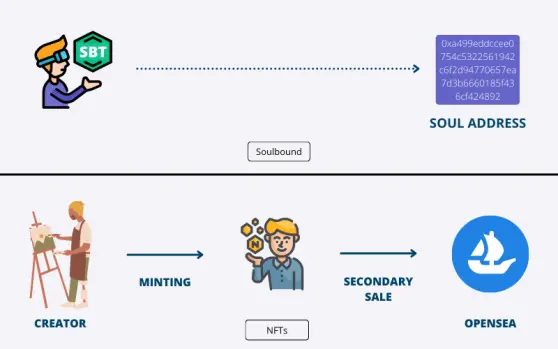
A "Non-fungible Token" (NFT) is a set of digital data that lives on a blockchain and is unique, transferable so it can be sold (passed from one wallet to another). Each NFT has its own identifier and metadata, which means that each NFT cannot be forged.
Soulbound Tokens, on the other hand, are permanent and non-transferable, which means that they cannot be given away or withdrawn from your private blockchain wallet (their rough definition is "tokens tied to your soul").
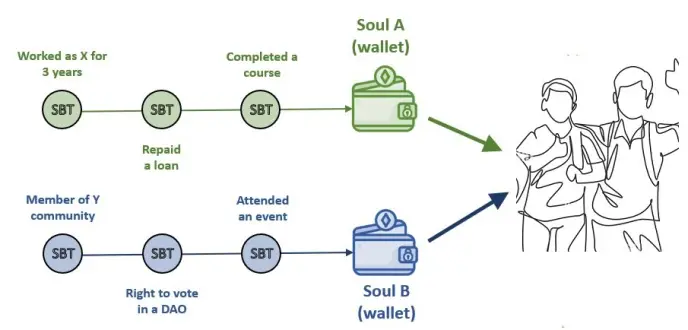
Some SBT could be for example a badge tied to an individual's real life or a video game when you complete a mission. In real life, you would get an SBT after completing a degree, getting a professional certification, winning a competition, and so on. For example, an SBT could be used to verify your name, birthday, donations, criminal background, nationality, religious education, military history, and more. The possibilities are literally endless. In general, Soulbound tokens carry information about you, broken down into individual NFTs and stored in your private blockchain wallet.
Anyone could enroll in a university or participate in a competition but without a certificate as it shows? SBT can be distributed among members of a group or institution as proof of participation. This would also combat the spread of fake credentials.
Along the same lines, Buterin and his co-authors note that they could help "solve some of the problems that devastate decentralized finance, such as scams." Also, as we all know, reputation plays a huge role, we have seen it several times, like when the Azuki collection hit record lows after it was revealed that the creator had abandoned some projects in the past. With SBTs, the Web3 community would be able to check for themselves whether an individual can be trusted. However, what happens when a person or organization sends an SBT that you don't want to your Anima (wallet)? SBTs are permanent and non-transferable. For the system to work effectively, the team said it must include features that allow people to hide an SBT from public view or destroy it. What happens if your Soul wallet is hacked? Or if you lose the key to your Soul address? This is, unfortunately, something to consider.
As mentioned above, thefts are rampant within the NFT community. Hence, when it comes to SBT, it is imperative to have adequate contingency plans to prevent attackers from taking identity theft to a whole new level.
The tokens could become entrance tickets to events, exclusive airdrops and other benefits aimed at members of a specific community.
SBT could be used by criminals to identify, target and harm members of specific communities. The potential when it comes to governing bodies is particularly alarming. For example, holders of a specific SBT may be denied entry to certain facilities, medical care or revoked the right to vote.
One of the biggest problems is the lack of trust in the web3. Every human interaction or business transaction is based on the levels of trust between the interested parties. This has made the web3 protocols highly dependent on the centralized web2 structures, which they are supposed to replace.
For instance:
-NFT collectors rely on Twitter, SuperRare, Solsea or OpenSea to show where their collections come from
-DeFi lending platforms are unable to make unsecured loans
-They could be used in a DAO, to prevent 51% attacks (a whale or a malevolent actor could not buy them)
Soulbound tokens could provide the missing link to bridge the trust gap in the web3. Their non-transferability allows them to serve as a means of building social identities that allow protocols and individuals to function based on trust. In addition to some privacy problems, another weak point could be the loss of the wallet seed / private key (Buterin speaks in this case of "social recovery" by providing his seed to a circle of trusted family members) or the theft of the wallet (someone could pretend to be another person).
Are you interested in ways to earn crypto bonus? Check it out here: Some Sites To Earn Crypto Bonus (Old & New)






