
Today Polkadot is a blockchain that aims to solve scalability and interoperability problems. It essentially works through a Relay Chain which guarantees security (proof of stake) and interoperability between internal chains (parachains) and external chains (EVM blockchain for example). Parachains work through leasing (a project binds a certain number of Dots also thanks to crowdfuning and if it wins the slot it becomes a Polkadot parachain for a maximum of 2 years. Slots are limited). They are autonomous chains with their own token. An example could be for example Manta Network which is a parachain of Polkadot (Manta Atlantic) but is also connected via bridge to the EVM world (it has an additional chain, layer2 of Ethereum, called Manta Pacific which exploits the Polygon zkEVM infrastructure and Celestia for "data availability" and this makes the chain very scalable). Polkadot 2.0 will bring significant changes to this system.
POLKADOT 2.0
What's new in Polkadot 2.0 will be:
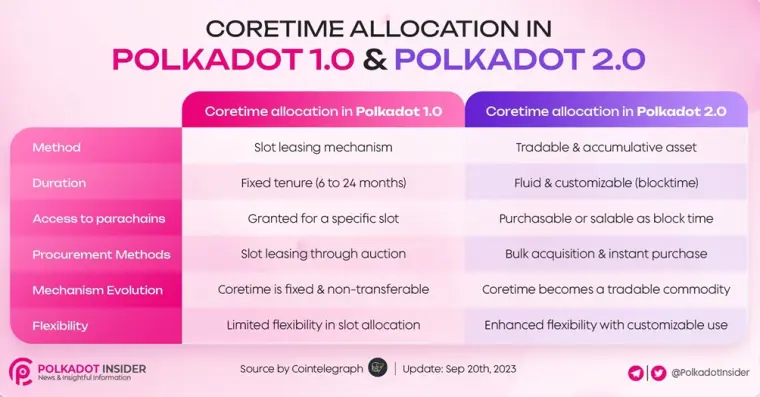
-eliminate the concept of parachains and move to the "coretime" model (computational power sold/rented to those who request it)
-burn of $Dot (the greater the coretime requirement, the more efficient the burn will be)
-improve scalability (asynchronous backing)
-modify the Relay Chain by replacing it with the JAM
CORETIME + DOT BURN
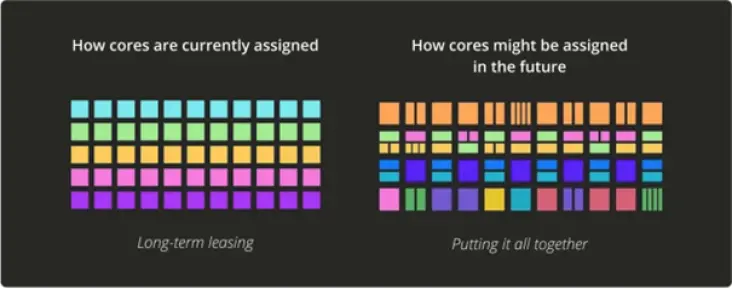
The coretime model will turn Polkadot almost into an AVS (cloud) type service provider, paying as you need it. This will eliminate the leasing concept introduced with parachains (blocking Dot to win 1 slot). A project that wants to use the Polkadot blockchain will acquire coretime (computational power) for a short/long period of time based on its needs and how complex what it wants to develop is.
The Dot token will obviously be used for the payment and the validators will be paid. A portion of the Dot used to buy coretime will be burned.
ASYNCHRONOUS BACKING TO IMPROVE SCALABILITY
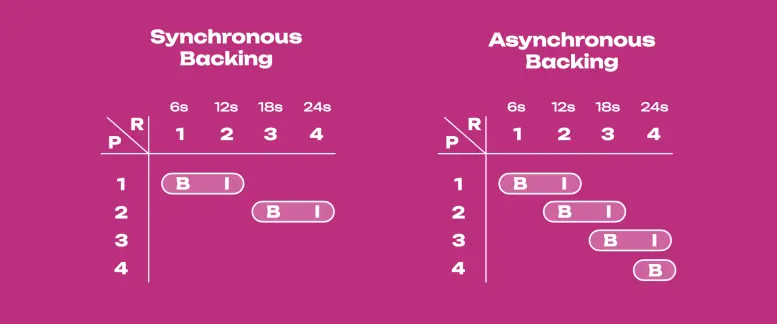
The introduction of asynchronous backing will increase the TPS while improving scalability (parallel processing of multiple units which will double the speed and halve the latency). Parallel backing (pre-approval of a transaction) will double the TPS, halve the latency and allow much more data to pass through (longer execution).
JAM
Instead the latest innovation will be the introduction of JAM (Join Accumulate Machine) which will (perhaps) replace the Relay Chain. The idea is to combine Polkadot and the modularity/compatibility of Ethereum through a new data model called JAM (union, accumulation and processing of data more efficiently). JAM allows the dynamic assembly of parachains, using network resources only when necessary. This should make it possible to optimize the use of computational and network resources, reducing operating costs and improving overall efficiency.
 There is also talk of "Dynamic Scalability" as the parachains will be assembled "just-in-time" based on the demand and needs of the moment. This improves the network's ability to handle peak usage without compromising performance.
JAM will also give the network greater flexibility, allowing it to quickly adapt to changes in usage conditions as the world needs.
For more info: GrayPaper: JAM (Polkadot 2.0)
Are you interested in ways to earn crypto bonus? Check it out here: Some Sites To Earn Crypto Bonus (Old & New)






