
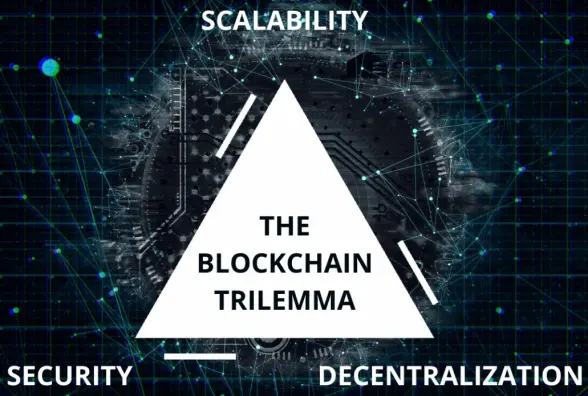
In DeFi and Crypto, the concept of "trilemma" is often used to describe inevitable structural tradeoffs: improving two properties tends to worsen a third. There are no "perfect" systems: tradeoffs are always necessary. A blockchain can only maximize two out of three.
BLOCKCHAIN TRILEMMA
- Decentralization: many independent nodes.
- Security: resistance to attacks/manipulation.
- Scalability: high TPS and low fees.
Bitcoin is secure and decentralized but lacks scalability. Ethereum is similar to Bitcoin (but with more features, due to smart contracts): less secure and less decentralized than Bitcoin but now slightly more scalable. Solana is highly scalable but insecure (low fees make spam attacks profitable) and moderately decentralized (hardware is very expensive). Layer2 (Arbitrum, Optimism) are highly scalable but insecure and poorly decentralized. In general, we can close this discussion by extending it to all modern chains (born from 2017 onwards): they are all scalable (high-performance, fast and cheap) but all centralized and insecure.
CROSS CHAIN BRIDGE TRILEMMA
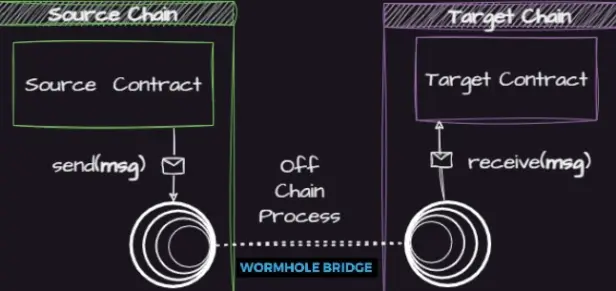
An ideal bridge should be trustless (no custodian), have speed and strong security but in practice:
- Custodial bridge: fast, but you have to trust it.
- Trustless bridge: secure but slow/expensive.
- Ultra-fast bridge: introduces new attack vectors.
Bridges are often vulnerable hubs in DeFi because most are centralized and often provide "wrapped" assets (1:1). When you bridge 1 native BTC to Ethereum mainnet, you get 1 wBTC (however, the bridge stores native liquidity; if a large bridge is hacked and loses native BTC, wBTC drops in price). If you use bridges often, you'll notice that there are super-fast ones (Across, Relay, etc.) that are very centralized and slightly slower ones (Stargate, LayerZero, Wormhole) that are more decentralized.
ADL (AUTO-DELEVERAGING) TRILEMMA: DERIVATIVES
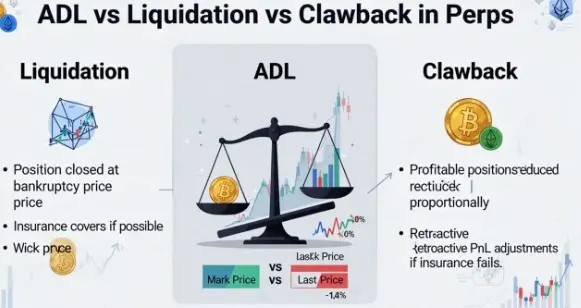
This especially concerns perpetual DEX and leverage protocols:
- Capital efficiency (high leverage, low collateral).
- Reliable liquidations (platform solvency).
- Absence of ADL (Auto-Deleveraging).
When the system can't liquidate losing positions quickly enough, the protocol forcibly closes other traders' profitable positions to cover the gap. If you want high leverage, you increase the risk of insolvency. If you avoid ADL, you need huge insurance funds. If you maintain security, you must liquidate aggressively (worse UX). You can't have: high leverage, zero ADL, and a completely trustless system.
LIQUIDITY TRILEMMA
You can't simultaneously maximize:
- Deep liquidity.
- Capital efficiency.
- Permissionless market making.
Classic AMM: decentralized but capital inefficient.
Orderbooks: efficient but less permissionless.
STABLECOIN TRILEMMA
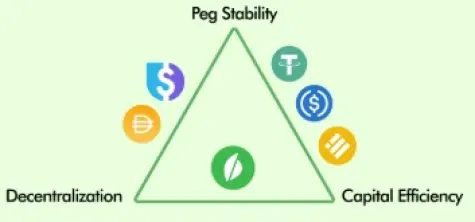
- Decentralized.
- Capital-efficient.
- Stable in all market conditions (peg).
Examples: USDC is stable and efficient but centralized (USDC is 1:1 with the US dollar but Circle can freeze your USDC remotely). DAI is decentralized and stable but lacks capital efficiency. Algorithmic stablecoins are decentralized and have good efficiency but are more volatile (arbitrage incentives may not work leading to depeg).
MEV/ORDERING TRILEMMA
For block builders:
- Fair ordering (user equity).
- Maximum validator revenue.
- Low latency.
MEV auctions and PBS seek compromises.
INTEROPERABILITY TRILEMMA
Cross-chain systems must choose between:
- Shared security.
- Chain sovereignty.
- Trustless communication.
This is the fundamental problem of the multi-chain ecosystem.
NFT TRILEMMA
- True Scarcity (True Ownership), meaning assets are truly on-chain, with immutable metadata, no centralized control, and the NFT is neither modifiable nor revocable (decentralization but high costs).
- Usability/Scalability: This is often achieved using off-chain storage, updatable metadata, centralized servers, and intermediate layers (a seamless user experience but reduced true ownership).
- Permanence over time: Many NFT aim to be hosted on IPFS pinning services or centralized CDN, so in these cases the image may disappear (even if the NFT remains registered on-chain).
WEB3 TRILEMMA
This is perhaps the most important trilemma to resolve. A cryptocurrency system today struggles to maximize all three simultaneously:
- User Experience (UX).
- True self-custody.
- Strong security (error-proof + attack-proof).
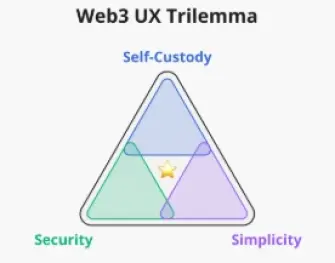
The newbie user wants: Web2-style login, no seed phrase, invisible gas, automatic transactions, easy account recovery.
Basic crypto principle: "Not your keys, not your coins", meaning no custodian, no account freeze and full control of funds. Responsibility falls entirely on the user.
Security: Cryptographic security, but also protection from phishing, human error, malicious signatures, smart contract exploits, bridge risk and wallet drain.
For example, a custodial exchange has password recovery, fraud protection and a simple UX, but no self-custody (risk of losing funds due to blocked withdrawals, regulations, KYC and other situations). On the other hand, a software/hardware wallet has user-controlled keys, high cryptographic security, but a complex UX (it's necessary to understand gas, chain, approvals and signing). Modern smart wallets: easy to use, non-custodial, but with new attack surfaces because they introduce relayers, bundlers, smart modules and automations.
There are models including smart accounts (the wallet becomes a smart contract and you don't even know you're using it), intent-based architecture (a solver performs the operation without the user realizing a bridge or swap is being executed), and chain abstraction (a user doesn't need to know where they are, similar to the internet, where a user doesn't know which server a website is hosted on). All these systems improve the user experience, are self-custodial, but have security issues (due to bugs, increased attack vectors, or having to trust someone).
Are you interested in ways to earn crypto bonus? Check it out here: Some Sites To Earn Crypto Bonus (Old & New)






