
In 1999, the 🆂🅴🆃🅸 research center in Berkeley launched software that would open the research of extra-terrestrial intelligence to all (🆂🅴🆃🅸@🅷🅾🅼🅴).
This distributed computing software was based on the proof of stake and proof of research mechanism.
The official cryptocurrency is the ̲̲G̲̲r̲̲i̲̲d̲̲c̲̲o̲̲i̲̲n̲̲ (launched in 2013 and developed by an anonymous named Rob Halford, the Judas Priest singer has nothing to do!).
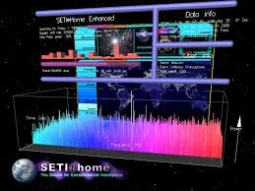
After 20 years SETI has decided to stop the activities with @home. The reason is that the program's network has become too large to manage and scientists need time to process the data obtained so far.
The idea was to have a large number of computers (volunteers) connected to the Internet to scan space.
The program was called SETI @ home and used radio telescopes to pick up low bandwidth radio signals from space. A large amount of data has been recorded since natural radio transmissions are very common in the Universe and human activities (radar, satellites and communications) produce a significant amount of interference that must be filtered.
To process the collected data, the previous SETI projects relied on special supercomputers that were located on the property grounds. In contrast, SETI @ home relied on Berkeley Open Infrastructure For Network Computing (BOINC), an open source platform that allows volunteers to contribute their unused hardware resources.
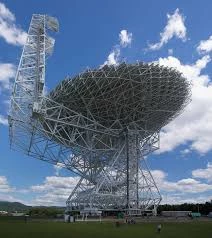
Radio data is collected by the Arecibo radio telescope and the Green Bank Telescope.
SETI @ home became the third largest distributed computer network dedicated to astrophysical studies, behind MilkyWay @ home and Einstein @ home.
So far the program has not revealed any concrete evidence of aliens but its growth has been remarkable. The amount of data collected has eons of processing time.
𝕋ℍ𝔸ℕ𝕂 FOͦRͬ R̲E̲A̲D̲I̲N̲G̲






