
In recent years, there has been more and more talk of "mass surveillance". Many laws that have come into force or are being applied aim to protect minors but create a trade-off between the effectiveness of the verification (which often requires sensitive data) and the risk of collection/centralization of this data (data breaches, which are then used for scams or which put the user in danger).
In his novel "1984", George Orwell describes a totalitarian society where the state controls virtually everything: private life, language, thoughts, and actions. He describes:
- Pervasive surveillance: telescreens watching and listening to citizens.
- Lack of freedom of expression.
- Information is manipulated or deleted ("revising history").
All of this leads to constant fear and an environment of self-censorship, because you don't know what's being monitored or whether what you're saying is right or wrong.
New privacy laws currently being developed allow for:
- User identity/age verification.
- Content scanning (even private, legitimate content).
- Requirements for platforms to remove "harmful content."
- Intrusion into personal data (documents, facial recognition, biometrics, etc.).
- Penalties for platforms that don't comply.
When laws address "harmful content," "hate speech," or "adult content" without rigorous definitions, it becomes difficult to understand what is permissible and what is not, leading to possible self-censorship for fear of the consequences. In 1984, there is no anonymity: the state also controls what you think. Once the state obtains certain surveillance powers, even with good intentions, it can use them for other purposes. In today's case, a law protecting minors can become a way to control political dissent or filter opinion. Orwell demonstrates this: surveillance grows to maintain power, not just for protection.
ONLINE SAFETY ACT: ENGLAND (UK)
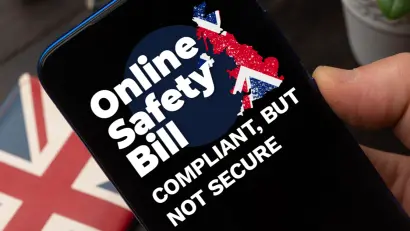
On 25 July 2025, in England, the "Online Safety Act" came into force which aims (in theory) to protect minors by verifying the age of those who access web portals. The ban protects minors from prohibited, discriminatory, violent and dangerous content. The result is that many information sites relating to the war in Ukraine and Gaza have been blocked (they can only be accessed through verification). Subsequently, all sites, including social media, Discord, Reddit, Spotify, Wikipedia will have to implement a system that verifies the age for UK residents. Verification occurs by uploading documents, credit card data or AI for facial recognition. This creates a huge repository of personal data that could be hacked and used for identity theft and fraud.
USA, AUSTRALIA, FRANCE, ITALY
Even in the USA, in many states, age verification has been implemented on some sites (although the law is still convoluted and in the process of being refined). In Australia, social media has been banned for children under 16 and age verification will also be implemented in search engines. Some adult sites have been blocked in France, subject to age recognition. In Italy, a third-party age verification site will be implemented which will issue a token for each identity (essentially the site will only know whether that person is an adult or not, at least this in theory).
GOOGLE
Google has introduced and gradually made developer identity verification mandatory (Play Console verification / developer verification). The support pages and developer documentation describe the steps (identity verification, possible upload of government IDs, etc). The stated goal is to increase security and reduce malicious actors, but it involves collecting developer identity data.
APPLE
Apple requires identity verification to sign up as a developer (some verifications may require ID documents or photos). The company uses these practices to combat fraud and for the legal attribution of developer accounts. Apple also provides age checks and ratings in its App Store Connect processes.
VPN AND ZK PROOF
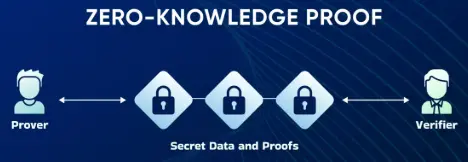
All this is leading to massive use of VPN and similar services. On the technical side, some are proposing the use of Zero Knowledge Proofs (ZKP) which allow age to be verified without revealing details (no personal data or documents are retained). Yes, ZKP are already used by Layer2 of Ethereum, such as Zksync, Linea, Scroll, Taiko, etc. I will make another article in the next few days where I will talk about this.
CHAT CONTROL
This law proposed in 2022, if passed, would force app managers to scan messages, videos, audio and photos before end-to-end encryption (used for example by WhatsApp). The purpose, they say, of implementing this government spyware is to search for dangerous content (CP) in order to protect children. The problem is that practically any content would be scanned by third parties. Germany among the undecided EU states seems likely to oppose it so this proposal should not pass.
This is the updated list:
- Against: Austria, Czech Republic, Estonia, Finland, Luxembourg, Netherlands, Poland, Slovenia, Germany.
- In favour: Bulgaria, Croatia, Cyprus, Denmark, France, Hungary, Ireland, Lithuania, Malta, Romania, Portugal, Spain.
- Undecided: Italy, Greece, Belgium, Latvia, Slovakia, Sweden.
States will vote to pass the law on October 14, 2025. As things stand now, it would lack a majority. As you know, I talk about Bitcoin and cryptocurrencies 99% of the time. This article covers other topics, although the potential use of cryptographic technology could open up an interesting use case for ZK systems.
Are you interested in ways to earn crypto bonus? Check it out here: Some Sites To Earn Crypto Bonus (Old & New)






