
Ampleforth (AMPL) is a very particular stablecoin that bases its value on the "Consume Price Index", or on the purchasing power of the dollar (inflation) in the year 2019.
How does the Price Target take place? The value is established by Chainlink which takes it from the Consume Price Index and then averages it with other markets (to avoid any manipulation). The decentralized oracle makes the calculation (as the dollar value mediated with the CPI) and at 2 o'clock in the night occurs the rebase: difference between the price of AMPL and that calculated by the oracle (the surplus / confidence range is + / -5% on its price).
What happens during the rebase? AMPL's liquidity increased / decreased.
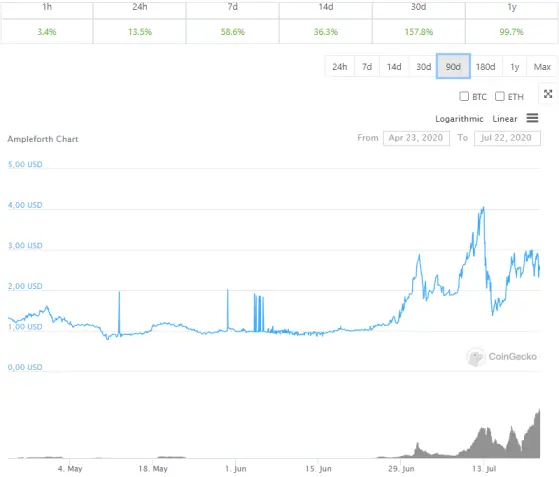
Why? Because it is not a stablecon that always sails on $ 1 because its value can be much higher (or lower).
Let's see the two cases:
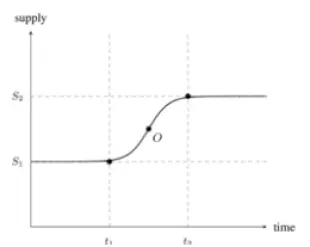
1) When its value EXCEEDS its Target Price ($ 1) the ecosystem increases the supply of AMPL by reducing its scarcity. This leads to sales of the coin by decreasing its price
2) On the contrary when the value goes DOWN, the supply of AMPL is reduced by increasing the demand (and this increases the value of the coin)

This crypto then creates liquidity autonomously if needed.
Let's take an example: if AMPL increases from $ 1 to $ 2, the supply is doubled and divided by 10 times (in short, the supply increases by 10%).
Rebase = 10%
And the holders? If I hold 100 AMPL (example), when the rebase occurs, I will receive 10% AMPL (I would end up with 100 AMPL + 10). This serves not to distort the market capitalization and my share held. Indeed this mechanism would encourage me to sell by lowering the value of AMPL. In this case I would end up with a net profit of 10%. The gain therefore does not derive directly from the volatility but from the increase in the coins held (liquidity increased by 10% compared to my initial share).






