
All cryptocurrencies (coins or tokens) falls into one of three (3) categories: currency, utility or securities
Each category operates by it's own special set of rules; regulatory implications and requirements -regarding their issuance, accessibility and usage.
There are over 2,300 different cryptocurrencies according to data on CoinMarketCap.com
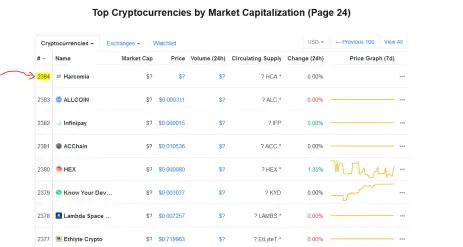
And as you can see from the above image, a lot of them are nearly worthless.
This may leave many new investors with a hard time deciding which one they can safely and profitably buy or invest in. This is perfectly normal and with time you'll get to understand why there are so many of them, why some die and and you will even discover new ones that are sprouting up almost every other day.
In this post we will be looking at the 3 different categories of cryptocurrencies. Their unique differences, regulatory implications and investment suitability so that you can choose and invest wisely.
Categories of Cryptocurrencies
- Currencies
- Security Tokens
- Utility Tokens
Crypto Currencies
These are created with the intention of replacing fiat money ~CryptoSorted!
The words "Crypto" and "Currencies" refers to the application of cryptography in the creation and control of money. This is the original and most straight-forward form of cryptocurrencies.
This form of coins and tokens are created specifically as a means of payment or exchange for goods and services and Bitcoin is the first and perfect example of a crypto currency.
Bitcoin is a Peer-to-Peer Electronic Cash System ~Satoshi Nakamoto
...that allows online payments to be sent directly from one party to another without going through a financial institution (bank). Bitcoin can be used to purchase goods and services from shops, online retailers, and other merchants instead of cash.
Other examples of coins and tokens that falls into this category are:
- Ethereum
- Ripple
- Tether
- Bitcoin Cash
- Dash
- Litecoin
- Stellar
and a host of others which are meant to be used sole as a more convenient, faster and cheaper means of payment, settlement of debt and transfer of value among parties.
It’s worth noting that the SEC has deemed both Bitcoin and Ethereum to be "currencies", as they're found to be too decentralized to be categorized differently.
Utility Tokens
These forms of cryptocurrencies are the native currencies of specific platforms and are designed as a tool with which one can have access to a particular product or platform. A perfect example are exchange tokens which are issued by exchanges to grant certain privileges to users, investors and holders such as reduced transaction fees, access to certain features and other perks of premium members.
The unique characteristics of utility tokens lies in the fact that they give the holders or investors access to a function provided directly by the businesses, company or platform that issued it. That means they're useless outside of their own ecosystem. Examples of utility tokens are:
- Binance Coin (BNB) which are only useful on the Binance Exchange
- Kucoin Shares (KCS) which are only useful on the KuCoin Exchange
- NAGA which are only useful withing the Naga ecosystem
... and a host of others out there.
Most tokens created on the: Ethereum, EOS, TRON, Waves blockchains are essentially utility tokens, as each one is intended to be used solely and primarily within the ecosystem of the issuing platform or decentralized app (dApp).
Security Tokens

Now by security tokens I don't mean the portable device your bank gives for generating one-time passwords for your banking transactions -lol.
In the traditional system, securities may represent an ownership position in a publicly-traded corporation, a creditor relationship with a governmental body/corporation, or rights to ownership as represented by an option.
Have you ever heard the term "tokenised securities"? -They're referring to security tokens.
A security token is a tokenised or digital form of these traditional securities; and are arguably the most complicated because of their regulatory implications and requirements. These tokens represents the ownership of the underlying assets or financial instruments and are issued on any asset considered to be a security -stocks, bonds, trusts, and funds. Instead of a paper certificate, the investors receive security tokens containing their legal rights and ownership information.
Most times all tokens that promises a positive return on their investment, aside from the returns generated from rising market prices of the tokens are categorized as securities and are required to be compliant with the security law and other regulations
Security tokens are expected to be a huge thing in the nearest future as crypto goes mainstream. As the assets which are represented by the security tokens already exist in the “real world”, they act like a bridge between legacy finance and the blockchain world; which makes them more appealing to traditional investors.
security tokens can unlock the liquidity of real-world assets by connecting them to the blockchain.
A good examples of security tokens are:
- Property Coin
- Polymath
- Tokeny
- Harbor
- Sia
- SpiceVC
- Swarm Form
- Open Finance
- tZero
A very popular one is the DAO, which was hacked right after the launching in 2016 and lost more than 1/3 of it's funds.
There we have it -the three forms or categories of cryptocurrencies.
The form of a coin or token could determine its possible market size. Currencies tends to have a wider audience compared to utility and security tokens which a are limited to their respective issuing platforms, companies or entities.
Several projects -ETH, XRP and their founders have repeatedly refuted being considered securities because of it's implication and it will be wise you too know exactly that a coin is before you put your hard-earned money into it -Invest wisely!





