

If five wallets depend on the same compromised phone, are they really five separate security systems?
A disturbing story has been circulating through parts of the Chinese-speaking crypto community.
According to the circulating account, several cryptocurrency wallets were reportedly drained within a very short period. The losses described were substantial, involving USDT and multiple wallets across mobile devices.
The most alarming part was not the amount.
It was the claim that the victims had used different wallets—and, in at least one version of the story, different iPhones.
That immediately led to a frightening theory:
What if the wallet apps were not the common failure point? What if the phone itself was?
There is an important caveat before going any further.
The specific theft described in the circulating video has not been independently attributed to a particular iOS vulnerability, and there is currently no public technical evidence proving that a specific exploit caused those losses.
That distinction matters.
But the broader threat behind the story is no longer hypothetical.
Security researchers have now documented sophisticated iPhone exploit frameworks capable of compromising devices through malicious or compromised websites and extracting data related to cryptocurrency wallets.
And that should change how crypto users think about mobile self-custody.
What the Community Report Claims—and What It Does Not Prove
The circulating report describes a scenario many crypto users would find difficult to explain.
Several wallets.
Different applications.
Apparently no deliberate disclosure of the recovery phrase.
Yet assets disappear in a narrow time window.
The natural conclusion is:
“The iPhone must have been hacked.”
Maybe.
But there are many other possible explanations:
- Recovery phrases could have been exposed previously.
- Multiple wallets could have originated from the same compromised seed.
- Cloud backups or screenshots could have leaked secrets.
- A malicious wallet application could have been installed.
- Browser phishing could have captured credentials.
- Wallet permissions could have been modified.
- A compromised computer or phone could have exposed hot-wallet secrets.
- The apparent timing of multiple thefts may not reflect when the original compromise happened.
Without forensic evidence, we cannot responsibly select one explanation.
What we can do is ask whether the proposed attack model—an iPhone compromised through web content with cryptocurrency wallet data subsequently exposed—is technically realistic.
Unfortunately, the answer is yes.
Coruna Changed the Mobile Crypto Threat Model
Earlier in 2026, researchers disclosed an unusually sophisticated iOS exploitation framework known as Coruna.
iVerify says the framework targeted iPhones running versions from iOS 13 through iOS 17.2.1. Its investigation described a one-click exploit chain beginning in Safari, followed by privilege escalation that could ultimately give an attacker extensive control over the infected device. iVerify internally called part of its investigation “CryptoWaters” because the framework contained modules targeting cryptocurrency wallets.
This is significantly different from the ordinary crypto phishing model.
Traditional phishing usually requires the victim to do something obviously dangerous:
- Enter a seed phrase
- Install an unknown wallet
- Download malware
- Approve a suspicious transaction
- Give credentials to fake support
A browser exploit changes that equation.
The website itself can become the entry point.
The user may believe they are simply reading a page.
Then Came DarkSword
Only weeks after Coruna became public, researchers disclosed another iOS exploitation framework: DarkSword.
iVerify reproduced a watering-hole attack against vulnerable iPhones running iOS 18.4 through 18.6.2. The attack began when a vulnerable device navigated to a malicious or compromised website. The recovered chain included Safari exploitation, sandbox escape, privilege escalation and in-memory implants capable of extracting sensitive information.
Lookout independently analyzed DarkSword and reported that it specifically searched for numerous cryptocurrency wallet applications in addition to extracting credentials and other sensitive device data. The campaign used a “hit-and-run” approach: collect the targeted information quickly, exfiltrate it, and then clean up evidence of the attack.
That is the part crypto users should pay attention to.
You do not need to believe every viral wallet-theft story to recognize that the underlying threat now exists.
Important: This Does Not Prove the Viral USDT Theft Was DarkSword
This is where security reporting often goes wrong.
A victim loses crypto.
Someone notices that the victim uses an iPhone.
A recently disclosed iOS exploit exists.
The story becomes:
“New iPhone zero-day stole the crypto.”
That conclusion requires evidence.
We do not currently have it for the case circulating in the video.
In particular, the publicly documented DarkSword deployment analyzed by iVerify targeted iOS 18.4–18.6.2. iVerify says the relevant bugs and techniques were progressively addressed by Apple through releases ending with iOS 26.3, and the researchers explicitly said they had no evidence those particular exploits were being used against iOS 26+ devices.
Apple also advises users to keep iOS updated because malicious links or compromised websites can place data on older vulnerable devices at risk. Apple states that fully updated devices were not vulnerable to the particular web attacks covered by its March guidance.
So if someone claims:
“iOS 26.4 was definitely compromised by DarkSword and that caused this USDT theft,”
that claim currently goes beyond the public evidence.
The real lesson is more interesting anyway.
Multiple Wallets Are Not Necessarily Multiple Security Boundaries
This is the part I think many crypto users miss.
Imagine someone has five wallets installed on one iPhone.
They might think:
Wallet A is separate from Wallet B.
Wallet B is separate from Wallet C.
Therefore a compromise of one wallet cannot affect the others.
At the application level, that may be partly true.
At the device level, the picture can be very different.
If all five wallets ultimately depend on the security of the same general-purpose operating system, then a sufficiently powerful device compromise can potentially undermine assumptions shared by all five.
Editor Opinion: Five hot wallets on one compromised phone should not automatically be treated as five independent security environments.
They may be five accounts sitting behind one larger trust boundary.
That distinction becomes increasingly important as mobile exploit chains move beyond normal app-level malware and achieve deeper access to the operating system.
Wallet Diversity Is Not the Same as Security Diversity
Consider these two setups.
Setup A
- Wallet 1: mobile software wallet
- Wallet 2: another mobile software wallet
- Wallet 3: another mobile software wallet
- All on the same phone
Setup B
- Mobile wallet for everyday activity
- Dedicated hardware signer for long-term holdings
- Offline recovery backup stored separately
- Different wallet used for experimental DeFi activity
Setup B is not automatically “safe.”
But its components do not all depend on exactly the same failure condition.
That is the important concept:
failure-domain separation.
A good security design asks:
If this one thing fails, what else fails with it?
If losing control of one phone potentially compromises every significant wallet you own, the portfolio may be diversified while the security architecture is not.
Hot Wallets and Hardware Wallets Have Different Threat Models
A software wallet on a smartphone generally operates much closer to the general-purpose operating system.
A hardware wallet changes that architecture by putting private-key generation and signing into a dedicated device.
For example, Ledger describes its devices as storing private keys and signing transactions within an offline Secure Element isolated from the connected phone or computer. Trezor similarly describes hardware wallets as keeping private keys offline even when the computer or smartphone used with the device is compromised.
That does not mean:
“Hardware wallets cannot be hacked.”
And it definitely does not mean:
“Buy hardware wallet = crypto permanently safe.”
It means the attacker now faces a different architecture.
A compromise of the phone does not automatically imply extraction of a private key that never existed on that phone in the first place.
That can be a meaningful difference.
But a Hardware Wallet Still Cannot Save You From Everything
This is where marketing claims need to stop and threat modeling needs to begin.
A hardware wallet cannot automatically prevent you from:
- Revealing the recovery phrase
- Entering the seed into a phishing website
- Approving a malicious smart contract
- Sending funds to an attacker-controlled address
- Ignoring transaction information displayed on the device
- Losing your only recovery backup
- Using an already-compromised recovery phrase
- Choosing a weak or poorly designed recovery process
Trezor explicitly advises users to verify transactions and smart contracts before signing when using third-party wallet applications and dApps.
This is why I prefer thinking of hardware wallets as key-isolation tools, not magical anti-theft devices.
They solve an important problem.
They do not solve every problem.
The Recovery Phrase Is Another Independent Layer
Suppose the phone is compromised but your private key lives on a hardware device.
Better.
Now suppose the hardware device is lost.
What determines whether you can recover?
The backup.
That creates another security layer entirely.
You can have excellent hardware-wallet security and terrible recovery security at the same time.
Examples include:
- Seed phrase photographed on a phone
- Recovery words stored in cloud notes
- Backup sitting beside the hardware wallet
- Handwriting that becomes unreadable
- Only one physical copy
- Forgotten passphrase
- Recovery procedure never tested
This is why offline recovery storage deserves its own threat model.
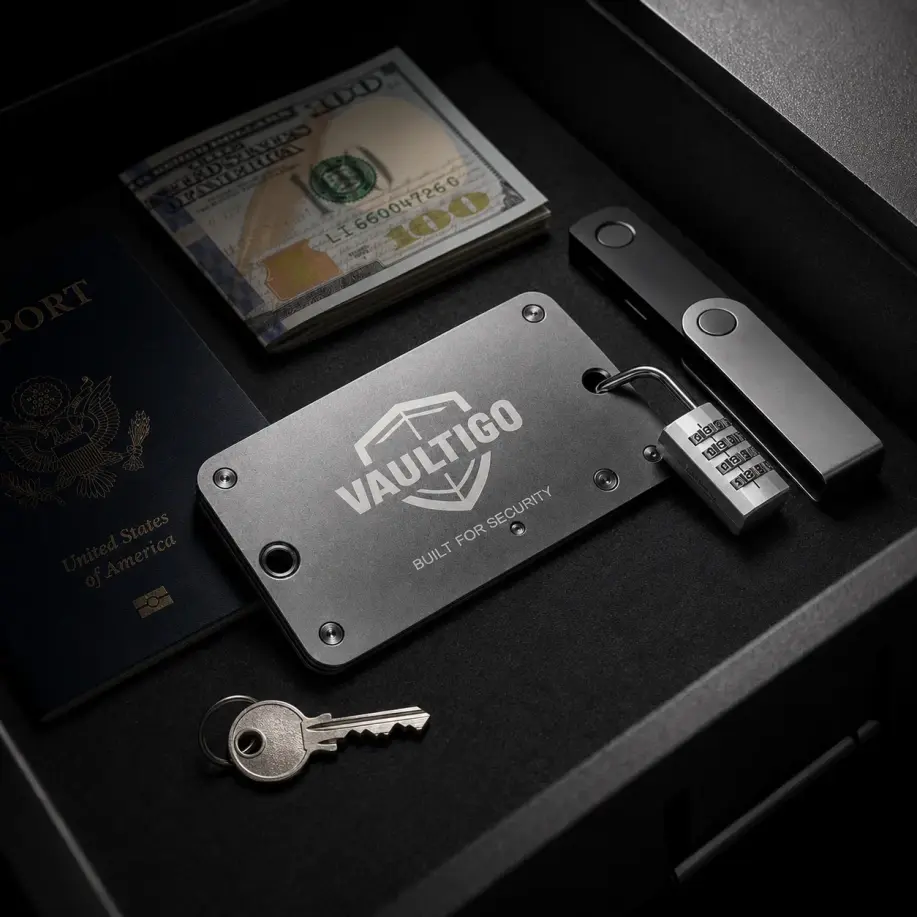
At CryptoSafeKit, this is how I prefer to think about self-custody products: not as things that make cryptocurrency “unhackable,” but as tools assigned to specific failure modes.
A dedicated hardware wallet addresses one layer.
A durable physical recovery backup addresses another.
Transaction verification addresses another.
Physical separation addresses another.
No single product should be expected to replace all of them.
The Most Important Question: Where Was the Seed Generated?
If multiple wallets are suddenly drained, I would want to know something before almost anything else:
Were these actually independent seeds?
Creating five accounts under one seed does not create five independent recovery roots.
Likewise, importing the same recovery phrase into several wallet apps creates multiple interfaces to essentially the same underlying secret.
If that secret leaks, changing wallet software does nothing.
The real question is not:
“How many wallets do I have?”
It is:
“How many independent cryptographic roots and security environments do I have?”
For most ordinary users, more complexity is not automatically better.
But understanding what is actually independent matters.
A Better Security Model for Meaningful Crypto Holdings
For users holding an amount they genuinely cannot afford to lose, I would think in layers.
Layer 1: Keep the Phone Updated
This sounds boring because it is boring.
It is also important.
Apple states that keeping software updated is one of the most important measures users can take to maintain product security, particularly against malicious web content exploiting known vulnerabilities.
Do not postpone security updates for months because you dislike a UI change.
The risk tradeoff is rarely worth it for a device controlling financial accounts.
Layer 2: Separate Spending From Storage
Do not require your long-term savings wallet to interact with every:
- NFT mint
- DeFi application
- Bridge
- Airdrop site
- Token claim
- Experimental dApp
A wallet that signs frequently experiences a different threat environment from one designed primarily for long-term storage.
Separation reduces blast radius.
Layer 3: Move Long-Term Keys Off the Everyday Phone
For meaningful long-term holdings, a dedicated hardware signer can reduce reliance on the phone's operating system as the place where the private keys themselves live.
Again, this does not remove phishing or signing risk.
It changes the failure model.
Layer 4: Verify on the Trusted Device
Never approve transactions mechanically.
Check:
- Destination address
- Amount
- Network
- Contract interaction
- Permission request
The hardware screen matters only if the user actually reads it.
Layer 5: Protect the Recovery Backup Offline
The seed phrase should not live in:
- Photos
- Messaging apps
- Cloud documents
- Screenshots
- Browser password managers
- Random “backup services”
The recovery phrase is effectively a route back to wallet control.
Treat it accordingly.
Layer 6: Separate Device and Backup Physically
Keeping a hardware wallet and its full recovery backup together feels organized.
It also creates a common failure point.
One theft.
One fire.
One lost bag.
One compromised safe.
Think about which events could affect both layers simultaneously.
Then design around them.
Layer 7: Consider Lockdown Mode if Your Threat Model Justifies It
Apple describes Lockdown Mode as an optional extreme protection mode for people who believe they may be targeted by highly sophisticated cyberattacks. It intentionally restricts certain device functionality to reduce attack surface.
It is not something every crypto user needs.
But high-value holders, executives, public figures, security researchers, journalists and users who believe they are being individually targeted should at least know that it exists.
What If You Think Your Phone Is Already Compromised?
Do not immediately start typing every recovery phrase you own into another wallet app on the same device.
That can make a bad situation worse.
First establish a trusted environment.
For a hot wallet whose key may have been exposed, the safer objective is usually to create a fresh wallet from a trusted environment, verify the new receiving address carefully and migrate remaining assets if control still exists.
For hardware-wallet users, determine whether the private keys were ever exposed outside the hardware device.
And regardless of wallet type:
- Stop visiting suspicious links.
- Update the operating system.
- Review recent transactions and wallet permissions.
- Do not accept unsolicited “recovery help.”
- Do not provide a seed phrase to anyone claiming to investigate the incident.
- Preserve transaction hashes and relevant evidence if theft has occurred.
A wallet thief does not need your recovery phrase to “investigate” where the funds went.
Anyone asking for it is creating another problem.
The Bigger Story Is Not One USDT Theft
I don't think the most important part of the circulating story is whether the reported loss was $70,000, $1.5 million, or something else.
Those figures need independent verification.
The more important development is already confirmed:
Sophisticated mobile exploit frameworks capable of targeting cryptocurrency-related information are no longer theoretical.
Coruna demonstrated one model.
DarkSword demonstrated another.
DarkSword's researchers showed that a vulnerable iPhone could be compromised after visiting malicious or compromised web infrastructure, with sensitive data extracted from the device.
That does not mean every iPhone is unsafe.
It does not mean every crypto theft is an iOS exploit.
And it does not mean hardware wallets solve everything.
It means the security boundary needs to be reconsidered.
“I Have Multiple Wallets” Is No Longer Enough
Ask yourself:
If my phone became hostile tomorrow...
Would my long-term private keys still be isolated?
Would my recovery backup still be offline?
Would one compromised device expose every wallet I use?
Could I replace the device without losing access?
Could I identify suspicious transactions?
Would I know which wallet to move first?
Those questions tell you far more about your security than the number of wallet apps installed on your phone.
The Security Model I Prefer
My preferred way to think about self-custody is simple:
Key isolation
↓
Transaction verification
↓
Recovery resilience
↓
Physical separation
↓
Operational discipline
Each layer assumes another layer may eventually fail.
That is what defense in depth is supposed to do.
At CryptoSafeKit, this is also the principle behind the security topics I write about: hardware wallets, cold storage, recovery backups and physical protection are complementary layers—not substitutes for one another.
The goal is not to create an “unhackable” wallet.
There is no responsible way to promise that.
The goal is to make one mistake, one stolen phone, one damaged device or one compromised environment less likely to become total loss.
One Question for the Comments
I am curious how other self-custody users think about this.
How many crypto wallets do you use—and how many of them actually depend on a different security environment?
For example:
- Three wallet apps on one phone?
- Separate phone for crypto?
- Hardware wallet + mobile spending wallet?
- Multiple hardware wallets?
- Completely separate long-term cold storage?
Don't post addresses.
Don't post balances.
And obviously, never post recovery words.
But I would be interested to hear how people are separating wallets from actual failure domains.
Because after looking at the new generation of mobile exploits, I think that distinction matters much more than most users realize.
Security Disclaimer: This article is for educational purposes only and is not financial, investment, legal, or individualized cybersecurity advice. The community theft described at the beginning has not been independently attributed to Coruna, DarkSword, or any specific iOS vulnerability. Never share a recovery phrase, private key, PIN or passphrase with anyone claiming to provide wallet support or asset recovery.






