
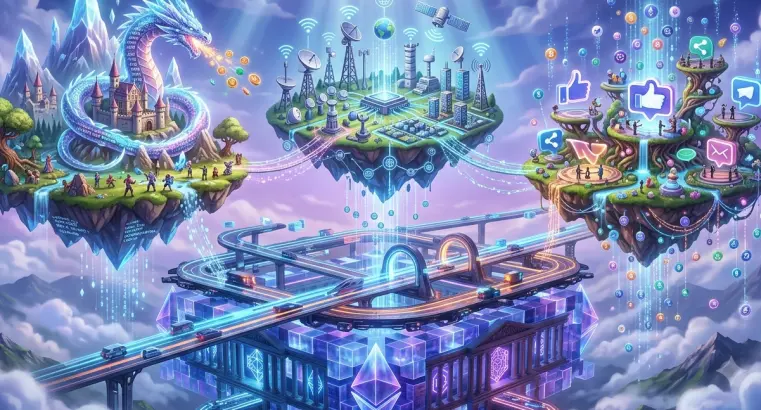
If you have ever paid over $20 in Ethereum gas fees to move a fraction of that amount, you know how frustrating the user experience can be. The promise of decentralization almost stumbled upon network bottlenecks and slow speeds. However, the game has changed dramatically: the Scalability War has reached its peak with the rapid evolution of Layer 2 (L2) and Layer 3 (L3) solutions, delivering sub-cent fees and near-instant settlement. Whoever masters this infrastructure will control global liquidity flows.
🛠️ The Diagnosis: Why Layer 1 Needs 'Superpowers'
Ethereum was primarily designed for security and decentralization. However, when thousands of users attempt to interact with smart contracts simultaneously, bandwidth runs out, resulting in predatory fee auctions.
Layer 1 networks were simply not built to handle daily micro-transactions, real-time on-chain gaming, or high-frequency trading. This is precisely where modular architecture comes into play:
-
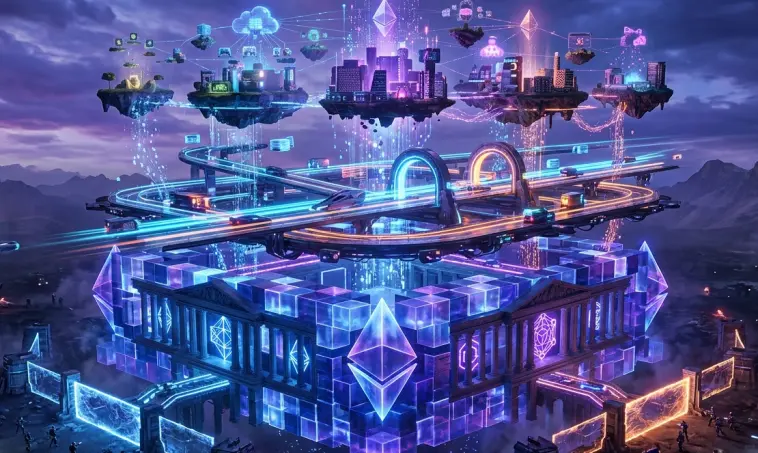
Layer 1 (Ethereum): The ultimate ledger for security and final settlement.
-
Layer 2 (L2s - Rollups): The high-speed highway that executes transactions off the main chain and posts compressed validity proofs back to L1.
⚔️ The Battle of the Rollups: ZK vs. Optimistic
Layer 2 competition has split the ecosystem into two leading-edge technologies, each fighting for liquidity dominance:
1. Optimistic Rollups (Arbitrum, Optimism, Base)
Assumes transactions are valid by default and relies on a challenge window (fraud proofs).
-
Advantage: Seamless, near-perfect compatibility with the EVM (Ethereum Virtual Machine).
-
Current Status: Dominance in TVL (Total Value Locked) and established DeFi ecosystems.
2. ZK-Rollups (zkSync, Starknet, Linea, Scroll)
Utilizes cutting-edge mathematics and Zero-Knowledge Proofs to validate blocks instantly without exposing underlying transaction data.
-
Advantage: Ultra-fast finality, enhanced privacy, and virtually limitless scalability.
-
Current Status: Exponential growth in institutional adoption and complex infrastructure setups.
🚀 Layer 3 (L3): The Era of Ultra-Specialized Networks
If L2s brought cent-level fees, L3s have arrived to bring costs down to zero and optimize hyper-specific use cases. Built directly on top of L2s, L3 networks function as highly customized appchains.
Feature Layer 1 (L1) Layer 2 (L2) Layer 3 (L3) Primary Focus Security & Decentralization Scalability & Low Costs Extreme Customization & Zero Fees Average Gas Cost High (dollars) Low (cents) Near Zero (fraction of a cent) Use Cases Settlement & Store of Value DeFi, NFTs, SocialFi On-Chain Gaming, DePIN & Micro-payments
💡 Investor Takeaway: Shifting execution to Layer 3 is unlocking Web3 applications that were previously impossible, such as fully on-chain AAA games and DePIN networks requiring thousands of interactions per second.
🔮 Conclusion & Final Insights
The "Scalability War" isn't just about raw speed; it's about who can deliver the smoothest user experience without compromising Ethereum's security. In the short to medium term, we will see the rise of chain abstraction, where the end-user won't even know which L2 or L3 they are interacting with.
Networks that successfully unify ecosystems without fragmenting liquidity will emerge as the ultimate winners of this narrative.
💬 Which L2/L3 ecosystem are you using most frequently in your crypto routines? Do you think ZK-Rollups will take over everything soon? Drop your thoughts in the comments below, leave a tip, and follow for more exclusive insights!





