
What he already knew about our health (and what we have forgotten)
Introduction: A Two-Century-Old Mystery
Imagine a man living in Paris during the Restoration, without microscopes, blood tests, or state-of-the-art laboratories. Yet this man managed to unravel the secret of the modern obesity epidemic two centuries before it became a global crisis. How did a simple 19th-century French magistrate identify the real cause of weight gain with a precision that modern science is only now beginning to rehabilitate?
Jean Anthelme Brillat-Savarin was not just a gastronome with a passion for fine dining. This lawyer, mayor, and career magistrate was a veritable encyclopedia. For decades, he acted as a clinical observer of society, recording the eating habits and health of his contemporaries with almost surgical precision. In 1825, he published The Physiology of Taste. Beneath the guise of a treatise on etiquette lies a revolutionary conclusion, the result of thousands of methodical observations: the secret to our figure lies in a balance that we have chosen to ignore.
1. The real culprit is not who you think it is
For Brillat-Savarin, the thesis is clear and unequivocal: the main cause of corpulence is neither the consumption of fats nor that of meat. The culprit, lurking in the shadows of our plates, is a diet rich in flour and starch.
He draws up a very precise blacklist of the vectors of overweight:
• Bread in all its forms;
• Potatoes;
• Pasta and cereals;
• Sugar.
To say this in 1825 was considered social heresy. At the time, bread was considered the “staff of life,” the ultimate virtuous food. Pointing the finger at starchy foods as a source of disease was a radical act. However, his remedy was just as straightforward: to regain health, one must drastically limit these substances and turn to a simple solution: “Eat meat.” These conclusions were not based on vague intuitions, but on undeniable data patterns collected over several decades. He understood that the body did not react to calories, but to the very nature of food.
2° “Tell me what you eat…”: a quote taken out of context
It is rare to find a phrase as famous and yet as misunderstood as this one:

Today, we use this quote to evoke cultural refinement or gastronomic elegance. This is a complete misinterpretation. For Brillat-Savarin, this phrase was not poetic; it was purely physiological.
The forgotten context behind this famous aphorism specifically concerns the impact of carbohydrates on human biology. He claimed that by observing an individual’s consumption of starchy foods, one could predict with certainty their physical constitution and future pathologies. The distortion of this phrase into a simple culinary cliché has caused us to lose sight of the original medical warning: our physical structure is an exact reflection of our consumption of sugar and starch.
3° Clinical observation ahead of its time
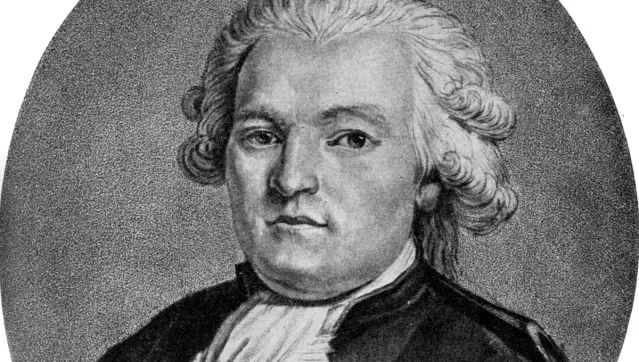
Brillat-Savarin was not a armchair theorist. He relied on massive empirical evidence. One of his most famous cases was that of a priest suffering from severe obesity. The man was surprised by this, as his portions were modest. Analyzing his diet, Brillat-Savarin noted that the priest ate almost exclusively bread, pastries, and potatoes, neglecting meat. The magistrate imposed a drastic reduction in these starches. The transformation was spectacular: within a few months, the priest regained a slim figure, proving that the quality of food takes precedence over quantity.
He supported this observation by comparing two military groups. On the one hand, there were officers who maintained an athletic figure thanks to a meat-based diet. On the other, their sedentary colleagues who were irretrievably getting fat by consuming large rations of bread. The distinction was crucial: even with reduced physical activity, those who favored protein and fat remained slim, while those who overindulged in starchy foods gained weight, regardless of their energy expenditure. For Brillat-Savarin, the pattern was consistent, obvious, and undeniable.
4° The great collective amnesia of the 20th century
How could such a well-documented truth be erased from the collective memory? The history of this knowledge is one of inevitable decline:
• 1825: Publication of The Physiology of Taste. It is a huge success, and his theories are widely read and respected.
• 1850: The tide begins to turn. People start to ignore his health advice and focus instead on Brillat-Savarin’s writings on the pleasures of the table and food and wine pairings.
• 1900: With the industrialization of food, his recommendations against starch are deemed “outdated” by progress.
• 1950: The paradigm shifts radically; fats become public enemy №1 and the theories of 1825 are now labeled “dangerous.”
• 2000: Rejection reaches its peak. His observations are relegated to the status of “pseudoscience” by public health authorities.
This amnesia shows that scientific truth can be sacrificed on the altar of economic interests and dominant schools of thought, even when it has been before our eyes for two centuries.
Conclusion: looking to the past to understand our present
The contrast between the wisdom of 1825 and our current reality is stark. While Brillat-Savarin warned us about sugar and starch, modernity has built its food pyramids on these very foundations. Today, the results of this great oversight speak for themselves: obesity and diabetes are reaching historic highs despite unprecedented medical technology.
By ignoring the systematic observations of a visionary 19th-century magistrate, we may have made the most costly nutritional mistake in history. It is time to reopen this 200-year-old book. What if the key to our future health lies not in a new laboratory molecule, but in the rediscovery of a secret forgotten since 1825?






