
For years, arbitrage trading meant hunting for price gaps between big, centralized exchanges (CEXs). But that game is over. The new frontier is the chaotic and untamable world of decentralized exchanges (DEXs)—a landscape so vast and complex that manual hunting is suicide. This shift created a new breed of professional trader armed with a specialized dex arbitrage capable of navigating this wilderness. It's why tools like ArbitrageScanner, designed specifically to track opportunities across dozens of blockchains and countless DEXs, are no longer just an advantage—they are the essential survival kit for this new gold rush.
What is a DEX and Why is it Different?
A DEX, like Uniswap or PancakeSwap, is a peer-to-peer marketplace with no central authority. Instead of matching buy and sell orders in a traditional order book, they use Automated Market Makers (AMMs). These are giant pools of tokens supplied by users, and prices are determined by a mathematical formula based on the ratio of tokens in the pool.
The Source of DEX Arbitrage: Constant Imbalance
This unique mechanism is a constant source of arbitrage opportunities. A single large trade can instantly and dramatically change the ratio of tokens in a pool, creating a temporary price imbalance on one DEX that doesn't exist on another, or on a CEX. These are pure, algorithm-driven price glitches, ripe for the taking.
Welcome to the Jungle: The Three Killers of DEX Arbitrage Profit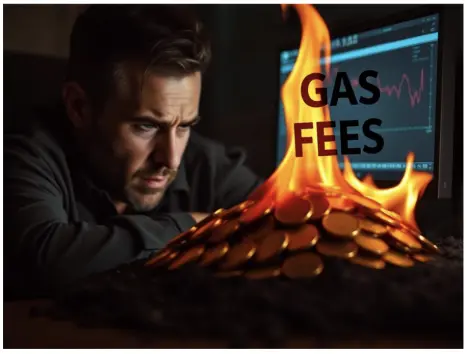
The DEX frontier is incredibly profitable, but it's also filled with dangers that don't exist in the safe, regulated world of CEXs. Newcomers often rush in, lured by massive spreads, only to see their profits instantly vaporized by one of three hidden killers.
The Gas War: When Your Profit Burns to Ash
Every single action on a DEX—a swap, a transfer—costs a network fee, known as "gas." When a hot arbitrage opportunity appears, thousands of bots instantly compete to capture it. This creates a "gas war," where everyone bids up the transaction fee to get their trade processed first. You can win the arbitrage trade but spend so much on gas fees that you end up with a significant net loss.
Slippage: The Price That Changes As You Trade
Because DEX prices are based on liquidity pools, the very act of you buying a token changes its price. If you're trying to execute a large trade in a pool with low liquidity, your own purchase can drive the price up while you are buying it. This is "slippage." The 5% spread you saw can shrink to 1% or less by the time your transaction is complete.
Rug Pulls & Scam Tokens: The Ultimate Trap
Anyone can create a token and list it on a DEX in minutes. Scammers often create tokens with appealing names, generate a massive but fake price spread, and wait for arbitrage traders to jump in. Once they buy the token, they discover it's been coded so it cannot be sold, or the developers drain all the liquidity, leaving them with worthless digital dust.
The Hunter's Survival Kit: The Tools Pros Use to Navigate the DEX Frontier

Surviving and thriving in the DEX jungle is not about manual skill; it's about having the right technology. Professional DEX arbitrage traders use a sophisticated toolkit to see the opportunities while avoiding the traps.
The All-Seeing Eye: A Multi-Blockchain DEX Scanner
The first and most essential tool is a powerful dexscanner. Manually checking prices on Uniswap, then Raydium, then TraderJoe is impossible. A professional tool like ArbitrageScanner does this automatically, scanning dozens of DEXs across more than 20 different blockchains simultaneously. It doesn't just find spreads; it gives you a complete, real-time map of the entire frontier.
The Profit Forecaster: Pre-calculating Gas and Fees
A simple price difference is useless information. A professional scanner calculates the potential net profit after accounting for estimated gas fees and trading commissions. It answers the most important question: "After all the costs, is this trade actually profitable?" This feature alone separates winning trades from money-losing traps.
The Safety Check: Liquidity and Contract Analysis
To avoid the traps of slippage and scams, a pro's toolkit must analyze the health of the liquidity pool. The scanner shows the available liquidity, the lifetime of the trading pair, and other metrics that help you distinguish a real opportunity from a scam token created an hour ago. It's the equivalent of a guide telling you which rivers are safe to cross and which are filled with crocodiles.
Conclusion: Be the Hunter, Not the Hunted
DEX arbitrage is the most exciting and potentially lucrative form of arbitrage trading today. But it is an unforgiving environment that punishes the unprepared.
The difference between the trader who consistently extracts profit from the chaos and the one who gets burned by gas fees and scams is not luck—it's information. By equipping yourself with a professional-grade dexscanner, you transform from being potential prey into a well-equipped hunter. You get the map, the compass, and the guide you need to navigate the wild west of crypto and capture the rewards that await.






