
The aim of this guide is to explain what are the complicated mechanisms that allow Bitcoin to function and be the first virtual currency exchanged in the world.
I will therefore explain clearly what it means to have, send or mine Bitcoins.
What is Bitcoin
Bitcoin is nothing more than a file that maintains data concerning digital accounts, as if it were a ledger, or an accounting book.
A copy of this file, or of this ledger, is kept on every computer of the Bitcoin network.
The numbers in the ledger mean nothing in the real world, but they constitute a virtual value on which users agree to be able to exchange real values.
The numbers on the ledger have a value only because we believe they have it, a bit like all FIAT currencies (USD, EUR, etc ...).
To send money from A to B you must enter the information that the money on account A will decrease by the amount X, while the money on account B will increase by X.
The nodes (i.e. the computers) on the Bitcoin network will apply this transaction to their copy of the ledger and pass the transaction to the other nodes which in turn will copy it to their ledger.
The Bitcoin network is therefore a system that allows a group of computers to maintain a ledger.
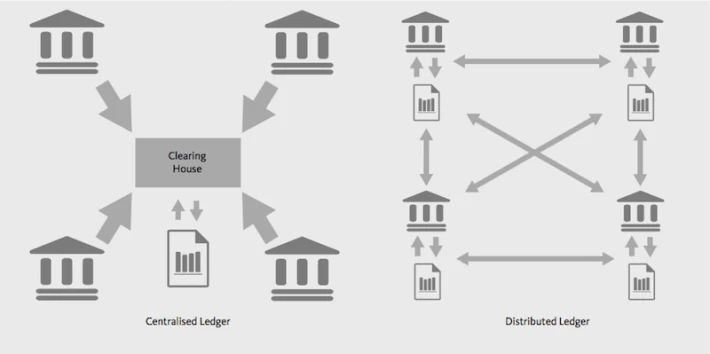
This mechanism may seem similar to what banks use to maintain current account balances, but the fact that the ledger here is maintained by a group, rather than a single entity, introduces quite a few differences:
In the case of banks, only their transactions are known, while in the case of Bitcoins, everyone's transactions are known.
In the case of banks, we know who we are dealing with and we can turn to the bank for account problems while the Bitcoins do not know the interlocutors and therefore we cannot trust anyone.
Solving the problem of trust in transactions is one of the main innovations of Bitcoin, which is solved thanks to special mathematical functions.
But how do a group of users who don't know each other (and trust each other) manage each other's transactions?
We see it in the next part of the guide, the one dedicated to digital signature.
Useful/Stonks link ALL TRUSTED:
My Exchange:
- KuCoin Exchange
- Coinbase
- Binance (YOU earn 10% for commission with this link)
Airdrop/Giveaway:
- WinPlay airdrop (multicrypto)
- Coinbase airdrop (50$): EOS- STELLAR
Faucet:
- Free BTC/ETH/DOGE multi-faucet (1 site, three crypto)
- Free Litecoin + Earn interest on holding
- Free Dogecoin + Earn interest on holding
- Free Bitcoin+ Earn interest on holding
- Free Bitcoin Cash + Earn Interest on holding
- Free Ethereum + Earn Interest on holding
- Free Monero + Earn Interest on holding
Cloud Mining FREE:
Earn for internet connection:






