
Bitcoin
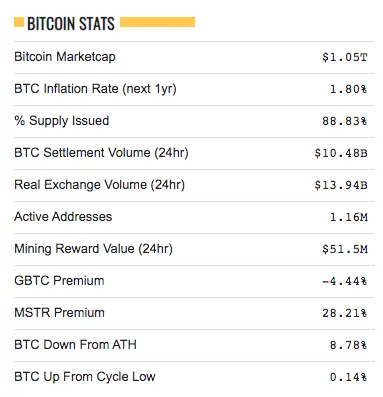
Source: CaseBitcoin
Despite a recent ~20% pullback, BTC continued on its bull run throughout the month of February, ending the month up ~22%. BTC momentarily reached a high of ~$58,000 before correcting down to current levels. February, much like the past several months, continued to prove out the narrative that institutional buyers are driving this bitcoin run. MSTR raised another debt round and purchased $1 billion worth of BTC at a ~$52,000 price point. Square doubled down on their initial BTC treasury purchase and revealed they bought an additional $170 million of BTC which constitutes ~5% of their cash holdings. We also got hard data proof in the form of Coinbase’s S-1 filing for their upcoming IPO. In it was a chart illustrating the breakdown of the revenue from retail vs institutions (image below). As seen below, institutions in relative and absolute terms have been increasing since 2020. This crypto bull run cycle is the first in which we can truly say “institutions are here.”
 Image credit: Coinbase
While institutions are making waves, they are not the only ones buying and HODLing. The total balance of BTC held in “accumulation addresses,” addresses that have never spent funds, reached a 3.5-year high (image below) of over 15% of the circulating supply. The digital gold and HODL narrative has never been stronger and in the face of rampant money printing by governments all over the world, BTC users are increasingly trading their fiat for the long-term wealth preservation BTC purports to enable.
 Image credit: Glassnode
Increased numbers in long-term HODLers means there is less BTC to go around. While we know there are ~18.8M bitcoin that have been minted since 2009, the actual number in circulation is far less due to lost coins and coins deemed “illiquid” due to the growing “never sell” mentality.
 Image credit: CoinMetrics
NFTs on Ethereum
The NFT market is sky-rocketing right now, with the vast majority of record-breaking sales happening within the last 30 days. So, first, what is an NFT? A Non-fungible token (NFT) is a digital asset that represents a wide range of unique items, from collectible sports cards to digital art to virtual real estate and even music.
One of the main benefits of owning a digital collectible versus a physical collectible is that each NFT contains distinguishing information that makes it both unique (scarcity) and easily verifiable (auditable). This makes identifying knock-offs or fakes extremely easy and disincentivizes copy-cats. Unlike regular cryptocurrencies like BTC and ETH, NFTs cannot be directly exchanged one-to-one. This is because no two NFTs are identical. Each one is cryptographically unique and, better yet, provable!
Ethereum has several NFT marketplaces like OpenSea and Rarible that list NFTs from around the ecosystem, thereby creating an easy-to-use marketplace for NFTs. There are also specialized NFT marketplaces like SuperRare and Nifty Gateway, which are specifically centered around cryptoart NFTs.
 OpenSea Market
NFTs are not a new concept and even in the bull run of 2017, an Ethereum project entitled CryptoKitties saw major adoption that congested the Ethereum network. But in February alone, we have seen several different kinds of NFTs sell for hundreds of thousands and even millions of dollars. An Axie Estate NFT sold for 888 ETH, a HashMask for 420 ETH, and CryptoPunk for 600 ETH. Beyond just the record-setting prices, big names are flooding into the space. High-profile figures from outside of crypto such as Mark Cuban, Mesut Ozil, Chamath Palihapitiya, NBA players, and even Lindsy Lohan have spoken about NFTs recently. Just this week, historic auction house Christie’s is selling its very first digital art piece and accepting ETH as payment. Interested users can track NFT sales across different platforms at CryptoSlam.
Basic Attention Token (BAT)

Everyone has heard of Google but Brave browser adoption just keeps growing. Since the beginning of 2020, Brave browser, which hosts the BAT token and wallet, has more than doubled the number of users from 11.5 to 25.4 million monthly active users. The privacy-focused browser that pays its users for watching adds now has 8.6 million daily active users. BAT utility has also grown with the support of over 12 million wallets and 4.3 million monthly transacting BAT users.
Another huge announcement from the Brave team came just last week as according to the BAT Roadmap, Brave is creating its own decentralized exchange (DEX) aggregator as well as a new “Brave Wallet.” A DEX aggregator helps users find the best possible prices across multiple exchanges. These additions will enable the Brave browser to more seamlessly interact with the world of decentralized finance (DeFi). Brave users will soon be able to earn interest, lend assets, and trade tokens without going through a financial institution all from the Brave browser. Users will receive discounts when using BAT for transaction fees.
USDT Settles with the New York's Attorney General

In February 2021, Tether and Bitfinex reached a settlement with the New York Attorney General’s Office after a 2+ year investigation stemming from questions around Tether’s solvency and a loan from parent company, Ifinex. Tether, which now has over $30 billion in assets across ~10 blockchains, operates mostly as a black box which has led to copious amounts of FUD (fear, uncertainty, and doubts) over the years in the crypto-space. Now, the lawsuit is over and Tether came out looking rather vindicated. Under the terms of the settlement, Tether did not have to admit any wrongdoing but will pay an $18.5 million fine and not be allowed to operate in the state of New York (it already did not operate there). The investigation took over two and a half years and for Tether to come out of the matter with only a small fine can only be viewed as a win for the project. Additionally, per the terms of the agreement, Tether is subject to publish quarterly reserve statements which should help bring transparency to the company and alleviate some concerns from the broader crypto markets. The settlement resolved the allegations about the $850 million loan Tether made to Bitfinex when Bitfinex was having issues accessing funds. The loan was repaid early and in full, including interest. At no point did the loan impact Tether’s ability to process redemptions.





