![What is GXChain (GXC)? [A Comprehensive Guide to Understanding GXChain]](https://www.publish0x.com/img/75994.webp?action=resize&ar=1&enc=webp&inv=0&ori=1&st=1&up=1&w=1140&signature=2287dce36bafffcec2dfd8aff2a688841351db737a282faff2f1d2fba0750e9b)
Hi everyone, today I'm going to be talking about GXChain, which is building use cases for the data economy. I've written about other projects as well, like Zcoin (XZC), Synthetix Network Token (SNX) and Status (SNT).
Within the past decade, the internet has rapidly developed and now plays an integral part in our everyday lives. We use it for connecting with friends, playing games, listening to music, watching movies, shopping online, banking, applying for jobs, etc.
There are so many companies that rely on the internet to provide customers with their products and services and they all require customers to sign up, login and provide personal identifying information.
This has led to the development of the controversial data economy, in which companies and large corporations track, collect, analyze, and sell data that is connected to us.
There are many problems with the data economy today:
First being the controversy of data ownership. Does all of this collected data belong to its producer (individuals on the internet) or does it belong to the corporations who collect it?
The problem is, the internet ecosystem hasn’t adopted a simple and effective way for users to manage and take ownership of their data. Instead, centralized corporations control, manage, and exploit our data and this poses a real threat to personal data security and privacy – which is the second problem.
Recently, centralized organizations have suffered many data scandals and breaches, such as the Equifax data breach, and Facebook– Cambridge Analytica data scandal. Our data is not safe under the control of corporations.
Thirdly, the data economy suffers from fake data. It’s difficult to identify the authenticity of data which significantly impedes social collaboration.
So what’s the solution?
To combat all these problems in today’s data economy, we need a solution that allows individuals to securely maintain ownership of their real and authentic data.
One such solution doing just that is GXChain (GXC) – a blockchain for the global data economy, designed to build a trusted data internet of value.
In the following article, I provide a comprehensive and subjective look at GXChain (GXC) so that you can fundamentally understand what GXChain is and see the value proposition of its cryptocurrency GXC.
I delve into its unique characteristics, its history, purpose, partnerships, as well as the issues and controversies surrounding it.
So buckle up and enjoy this comprehensive guide to understanding this innovative blockchain project aiming to serve the global data economy by building a trusted data internet of value.
History of GXChain (GXC)
GXChain is a public blockchain offering decentralized data exchange solutions that bring the idea of a globalized data economy closer to reality.
The project was created by the Korean Power Exchange (KPX) team and is the underlying blockchain of the KPX data exchange – an exchange where electricity is traded across more than 900 power companies.
To be more specific, GXChain was founded by MQ Huang and is co-founded by Cheng Wang. The project is based out of China and was initially conceived in 2016.
Less than 1 year after conception, the GXChain team conducted an ICO in April 2017 where a total of 10,000,000 GXS (GXChain’s ERC-20 token) were sold at a rate of $0.13 per GXS. Of the remaining supply, 5,000,000 GXS was reserved for the mining pool, 9,490,000 GXS reserved for developer support, and 51,000,000 GXS reserved for the GXS Foundation.
Therefore, the GXS token sale was not fairly distributed as the vast majority of GXS tokens were reserved for the team.
More than 1 year after the project’s ICO, GXChain’s mainnet launched in Q4 2018 and all GXS tokens were swapped for GXC mainchain tokens at a 1:1 rate. Now, at the time of writing and according to CoinMarketCap, the max supply of GXChain is 100,000,000 GXC, the total supply is 99,898,145 GXC, and the circulating supply is 65,000,000 GXC.
As for GXC price performance, the project hit exchanges trading around $5.00, reached a peak price of $10.38 on January 13, 2018, and has since cascaded downward, making new lows and failing to build a market structure.
Purpose of GXChain (GXC)
GXChain is a fundamental blockchain for the global data economy, designed to build a trusted data internet of value. The purpose of GXChain’s blockchain technology is to solve problems in the data economy, including ownership, security, authenticity, and lack of incentive.
The team behind GXChain is working to solve these problems by offering blockchain-based solutions for enterprises that engage in network loans, automobile finance, personal loans in internet finance and banks.
They also provide industrial-level data exchange solutions for government institutions and industries requiring secure and authentic data exchange, such as insurance, medical care, and logistics.
The GXChain blockchain possesses functions including G-ID, GVM, BaaS, and BlockCity, which aid in the development of decentralized applications (dapps).
Key Features of GXChain
DPoS based Graphene Architecture

GXChain utilizes a delegated proof-of-stake (DPoS) consensus mechanism and second level transaction confirmation which provide dapp users with a high-level experience that supposedly supports 100,000 transactions per second (TPS).
Smart Contracts

GXChain supports smart contract development with an IDE tool that supports C++ and other popular languages to develop, debug, deploy smart contracts efficiently and conveniently.
General Digital Identity G-ID

G-ID is the unique identity of the GXChain ecosystem in which each G-ID corresponds to a single user and his/her data. Once a user’s G-ID is verified it acts as a data passport that provides authenticity to data.
GXC Cryptocurrency
GXC is a utility token used within the GXChain ecosystem. GXC is required as payment for using GXChain products and applications.
According to the project’s whitepaper, the uses for GXC include:
- Mining rewards in the BlockCity dapp
- An incentive for users to finish quests and tasks in the BlockCity dapp
- A reward for contributions to the GXChain community, such as a bug bounty program
- The ballot for voting for witnesses, who are in charge of mining on GXChain
- Fees for peer-to-peer data transactions
- Fees for using services at BlockCity
- Fees for using GXChain blockchain as a service (BaaS)
- A payment method for using/buying applications on GXChain
- Fees for developer registration
GXChain (GXC) Issues and Controversies
The GXChain project is one of many cryptocurrency projects to have come out of China. Unfortunately, many Chinese crypto projects have gotten a bad name due to a large number of them being fraudulent projects.
GXChain, on the other hand, was once considered a highly rated blockchain project from China and was even ranked the fourth-best blockchain in the world according to China’s Global Blockchain Assessment Index. That was until the Gushu Police Department raided GXChain’s headquarter office and apprehended their executives in September 2019.
According to the allegations, the police raid was related to GXChain executives harvesting sensitive information including personal credit data from its more than 2 million verified users. If these allegations are true, it means that GXChain is not secure and decentralized.
Another controversial issue regarding GXChain is the distribution of GXC tokens. Only 10% of the total supply was distributed to retail investors during the ICO and a whopping 50% was held for the project’s founders.
No cryptocurrency project should reserve that much of the total supply for its founders. Therefore, this suggests GXChain may be a scam or simply very centralized.
GXChain Working Products & Partnerships
According to the GXChain website and blog, their blockchain already has two widely used products:
P2P Data Marketplace/GXC Data Exchange
Their first product is the GXC data exchange which is commercialized and ready to be used for data exchanging in any industry. It’s an alternative to traditional data exchange solutions, such as centralized data centers or the underground data trading market.
According to GXChain, this GXC data exchange utilizes GXChain as the underlying blockchain of the KPX data exchange – a Korean electricity exchange where electricity is traded across more than 900 power companies.
BlockCity
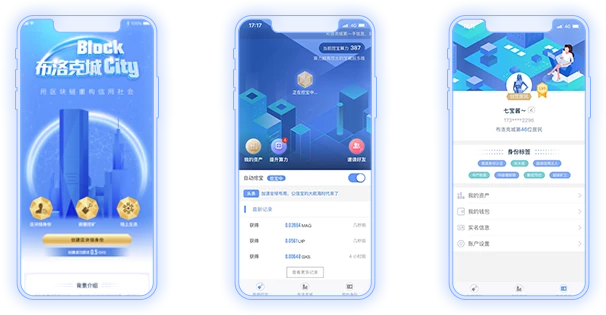
While the GXC data exchange product is for commercialized enterprise use, GXChain also has a product built for everyday users the – BlockCity mobile dapp.
BlockCity is a large-scale mobile dapp based on GXChain. It apparently attracts millions of users through a mining incentive where the users can earn GXC. The dapp is essentially a dapp marketplace in which other dapps can be accessed through.
According to the GXC website, BlockCity only hosts 3 different dapps being Block Pirate, Chaos, and Prophet.
Partnerships

GXChain has three partnerships listed on its website and each of them is with State-owned companies in China.
- China Union Pay
- China Unicom
- China Mobile
However, it later came out that these partnerships were fake and that GXChain took bribes to post fake partnerships in an effort to boost their GXC token’s price.
Conclusion
GXChain was once considered one of the most promising blockchain cryptocurrency projects to come out of China. Their blockchain was apparently highly ranked by Chinese officials, had multiple partnerships with State-owned companies, and had millions of verified users.
But as time passes with no new retail investors entering the crypto market, it’s now clear that GXChain isn’t what it was cracked up to be. While the project does have a working blockchain and some viable products, the GXC token’s price continues to fall, making lower highs and lower lows.
Perhaps if the crypto market enters a new bull run and GXChain does some rebranding and refocuses their efforts it may be able to make a comeback.
What do you think about GXChain (GXC)? Is the project more legit than it appears to be? Let me know what you think in the comment section below.






